


GCxGC data analysis of msFineAnalysis AI Ver. 3 ①Diesel fuel
MSTips No. 509
Introduction
The qualitative analysis software msFineAnalysis AI enables automatic structure analysis of unknown compounds not registered in libraries through EI/SI integrated analysis and AI structure analysis. Ver. 3 newly supports comprehensive 2D GC (GCxGC) data analysis. Figure 1 shows a schematic diagram of GCxGC-MS and the 2D chromatogram. In GCxGC, two columns with different polarities are connected via a modulator. The sample separated by the first column is cryogenically trapped by the modulator and then thermally introduced into the second column at a few-second interval. For example, using a non-polar column in the first dimension for separation by boiling point and a polar column in the second dimension for separation by polarity significantly enhances compound separation capability. This technique is effective for petroleum, chemical, food, fragrance, and environmental analysis, which have many components and are difficult to analyze using a single GC-MS. This MSTips introduces the features and capabilities of the system using diesel fuel analysis as a basic application example.
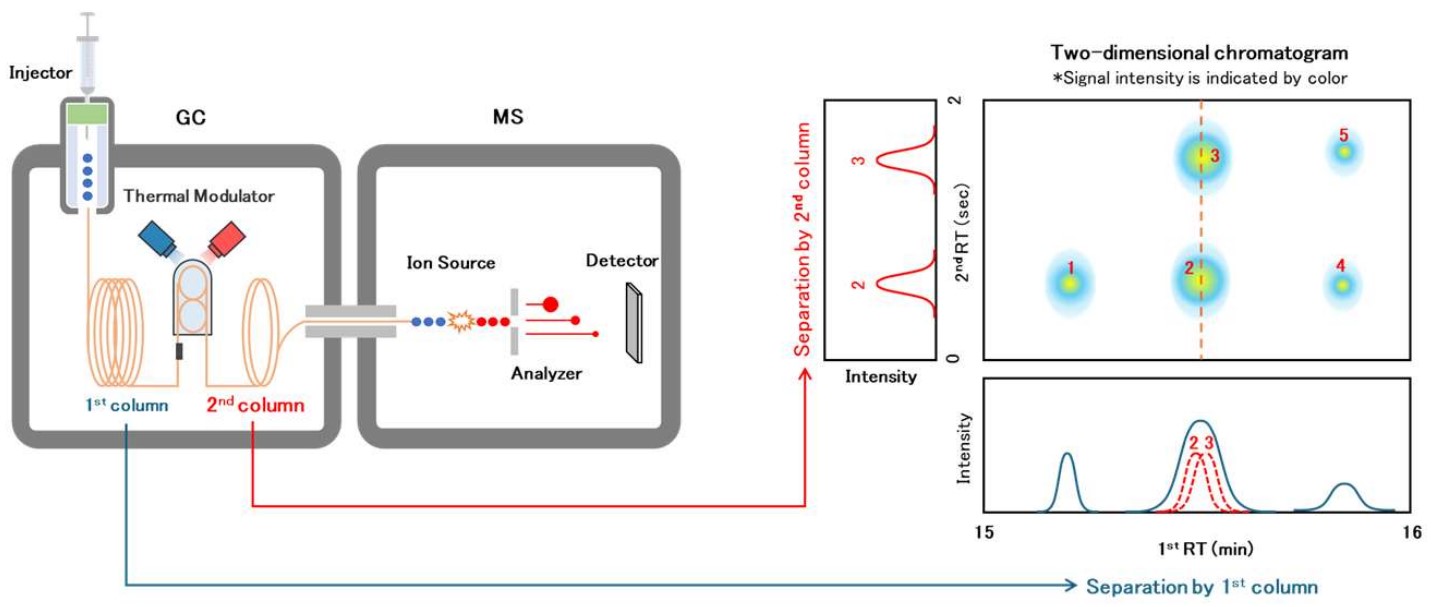
Figure 1 Schematic diagram of GCxGC-MS and the 2D chromatogram
Experiment
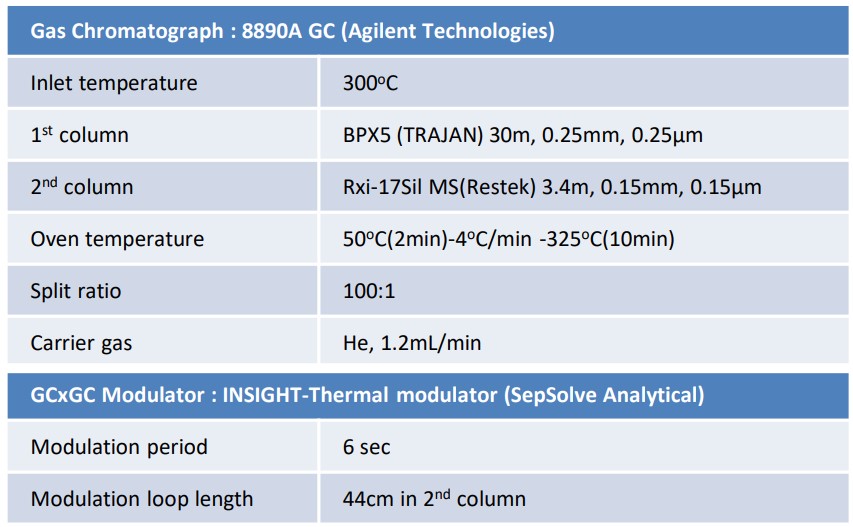
A diesel fuel sample for petroleum product testing (24107-08, Kanto Chemical Co., Inc.) was used, and 0.2 μL was injected into the GC. The GCxGC modulator used was the INSIGHT-Thermal modulator (SepSolve Analytical), with a semi-polar first column and a medium-polar second column. The GC-TOFMS used was the JMS-T2000GC, and ionization was performed using both EI and soft ionization FI (Field Ionization). GCxGC non-target analysis mode of msFineAnalysis AI Ver.3 was used for GCxGC data analysis. Detailed analytical conditions are shown in Table 1.
Table 1 Analytical conditions

Results
Figure 2 shows a screenshot of the analysis result of msFineAnalysis AI. On the left side, 2D chromatograms (both EI and FI method) and peak lists are displayed. On the right side, the mass spectra (both EI and FI method) and qualitative analysis results for the selected peak are displayed.
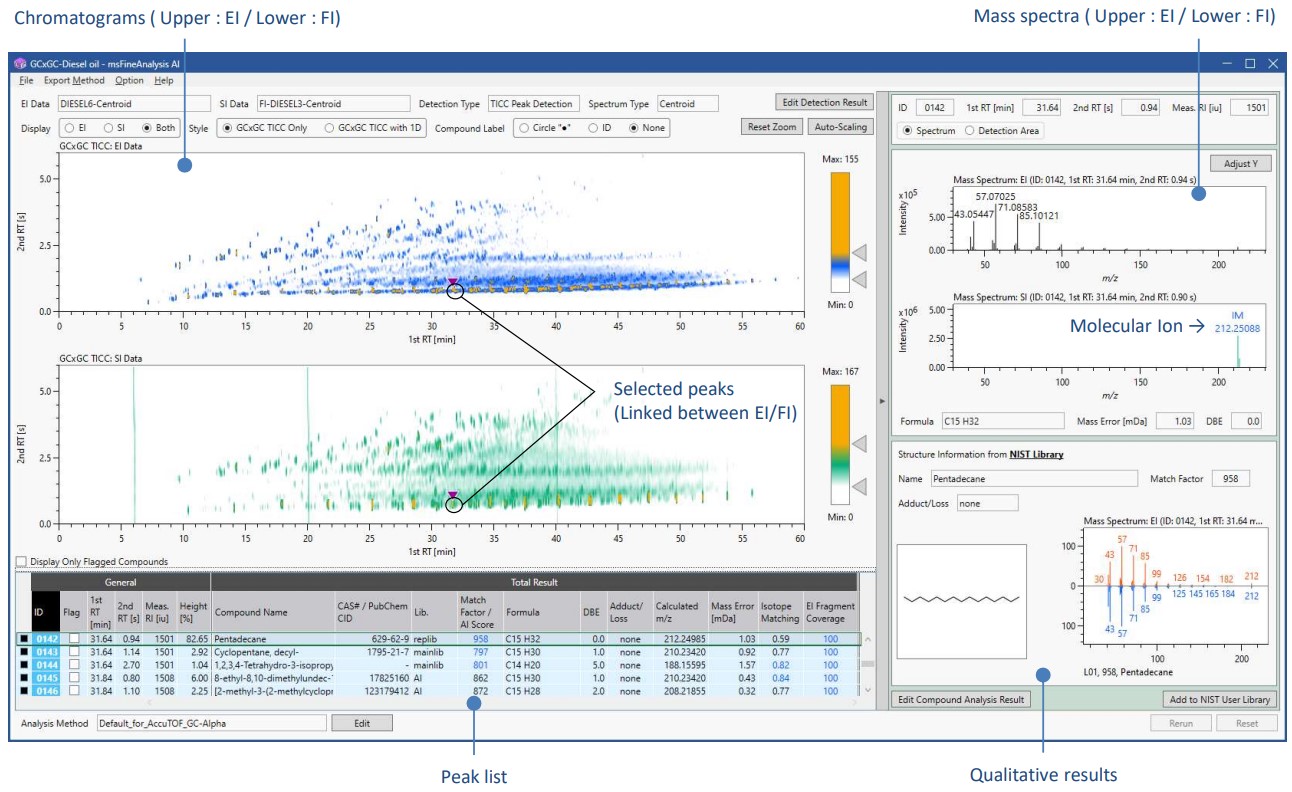
Figure 2 Screen shot of msFineAnalysis AI
Figure 3 shows the EI and FI mass spectra of n-alkanes (C14H30、C15H32、C16H34) . Diesel fuel is a mixture of many hydrocarbon compounds, including multiple n-alkanes with similar structures but different carbon numbers (molecular weights). These compounds have common fragment ions, making them difficult to distinguish in EI mass spectra. However, EI/SI integrated analysis, which utilizes molecular ion information from soft ionization, enables easy differentiation.
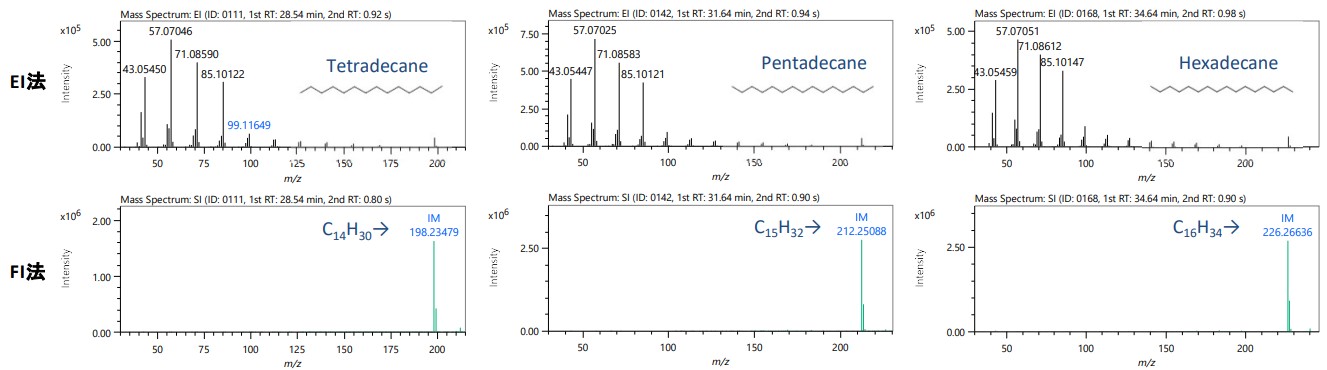
Figure 3 Mass spectra of n-alkanes (Upper : EI / Lower : FI)
Figure 4 compares a 1D chromatogram obtained by single GC-MS with a 2D chromatogram obtained by GCxGC-MS. In the 2D chromatogram, compound classes such as paraffins, olefins, naphthenes, and aromatics can be roughly distinguished along the vertical axis. This enabled visual understanding of the qualitative composition of the diesel sample.
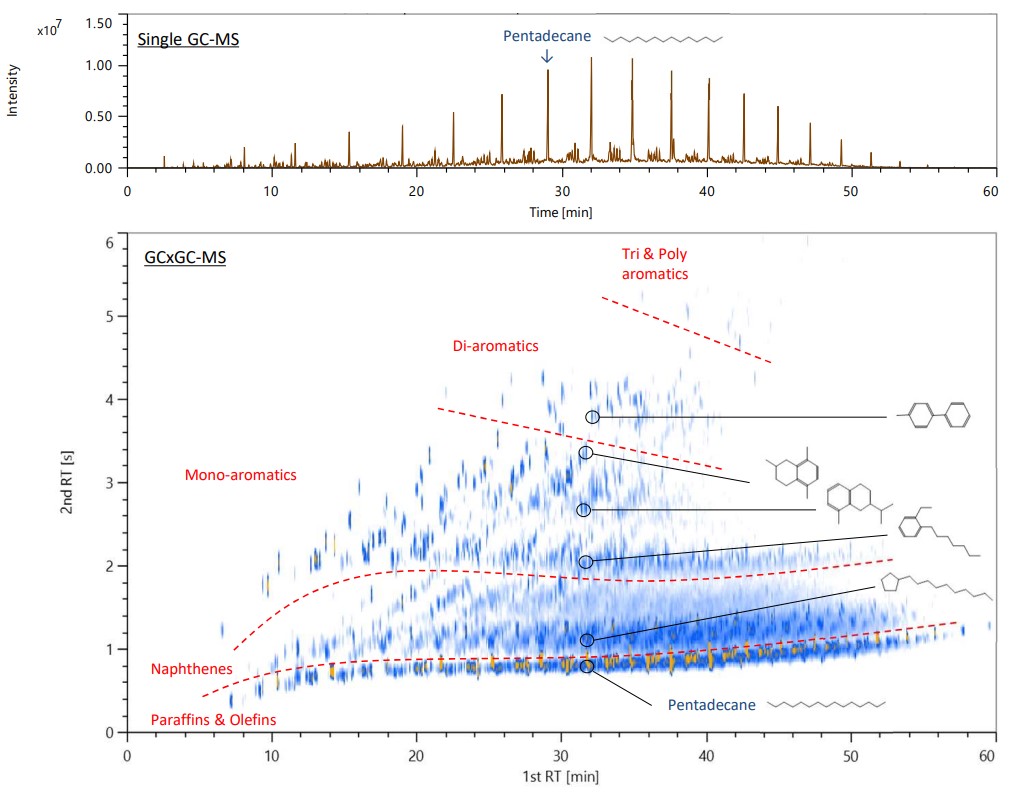
Figure 4 Chromatograms of diesel fuel (Upper : Single GC-MS / Lower : GCxGC-MS)
Figure 5 shows the number of peaks automatically detected by msFineAnalysis AI (limited to those with significant qualitative information). When the detection threshold was lowered, the number of detected peaks stopped at around 200 with single GC-MS, but continued to increase to over 700 with GCxGC-MS. This confirms the usefulness of GCxGC-MS in qualitative analysis of trace-level peaks.
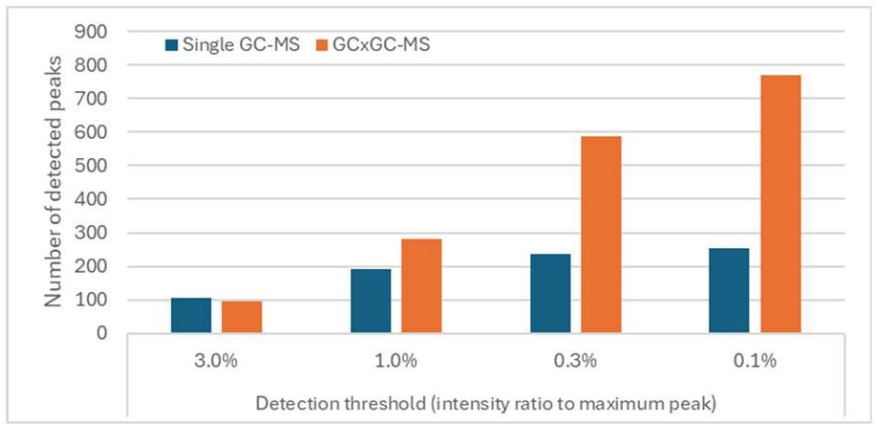
Figure 5 Number of peaks automatically detected by msFineAnalysis AI
Conclusion
With the new support for GCxGC data analysis in msFineAnalysis AI Ver.3, it is now possible to rapidly obtain highly reliable qualitative results through EI/SI integrated analysis for the large number of peaks detected in 2D chromatograms.
Solutions by field
Related products
Related information


Are you a medical professional or personnel engaged in medical care?
No
Please be reminded that these pages are not intended to provide the general public with information about the products.