


A study of dioxins analysis by GC/MS/MS with hydrogen carrier gas
MSTips No. 507
Introduction
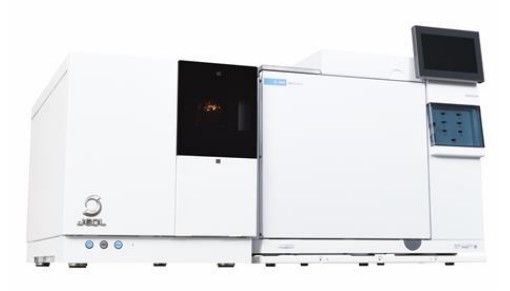
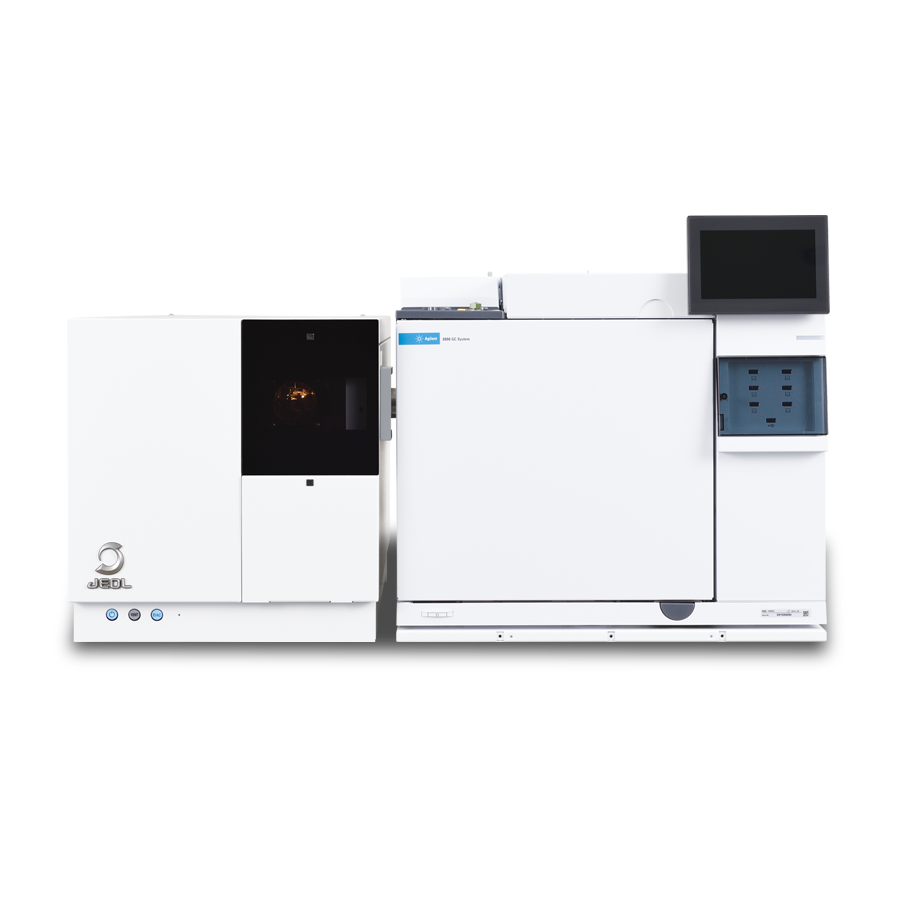
Figure 1 JMS-TQ4000GC UltraQuad™ TQ
Dioxins are primarily analyzed by using a gas chromatograph/double-focusing magnetic sector high-resolution mass spectrometer (GC/HRMS) [1, 2]. Recently, however, the EU and China have recognized the use of GC-tandem mass spectrometer (GC/MS/MS) for the analysis of dioxins in food and feed [3, 4]. GC/MS/MS is also being considered by the EPA for measurement. Against this background, Japan is exploring the use of GC/MS or GC/MS/MS as alternatives to GC/HRMS, and we have also reported the results of dioxins analysis by GC/MS/MS [5, 6]. Recently, the dioxins analysis has been also conducted using alternative carrier gases that is similar to water quality analysis and pesticide analysis. However, the number of reports of this analysis is very small compared to that of water quality analysis and pesticide analysis. In this study, we report a comparative analysis of dioxin analysis by hydrogen carrier gas with helium carrier gas using GC/MS/MS “JMS-TQ4000GC UltraQuad™ TQ” (Figure 1).
Method
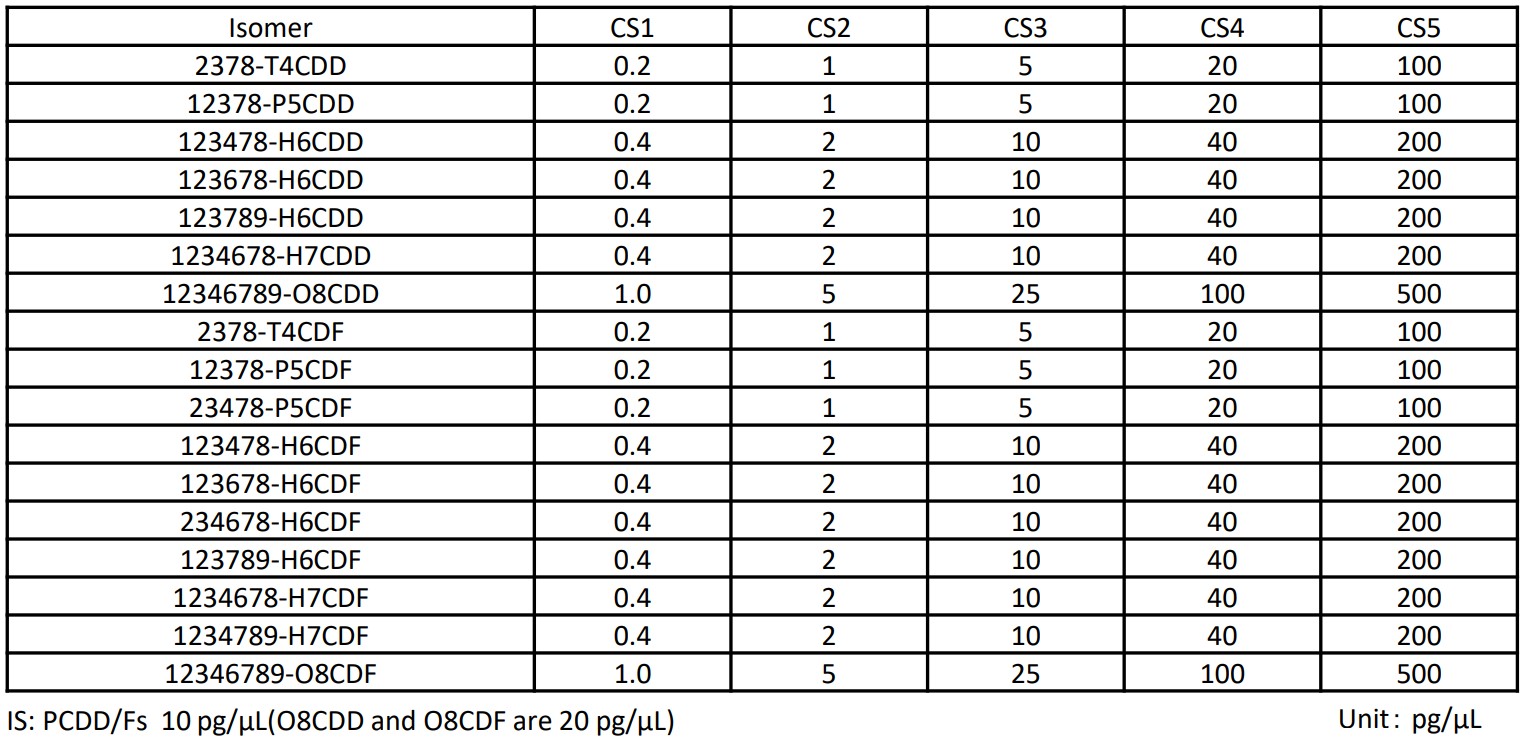
The measurement was performed using GC triple quadrupole mass spectrometer JMS-TQ4000GC UltraQuad™ TQ. The measurement condition is shown in Table 1, and the selected reaction monitoring (SRM) transitions are shown in Table 2. The Japanese industrial standards (JIS) dioxin/furan calibration solution in nonane(Cambridge Isotope Laboratories, Inc.) was used as the standard sample. The concentration range is shown in Table 3.
Measurement conditions were created based on results of 1) Change in mass spectrum, 2) Change in chromatographic peak, and 3) Optimization of flow rate by S/N value and column separation. And then, the measurement was performed using both splitless the pulsed splitless modes.
Table 1 Measurement condition
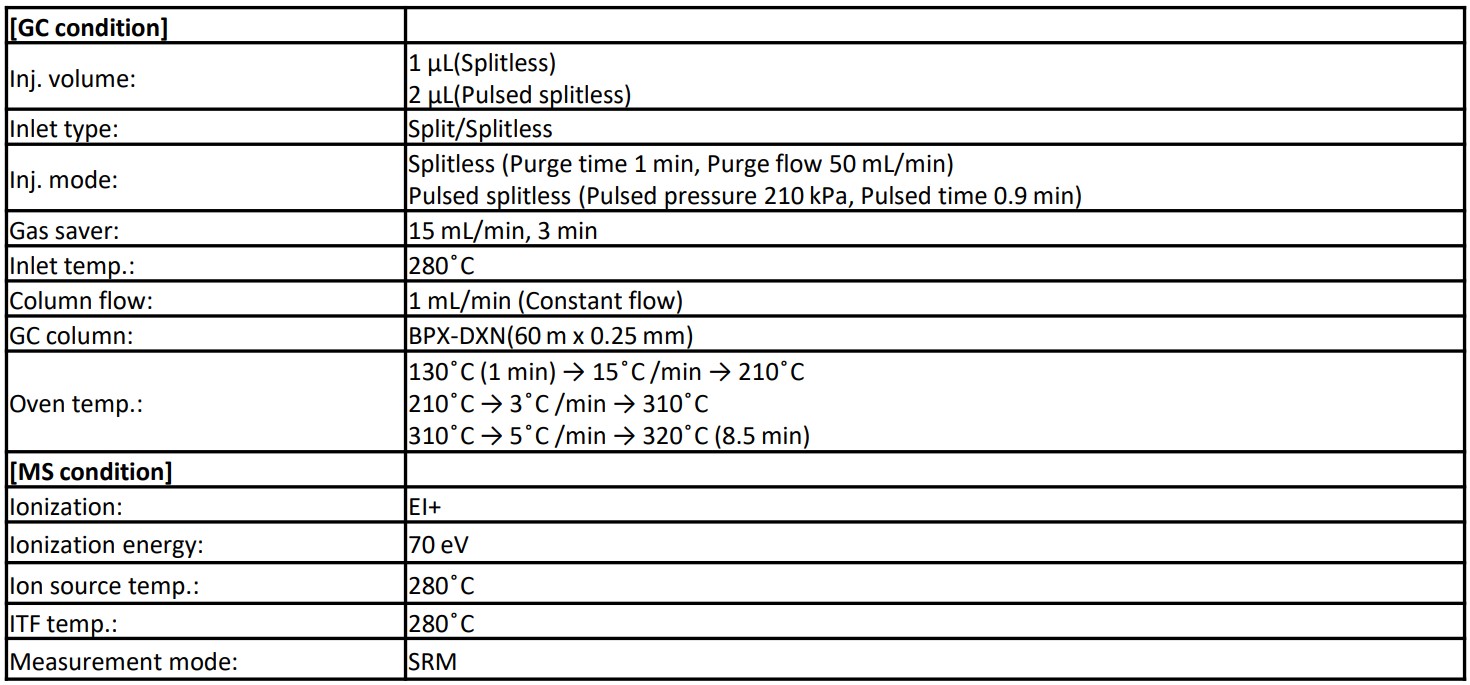
Table 2 SRM transition
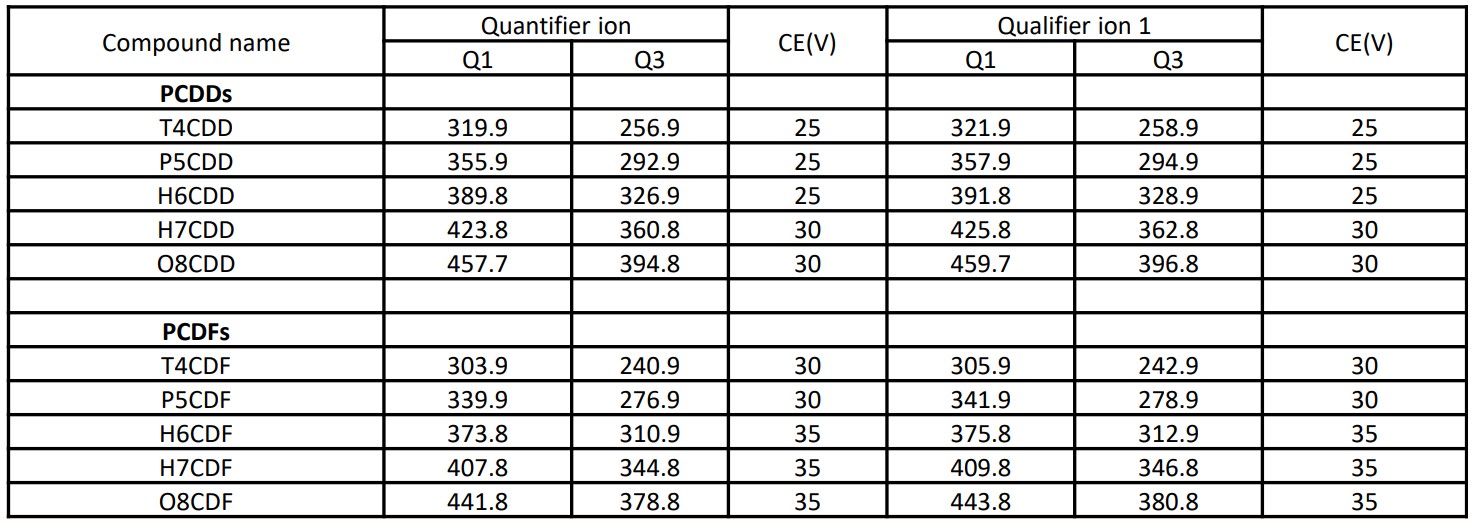
Table 3 Standard sample for calibration curve
Result
Changing chromatogram peak by hydrogen carrier gas
The SRM chromatogram peaks were created by averaging the SRM data for the quantitation ion and reference ion. The average SRM chromatogram peak of T4CDF at CS3 using both carrier gases are shown in Figure 2. Only one peak was observed by helium carrier gas, while a lot of peaks were observed by hydrogen carrier gas. Generating low-chlorinated isomer by the reduction reaction of high-chlorinated isomer was suggested. The reduction reaction was also observed in other chlorinated isomers, especially in samples with high concentration.
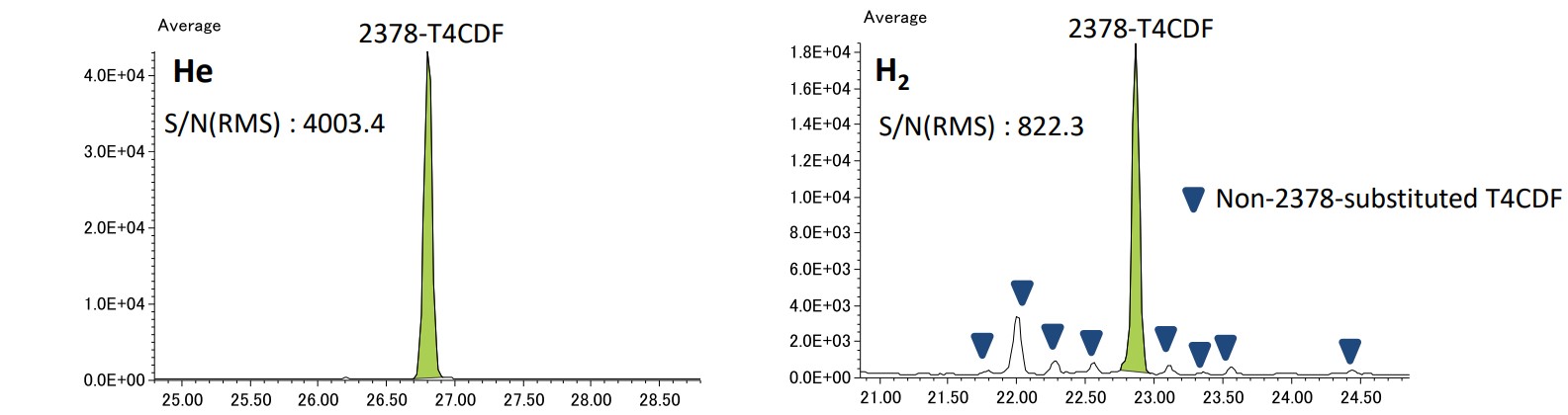
Figure 2 Average SRM chromatogram peaks of T4CDF
Comparison of the Av-S/N values by hydrogen carrier gas and helium carrier gas
The average S/N (Av-S/N) values of three repeated measurements of CS3 obtained in splitless mode using both carrier gases are shown in Table 4, and the corresponding bar graph is shown in Figure 3. Av-S/N values by hydrogen carrier gas were 0.6 times lower than Av-S/N values by helium carrier gas.
Table 4 Av-S/N value by each carrier gas
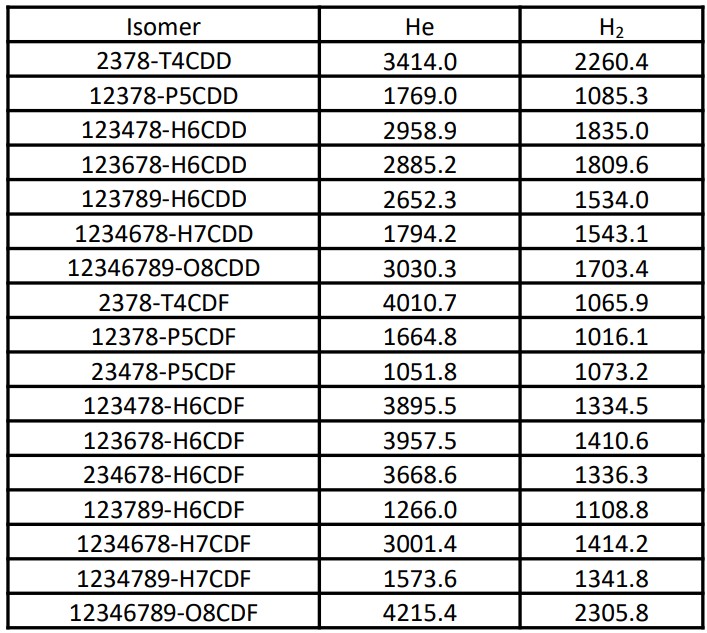
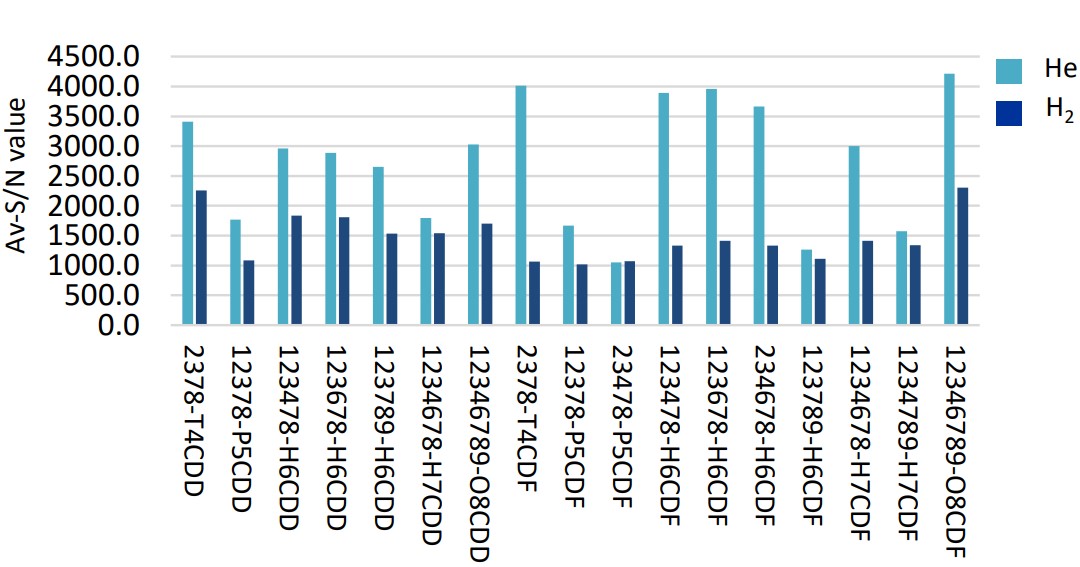
Figure 3 Comparison of Av-S/N value by each carrier gas
Peak detection status of CS1
The average SRM chromatogram peaks of CS1 using splitless mode with hydrogen carrier gas are shown in Figure 4. All target components were detected with good peak shape.
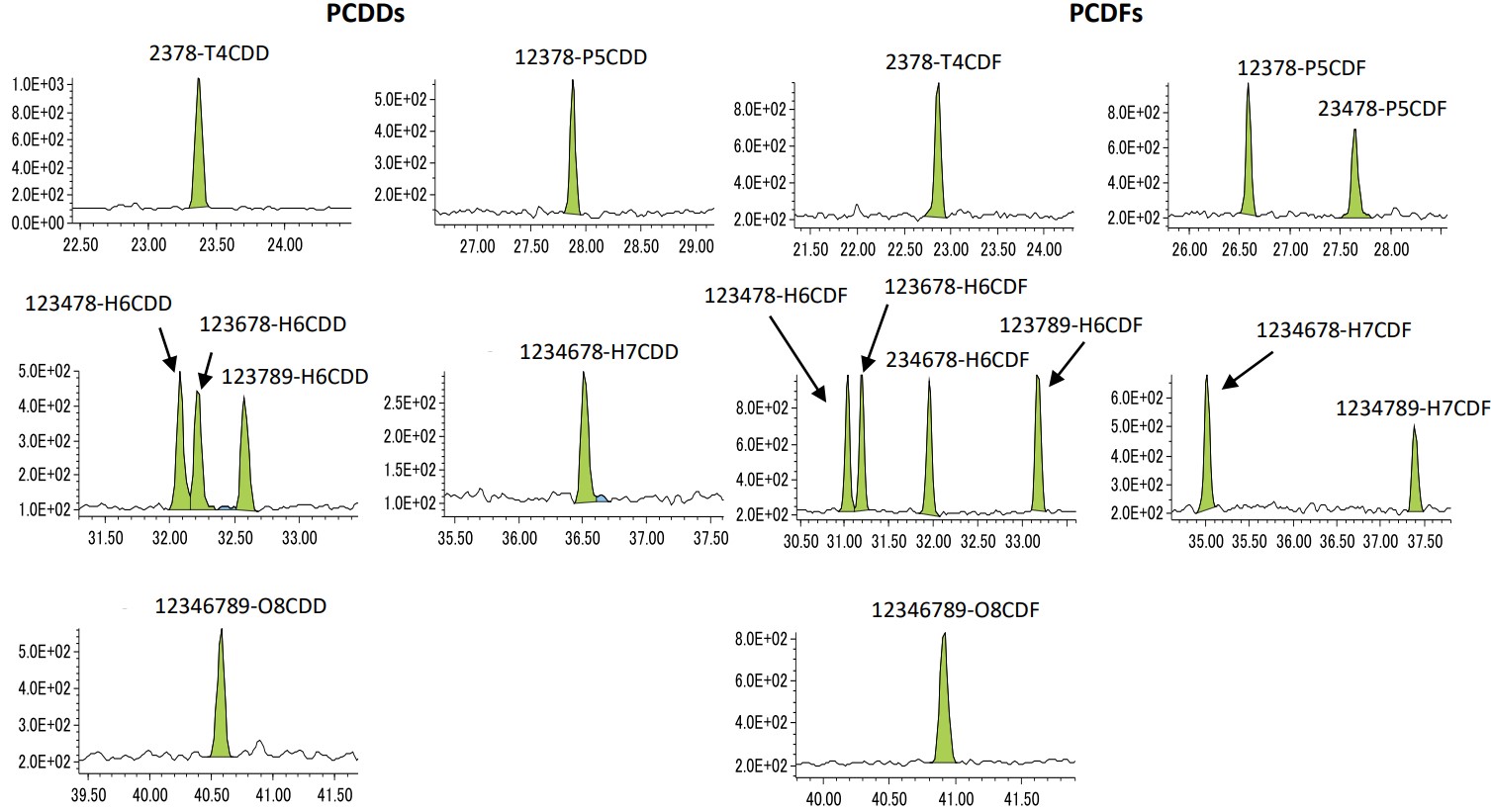
Figure 4 The average SRM chromatogram peaks of PCDDs and PCDFs
Comparison by the RSD of average RRF
The RSD values of average RRF (Av-RRF) are shown in Figure 5, and were calculated using the measurement data from CS1-5 in accordance with Japanese regulation (JIS). For splitless mode with helium carrier gas, all target components met the reference value (10% or less). For splitless mode with hydrogen carrier gas, four components exceeded the reference value. For pulsed splitless mode with hydrogen carrier gas, one component showed a value above the reference value. This is presumed to be due to the reduced sensitivity with hydrogen carrier gas and the reduction reaction occurring during injection, which results in the formation of low-chlorinated isomers from high-chlorinated isomers.
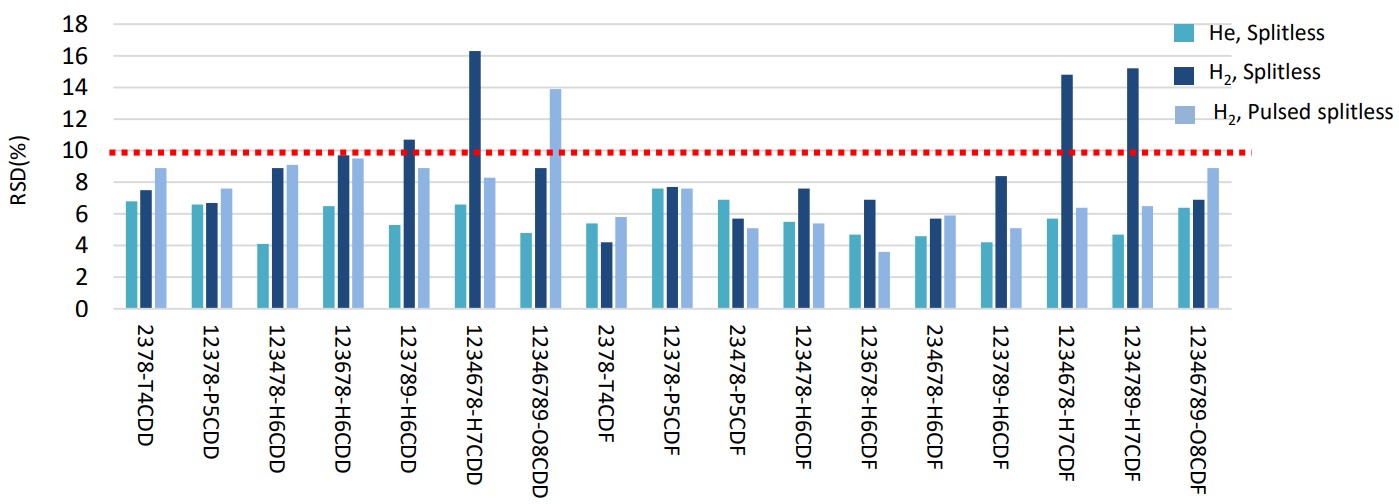
Figure 5 RSD of Av-RRF
Comparison by the IDL
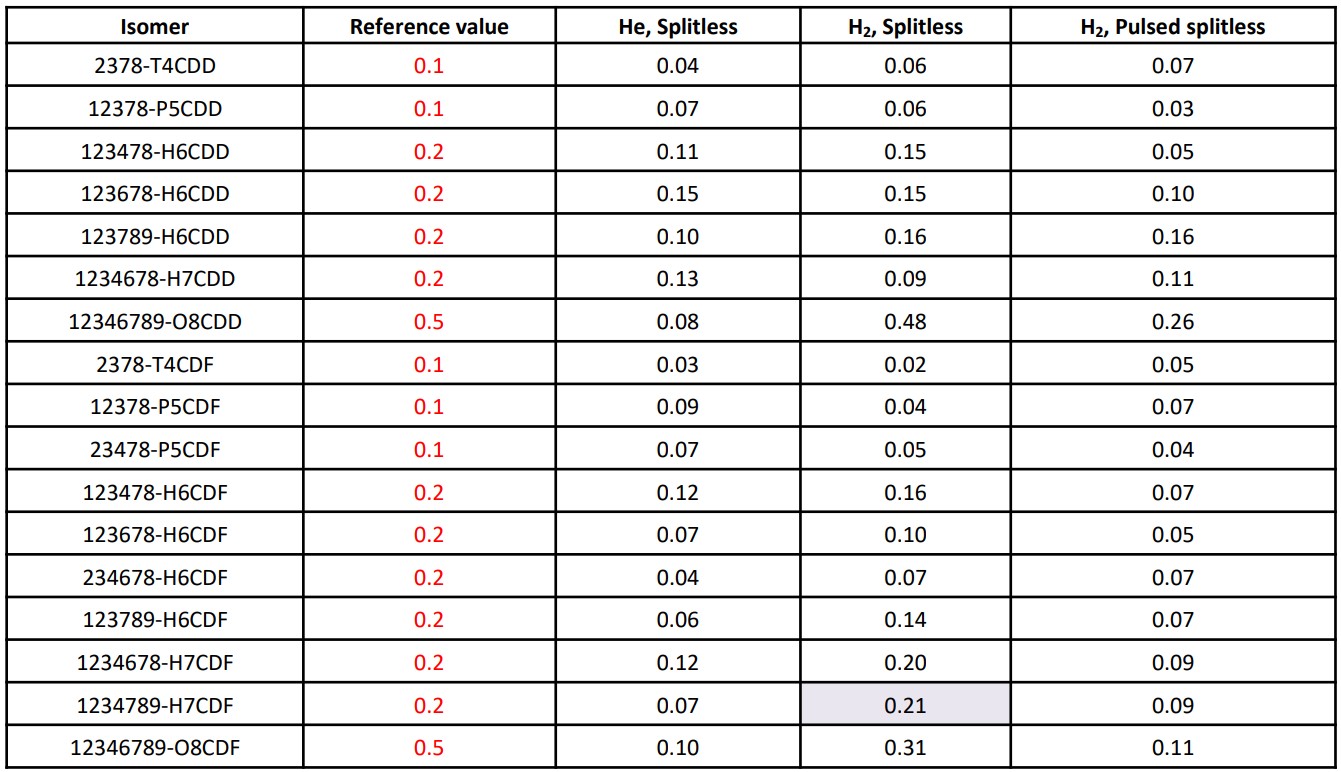
The IDL for each Injection mode/carrier gas combination is shown in Table 5. The IDL was calculated using measurement data from CS1 in accordance with JIS. For splitless mode with helium carrier gas and pulsed splitless mode with hydrogen carrier gas, all target components were less than the reference value. For splitless mode with hydrogen carrier gas, only 1234789-H7CDF was over the reference value.
Table 5 The IDL by each measurement
Conclusion
Verification based on JIS K0311 and JIS K0312 showed that while the RSD of the Av-RRF met the reference value with helium carrier gas, it did not achieve the reference value for some components when using hydrogen carrier gas. Additionally, IDL results suggests that hydrogen carrier gas appeared to reduce high-chlorinated isomers, producing low-chlorinated isomer. For splitless mode with hydrogen carrier gas, all target components in CS1 were detected; however, four components in the RSD of Av-RRF and 1234789-H7CDD in the IDL exceeded the reference value. For pulsed splitless mode with hydrogen carrier gas, the RSD of the Av-RRF exceeded the reference value only for 12346789-O8CDD, while the IDL for all target components remained within the reference value. In the future, we plan to conduct further studies focused on 1) chromatographic separation of each isomer, 2) reduction of byproduct formation, and 3) improvement of stability while controlling the amount of hydrogen gas.
References
[1] JIS K0311(2020)
[2] JIS K0312(2020)
[3] COMMISSION REGULATION (EU) 2017/644 of 5 April 2017
[4] GB 5009, 205-2024
[5] JEOL NEWS Vol. 56 No.1(2021)
[6] MSTips 491
Solutions by field
Related products
Related information


Are you a medical professional or personnel engaged in medical care?
No
Please be reminded that these pages are not intended to provide the general public with information about the products.