


Dioxins analysis in fly ash samples by using GC/MS/MS
MSTips No. 491
Introduction
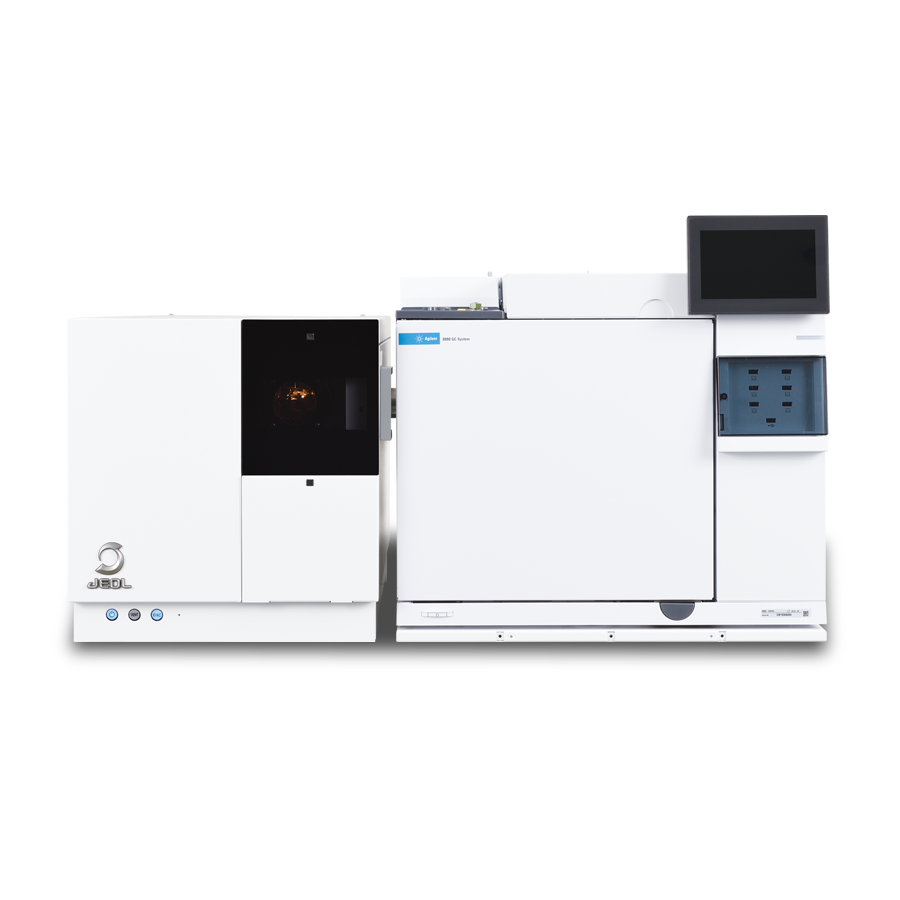
Dioxins are primarily analyzed by using a gas chromatograph/double-focusing magnetic sector high-resolution mass spectrometer (GC/HRMS) [1, 2]. Recently, however, the EU and China have recognized the use of GC tandem mass spectrometer (GC/MS/MS) for the analysis of dioxins in food and feed [3, 4]. GC/MS/MS is also being considered by the EPA for measurement. Against this background, Japan is exploring the use of GC/MS or GC/MS/MS as alternatives to GC/HRMS. In this application note, we report the measurement result of polychlorinated dibenzo-p-dioxins (PCDDs) and polychlorinated dibenzofurans (PCDFs) in fly ash sample by using a gas chromatograph triple quadrupole mass spectrometer JMS-TQ4000GC (Figure 1). In addition, the obtained measurement results were compared with those of GC/HRMS JMS-800D.
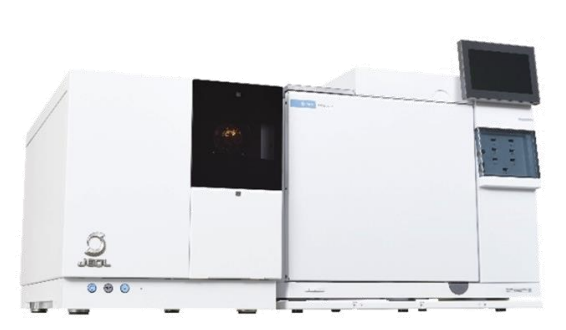
Figure 1 JMS-TQ4000GC UltraQuad™ TQ
Method
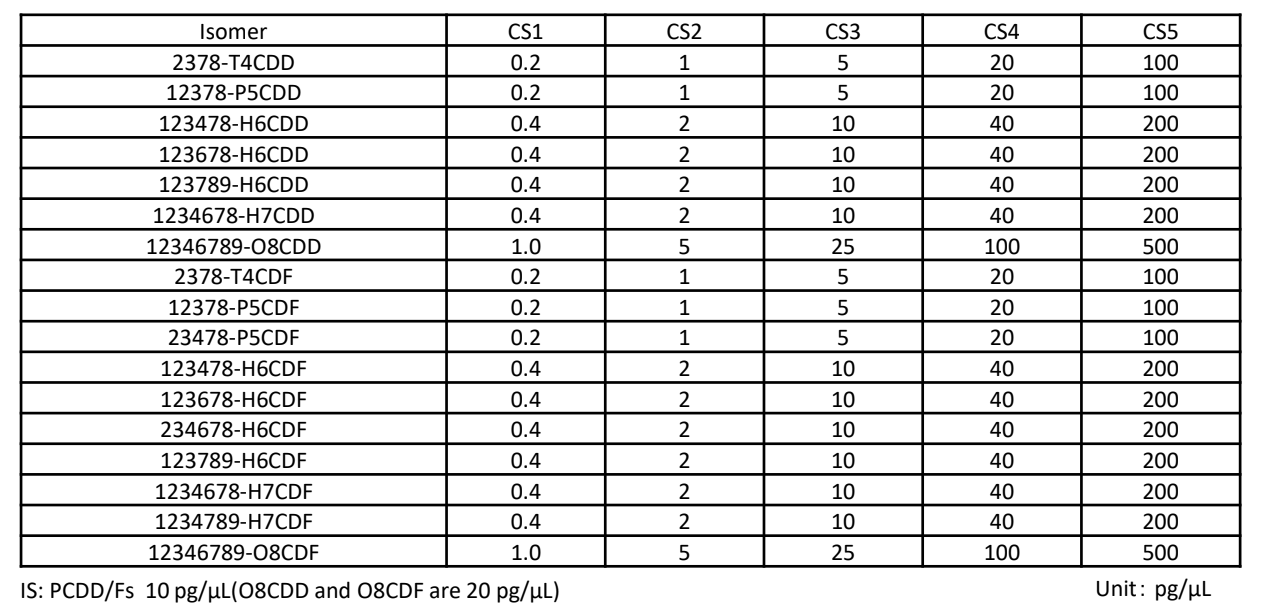
The measurement was performed using GC triple quadrupole mass spectrometer JMS-TQ4000GC UltraQuad™ TQ. The measurement condition is shown in Table 1, and the selected reaction monitoring (SRM) transitions are shown in Table 2. The Japanese industrial standards (JIS) dioxin/furan calibration solution in nonane(Cambridge Isotope Laboratories, Inc.) was used as the standard sample. The concentration range is shown in Table 3.
Table 1 Measurement condition
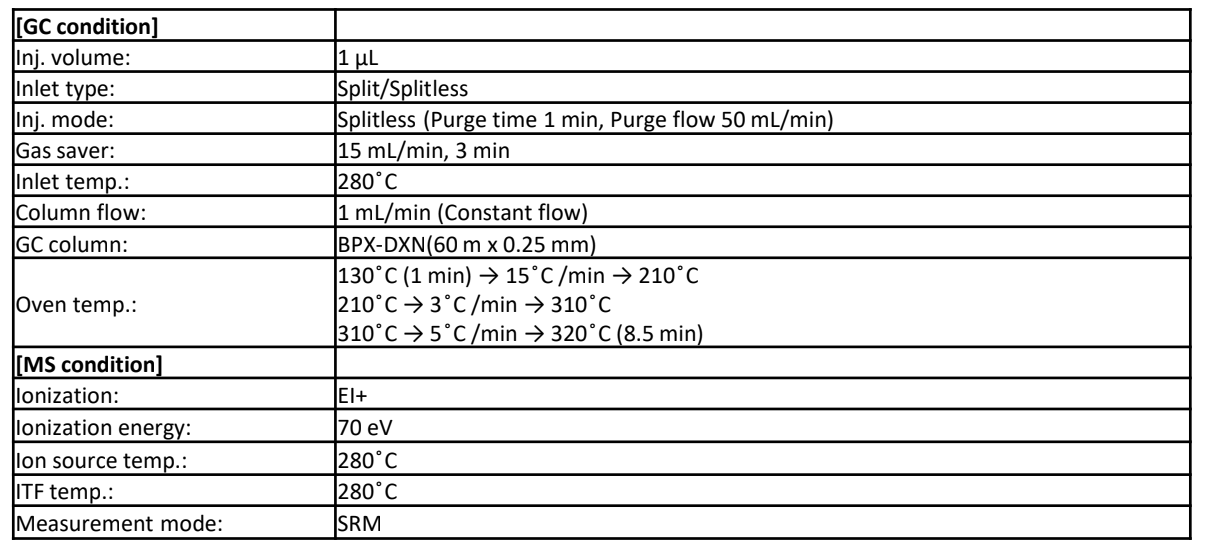
Table 2 SRM transition
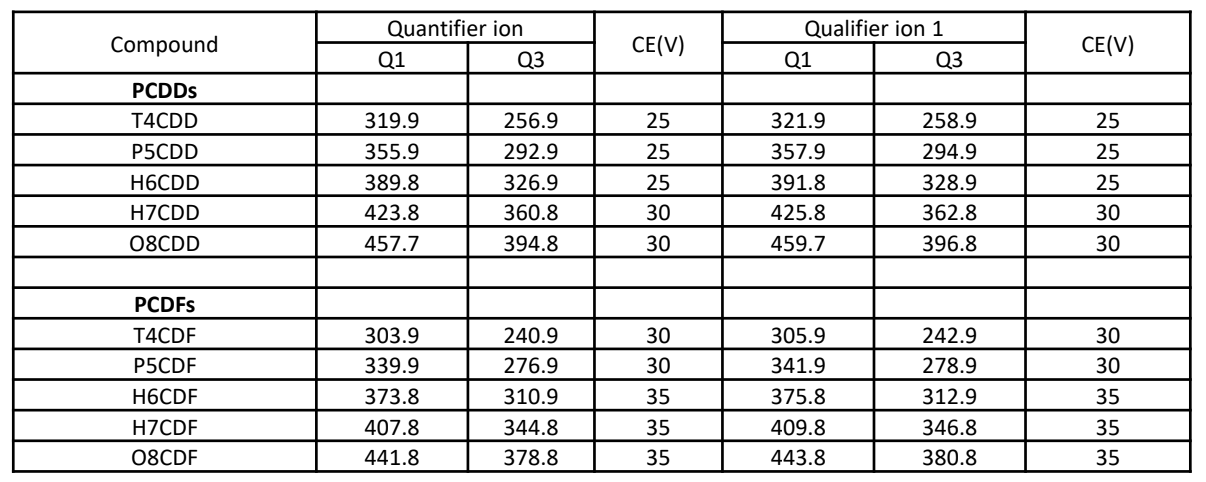
Table 3 Standard sample for calibration curve
Result
Peak detection status of CS1
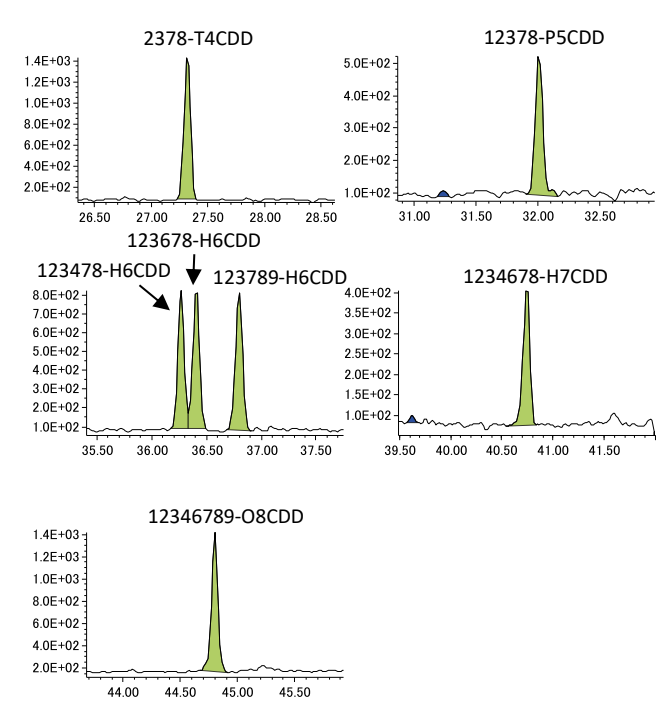
The SRM chromatogram peaks created by averaging the SRM data for the CS1 quantitation ion and reference ion are shown in Figure 2. For the average SRM chromatogram peak, all isomers, including 2378-T4CDD, which is considered to be the most toxic isomer, were observed with good peak shape.
TCDDs
TCDFs
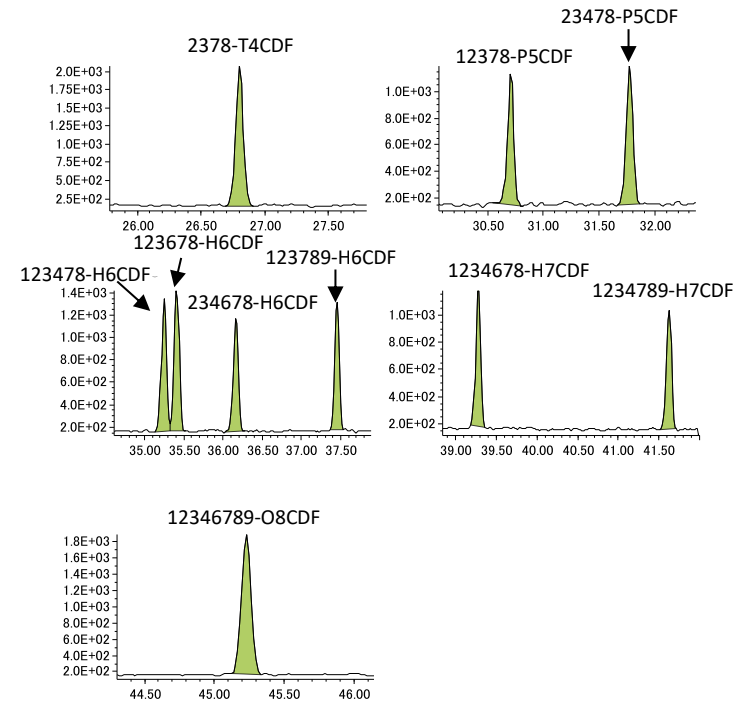
Figure 2 Average SRM chromatogram peaks of CS1
RSD of Av-RRF from CS1-5
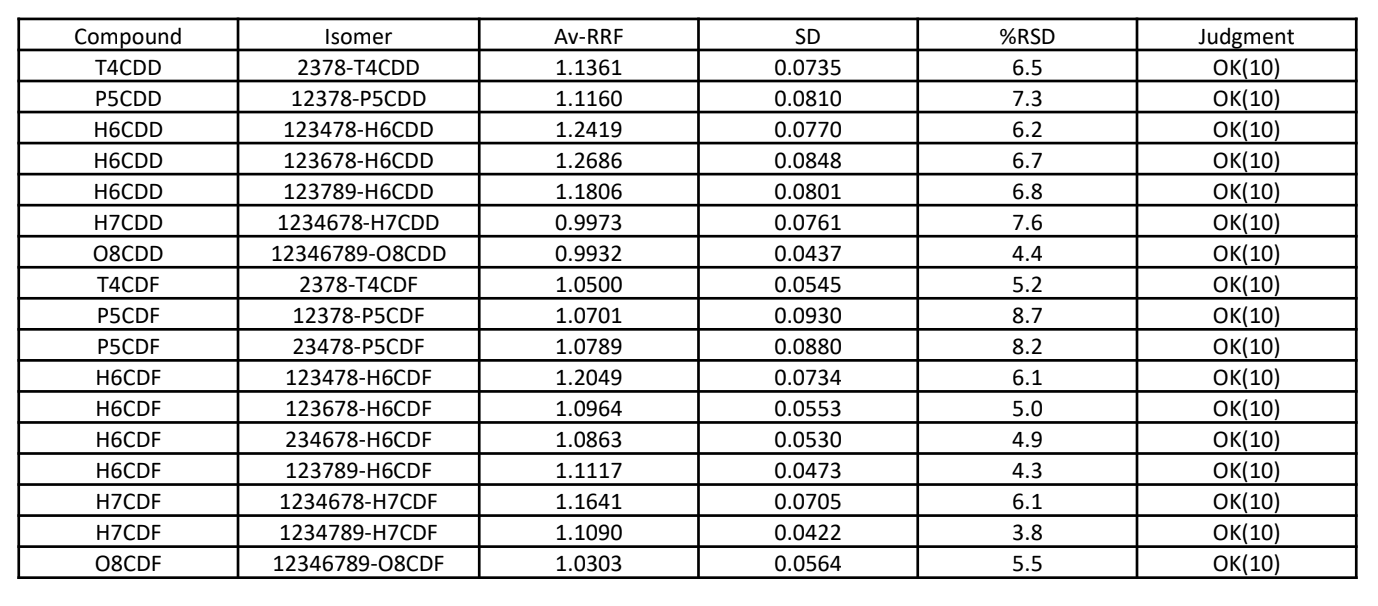
The relative standard deviation (RSD) of the average relative response factor (Av-RRF) using the measurement data of CS1-5 (CS1: 5 times, CS2-5: 3 times each repeat measurement data, 17 points in total) is shown in Table 4. The JIS for GC/HRMS requires that a total of 15 or more data points over the entire concentration range be used to construct a calibration curve, and further specifies that the RSD of the Av-RRF should be less than 10%. The RSD obtained in this measurement ranged from 3.8 to 8.7%, and it was confirmed that all isomers met the reference value (10%) of the JIS for GC/HRMS.
Table 4 RSD of average RRF
IDL
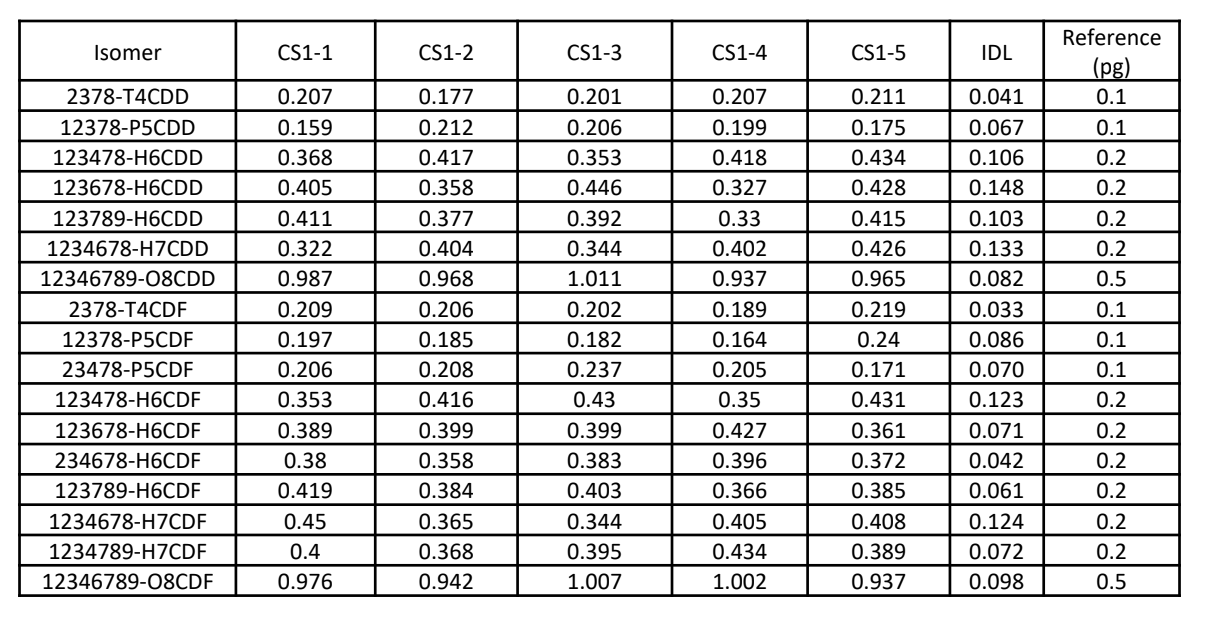
The instrument detection limit (IDL) is shown in Table 5. The JIS for GC/HRMS specifies that the IDL is calculated by tripling the standard deviation of the quantification value obtained from five replicate measurements of the lowest concentration. The IDLs obtained in this measurement ranged from 0.033 to 0.148 pg, and it was confirmed that all isomers met the reference values of the JIS for GC/HRMS.
Table 5 IDL by CS1
Dioxins detection status in fly ash samples
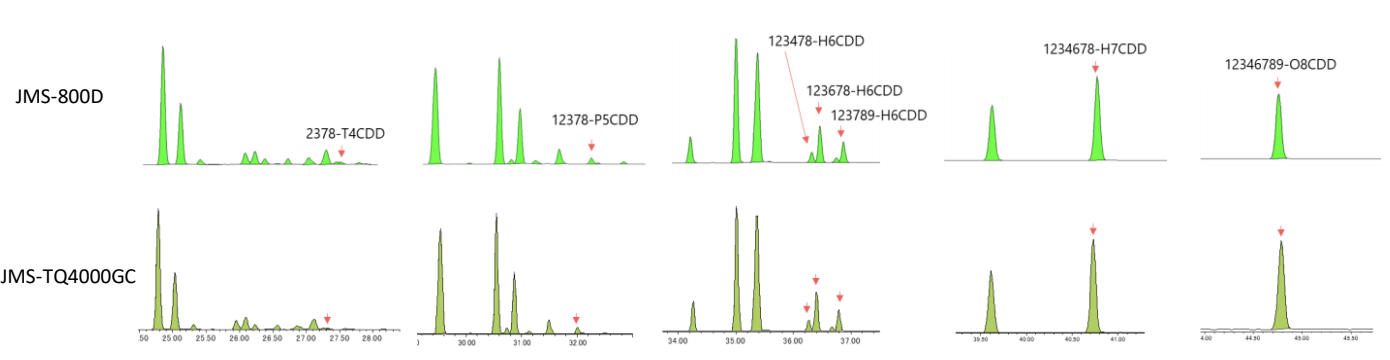
The average SRM chromatogram peaks detected by the JMS-TQ4000GC and the average selected ion monitoring (SIM) chromatogram peaks detected by the JMS-800D are shown in Figure 3. The obtained peak pattern of 4-10 chlorinated isomers of JMS-TQ4000GC was almost the same as the peak pattern of JMS-800D. Next, the quantitative values obtained by JMS-TQ4000GC and JMS-800D are shown in Table 6, and the comparison results are shown in Figure 4. The correlation coefficient R2 was 0.999, confirming that the quantitative values obtained by JMS-TQ4000GC are equivalent to those of JMS-800D.
PCDDs
PCDFs
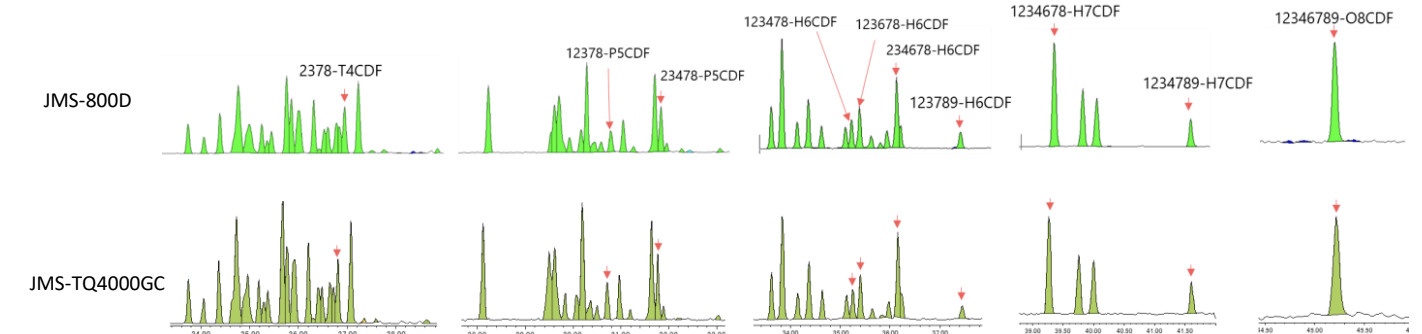
Figure 3 Comparison average SIM chromatogram peaks by JMS-800D with average SRM chromatogram peaks by JMS-TQ4000GC
Table 6 Quantitative values of 2378-substituted each isomers by JMS-TQ4000GC and JMS-800D
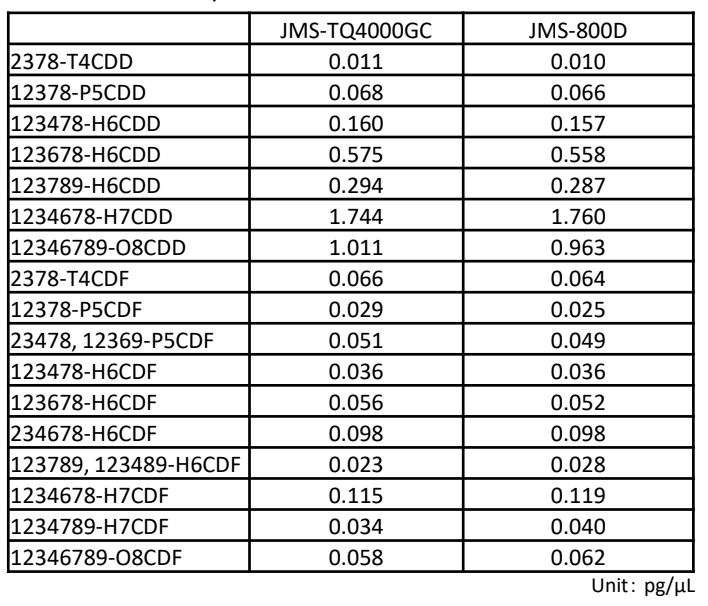
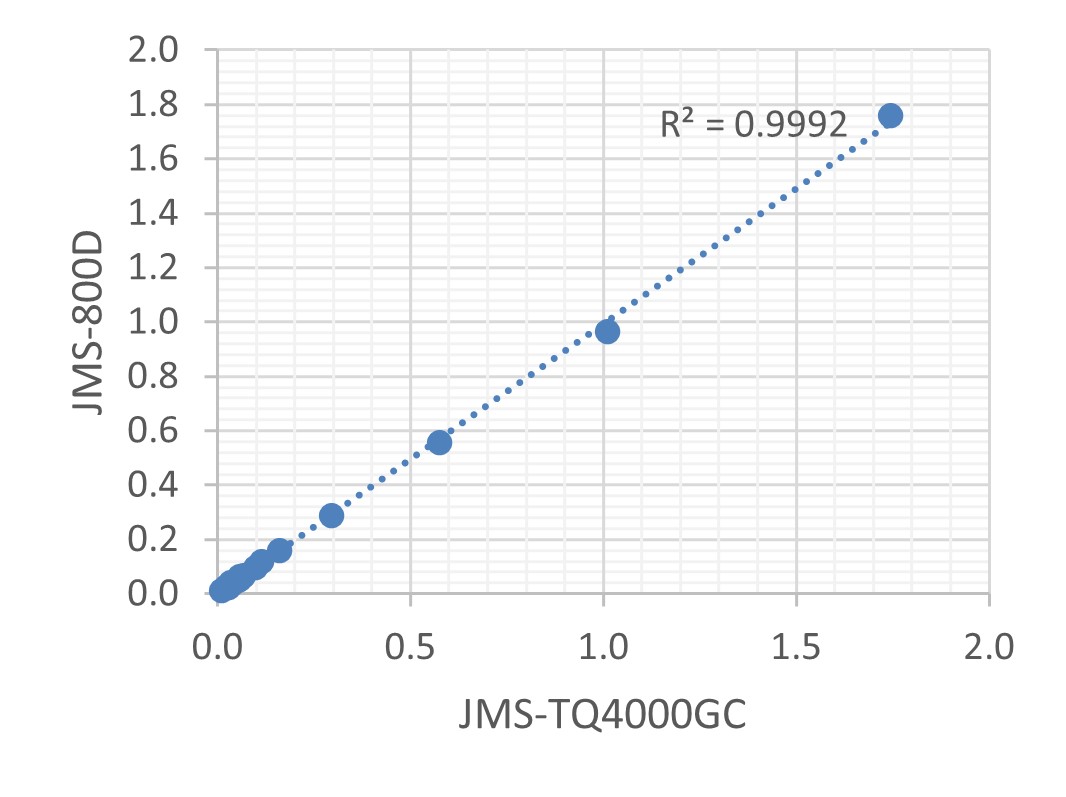
Figure 4 Comparison of quantitative values
Conclusion
In this application note, the dioxins analysis using the GC/MS/MS “JMS-TQ4000GC” was investigated. As a result, all isomers are detected even in CS1, which is the lowest concentration standard sample. The RSD of Av-RRF in CS1-5, and the IDL in CS1 also met the reference value of the JIS for GC/HRMS. In addition, the quantitative values of dioxins in the fly ash samples were almost equivalent to those of the JMS-800D. These results confirm that the JMS-TQ4000GC is effective in the analysis of dioxins.
References
[1] JIS K0311(2020)
[2] JIS K0312(2020)
[3] COMMISSION REGULATION (EU) 2017/644 of 5 April 2017
[4] GB 5009, 205-2024
Solutions by field
Related products


Are you a medical professional or personnel engaged in medical care?
No
Please be reminded that these pages are not intended to provide the general public with information about the products.