


Simultaneous analysis of pesticide residues by GC-MS/MS method using Nitrogen carrier gas
MSTips No. 496
Introduction
In the field of mass spectrometry, helium has primarily been used as the carrier gas for gas chromatography. However, due to the ongoing global supply chain disruptions, reduced production caused by issues at supply plants, and political and economic factors, there has been a long-term shortage of helium, leading to continuous price increases. To continue performing mass spectrometry, it is becoming essential to select alternative carrier gases to helium. Nitrogen or hydrogen are generally considered as alternative carrier gases, but it is desirable to understand the characteristics of each gas type for proper operation. In the case of Nitrogen carrier gas, it is cost-effective, safe, and inert, making it an excellent choice as a carrier gas. However, to maintain separation efficiency, it is necessary to set the average linear velocity to a much lower value, resulting in longer measurement times. Additionally, detection sensitivity generally decreases by about an order of magnitude, making it difficult to detect low-concentration samples that were detectable with helium carrier gas. Switching to an alternative carrier gas requires a review of the previously used measurement conditions. For the simultaneous analysis of pesticide residues, nitrogen was chosen as it is considered safer and easier to use compared to hydrogen. Various measurement conditions were optimized for this purpose. This report introduces an example of analysis using Nitrogen carrier gas for the simultaneous analysis of pesticide residues in food by GC-MS/MS method.
Experimental
1. Sample Conditions
Standard Reagents : Pesticides standard solution 48, 63, 70, 73, 77, 79, Pesticide-Mix 1598 made by KANTO CHEMICAL CO.,INC.
Sample Concentration : Pesticide mixed standard solutions were prepared at 5, 10, 20, 50, and 100ppb
Sample Volume : 2μL (+ 1μL co-injection of analyte protectants : SFA10mix made by Hayashi Pure Chemical Industry Co.)
2. GC Conditions
Gas chromatograph : 7890B (Agilent Technologies, Inc.)
Column : VF-5MS (Agilent Technologies, Inc., length : 30m, inner diameter : 0.25mm, film thickness : 0.25μm)
Oven temperature : 50℃ (1min) – 125℃ (25℃/min, 0min) – 300℃ (10℃/min, 6min) – 320℃ (20℃/min, 6min)
Inlet temperature : 250℃
Inlet mode : Splitless mode (purge time : 1min)
Flow rate : 0.7mL/min (constant flow)
Carrier gas : Nitrogen
3. MS Conditions
Mass spectrometer : JMS-TQ4000GC (JEOL Ltd.)
Measurement mode : SRM
SRM mode : Variable speed (5 or 10ms)
Ion source temperature : 280℃
Interface temperature : 300℃
Ionization current : 30μA
Ionization voltage : 20V
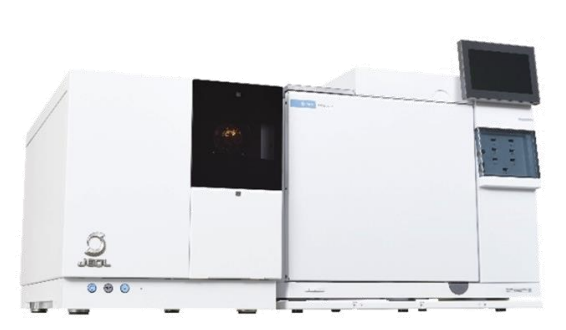
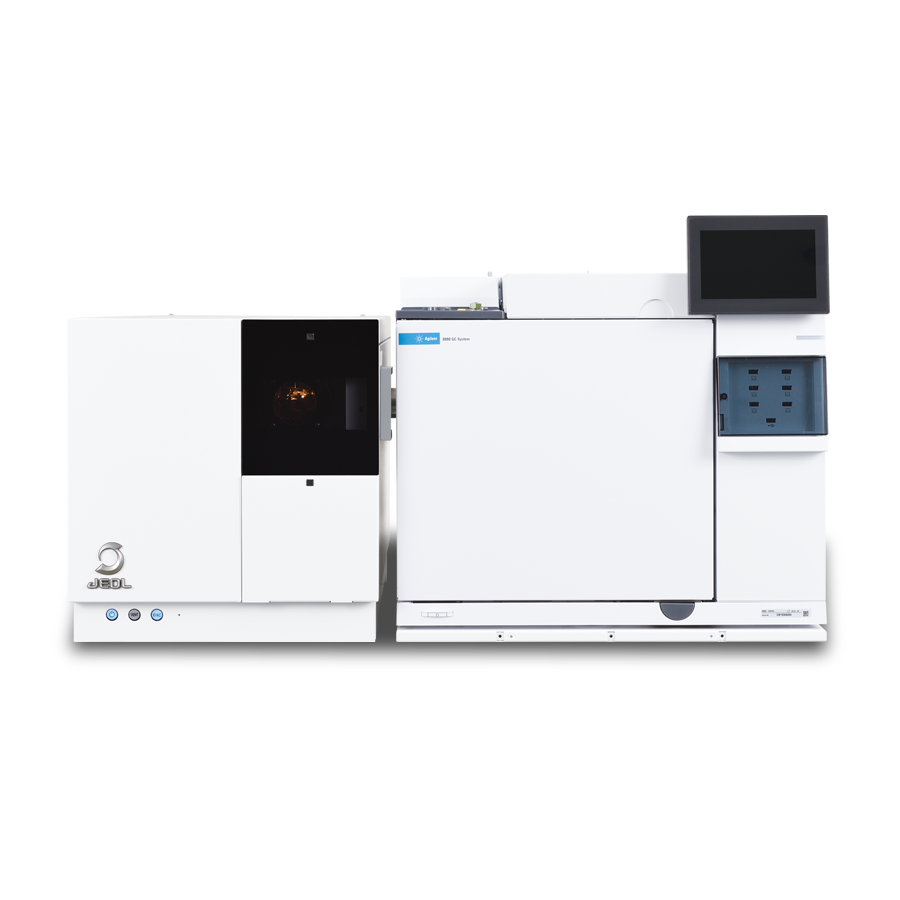
JMS-TQ4000GC
Results
It is known that by lowering the ionization voltage when using a nitrogen carrier, the generation of nitrogen ions can be suppressed, resulting in improved detection sensitivity. The ionization voltage commonly used under general measurement conditions is 70V, but when comparing data set to 20V, it was found that many components showed better sensitivity at 20V. Therefore, in this report, measurements were conducted with the ionization voltage set to 20V.
Regarding the 335 components set as measurement targets, it was determined that 328 components could be sufficiently detected at 5 ppb, with good linearity of the calibration curve. For the five components "Oryzalin, Fensulfothion, Isoxathion oxon, Imazamethabenz methyl ester, and Thiacloprid," detection at 5 ppb was possible, but improvements were determined necessary for some items such as the linearity of the calibration curve, area reproducibility, or chromatogram shape. Additionally, the two components "Chlorfenapyr and Dioxathion" were found to be difficult to detect at 5 ppb in this study. As an example of the 328 components deemed measurable, Fig. 1 to 3 show the EIC and calibration curves at 5 ppb for the three components “Captan, Cyfluthrin, and p,p’-DDD”.
Next, Fig. 4 shows the 5 ppb area reproducibility (n=3) and the correlation coefficient of the calibration curves for all 328 measurable components. Among the 328 components, 310 components showed good reproducibility with a CV of 20% or less. Additionally, 310 components showed a correlation coefficient of r=0.999 or higher for the calibration curve, confirming no issues with linearity.
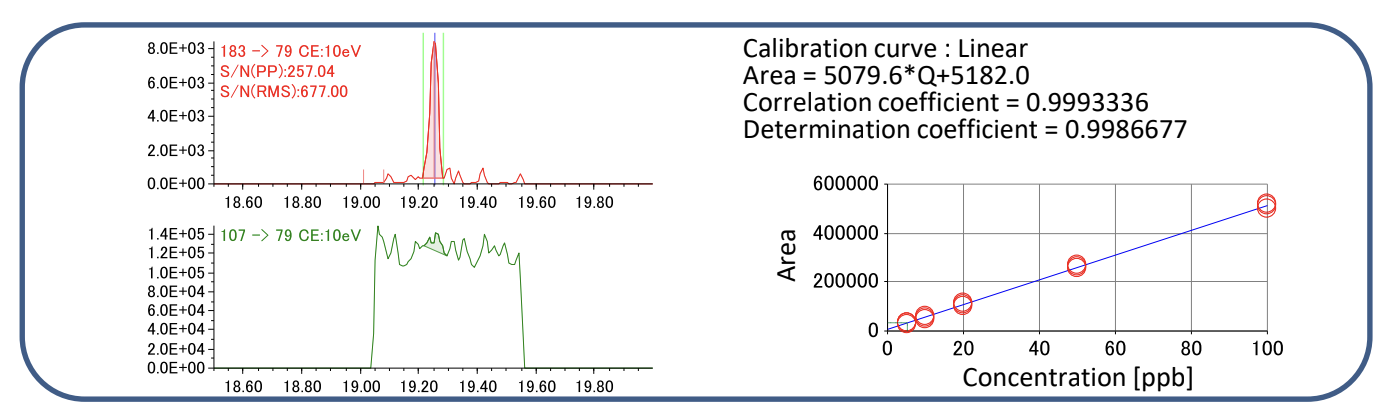
Fig. 1 EICs at 5ppb and calibration curve of Captafol
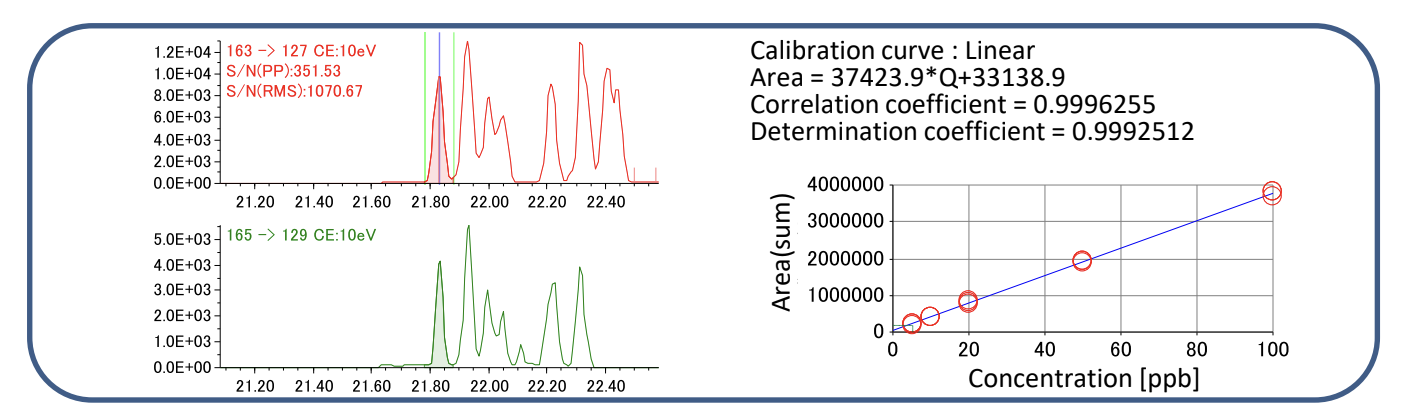
Fig.2 EICs at 5ppb and calibration curve of Cyfluthrin
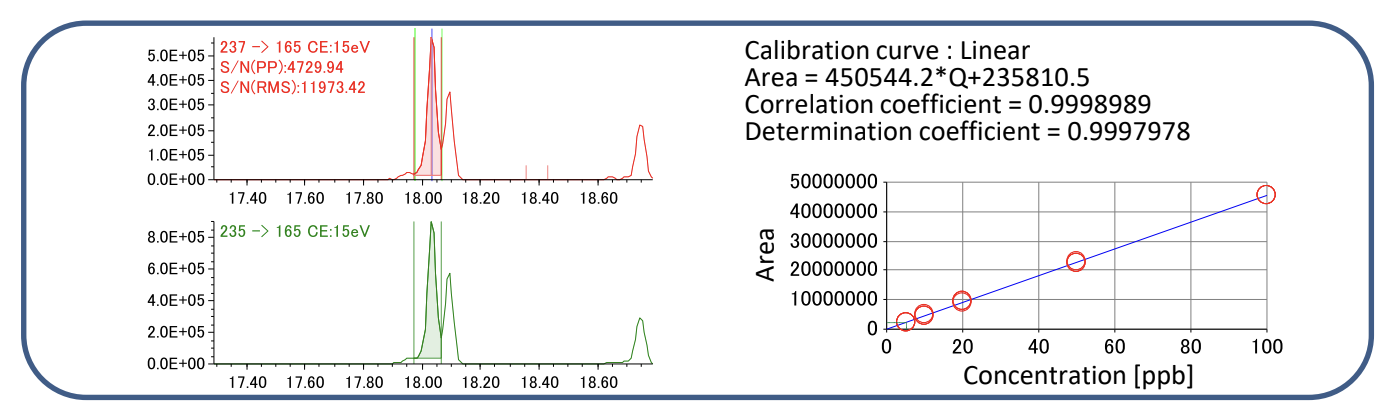
Fig.3 EICs at 5ppb and calibration curve of p,p’-DDD
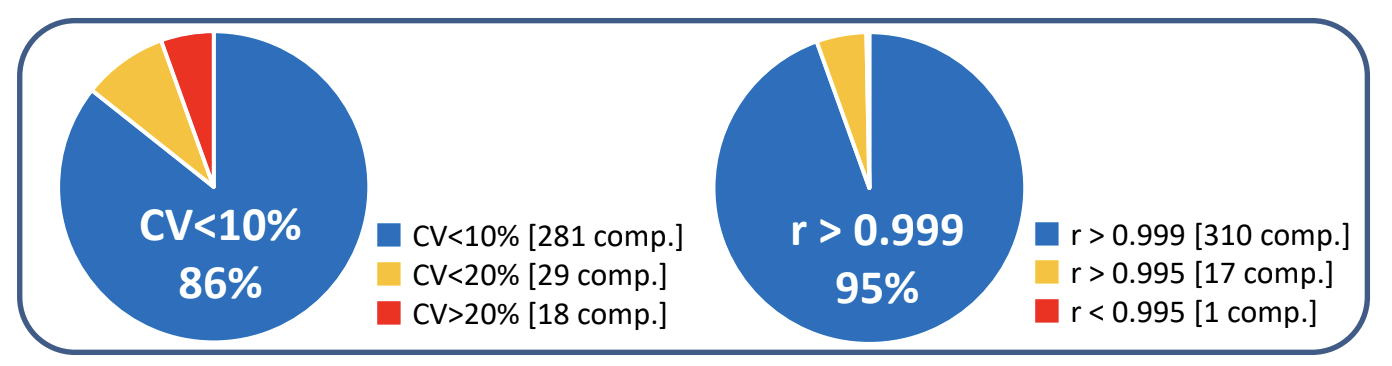
Fig.4 Coefficient of variation of area and correlation coefficient of the calibration curve
Conclusion
As an application example of simultaneous analysis of residual pesticides in food using GC-MS/MS with nitrogen carrier gas, measurement conditions were examined, and a calibration curve was created in the range of 5 ppb to 100 ppb by measuring a mixed pesticide standard solution. Out of the 335 pesticide components set as measurement targets, 328 components could be detected without any issues down to 5 ppb. This resulted in a favorable outcome, indicating that 98% of the pesticide compounds examined could be quantified using nitrogen carrier gas. This result was almost equivalent to the findings reported in MSTips No. 394, which used hydrogen carrier gas. When comparing the detection sensitivity of various alternative carrier gases, it is generally said that hydrogen is more sensitive than nitrogen. However, by thoroughly optimizing the measurement conditions to match the carrier gas used, it was confirmed that sufficient sensitivity for analysis could be achieved even when using nitrogen carrier gas.
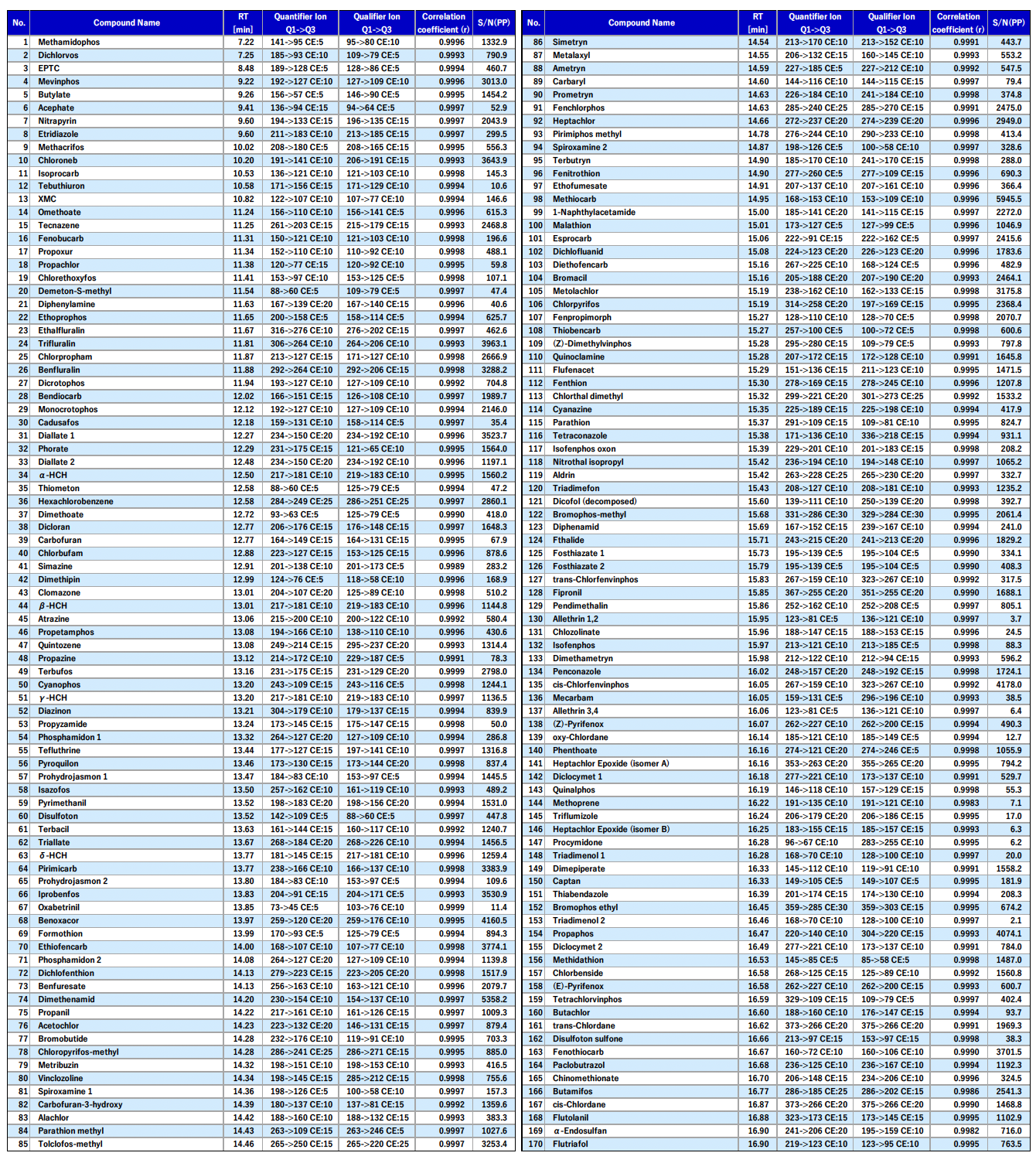
Target pesticides (No.1 to 170)
Calibration curve : Linear
S/N(PP) : STD 5ppb
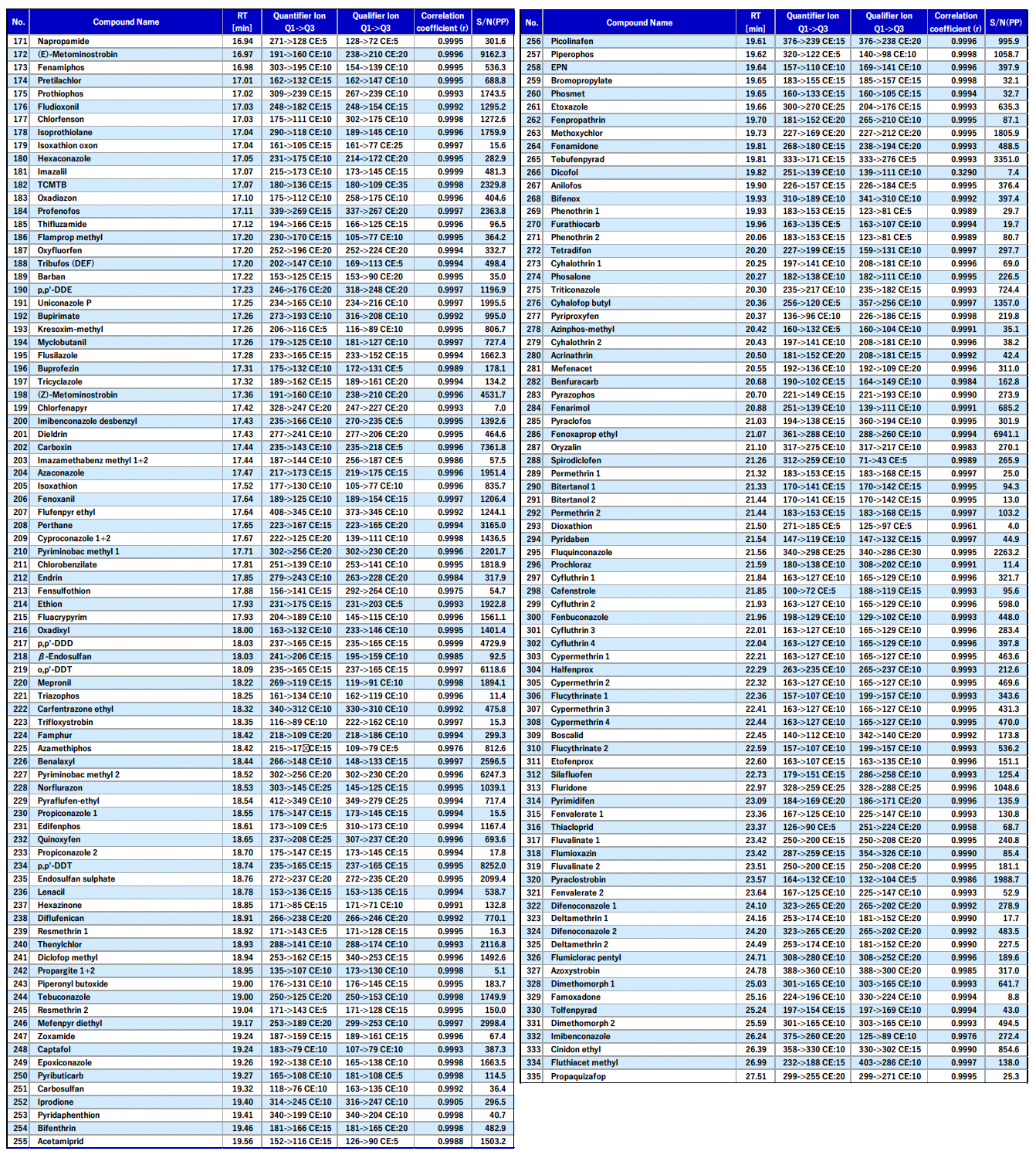
Target pesticides (No.171 to 335)
Calibration curve : Linear
S/N(PP) : STD 5ppb
Solutions by field
Related products
Related information


Are you a medical professional or personnel engaged in medical care?
No
Please be reminded that these pages are not intended to provide the general public with information about the products.