


Hardware optimization for pure shift NMR experiments
NM210003E
Pure shift NMR experiments simplify analyses of proton spectra by the application of homonuclear broadband decoupling. The homonuclear broadband decoupling removes splitting due to the 1H-1H scalar couplings from all proton signals at once, and thus leaves pure chemical shift spectra. As all signals become singlets, this significantly reduces the presence of signal overlaps.
Although, pure shift NMR experiments may be extremely useful in analyses of complex samples, acquiring high-quality pure shift spectra is not trivial, because these experiments typically rely on rather complex pulse sequences and require careful adjustment of NMR hardware. Here we discuss several precautions which are crucial in obtaining high-quality pure shift spectra. All spectra shown in this applications note were collected on a sample containing 50 mg of sucrose in D2O.
1. Resolution
Pure shift experiments should be run with sample-spinning off. Therefore, it is really important to carefully adjust radial, i.e. non-spinning, shims in advance. Fig. 1 shows single pulse and pure shift proton spectra with poorly (a, c) and optimally adjusted shims (b, d). The signals in spectrum d) are narrower, and hence they are more intense and well-separated in comparison to the broadened signals in c). Therefore, a proton spectrum should be collected without sample spinning and inspected before running pure shift experiments. If resolution is not optimum, adjust axial and radial shims either manually or by using 3D gradient shimming.
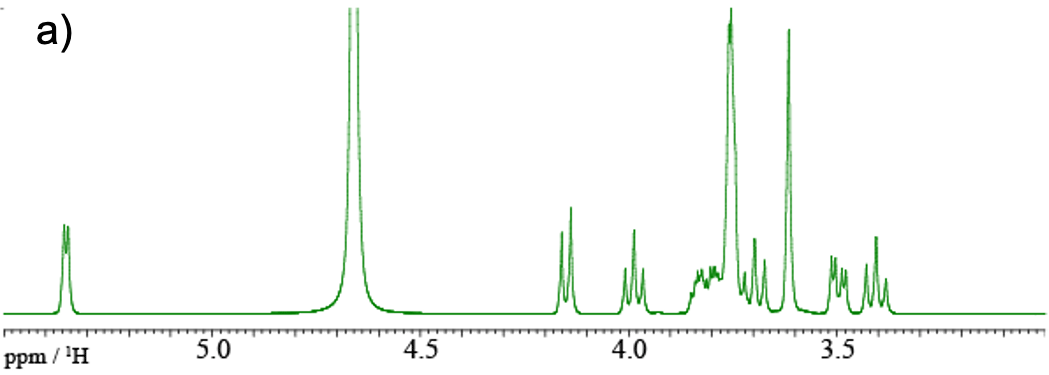

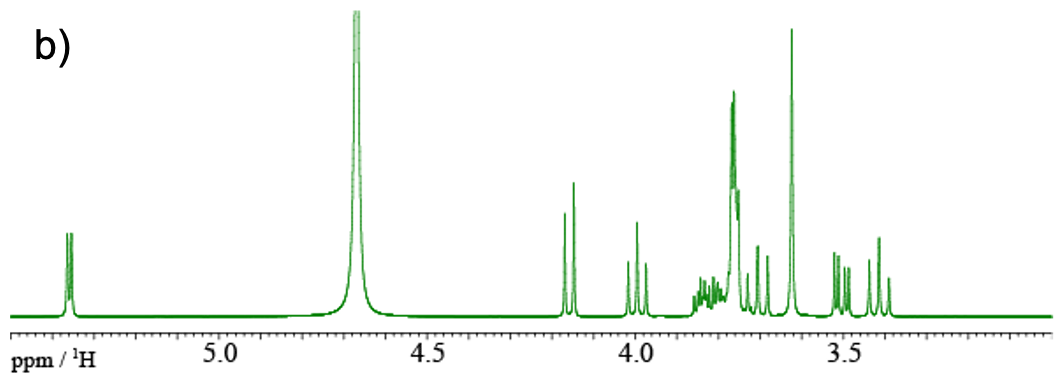
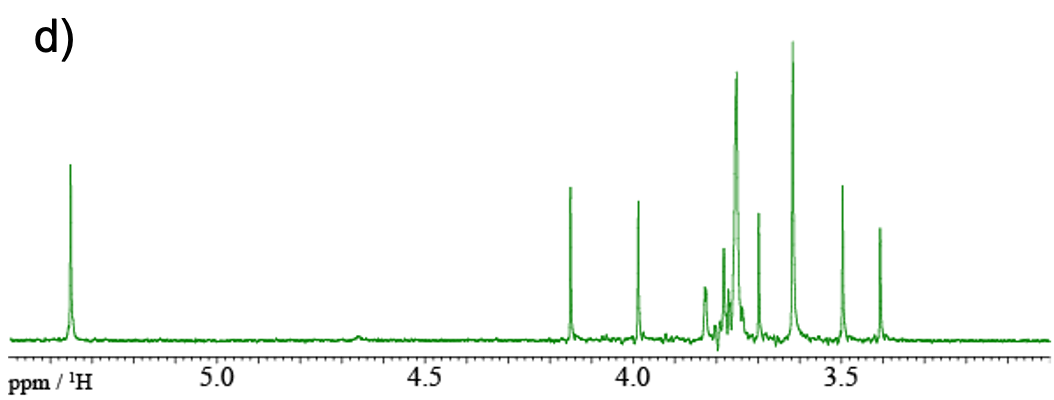
Fig. 1: 1H spectra of sucrose obtained before careful shim adjustment a), and after optimum shimming b).
Pure shift spectra of sucrose obtained before careful shim adjustment c), and after optimum shimming d).
2. LOCK phase
When phase of NMR lock is not set correctly, pure shift spectra may be affected as shown in Fig. 2 a). The signals are distorted and this distortion cannot be corrected by phase correction. On the other hand, the distortion was not observed after lock phase had been re-optimized as shown in Fig 2 b).
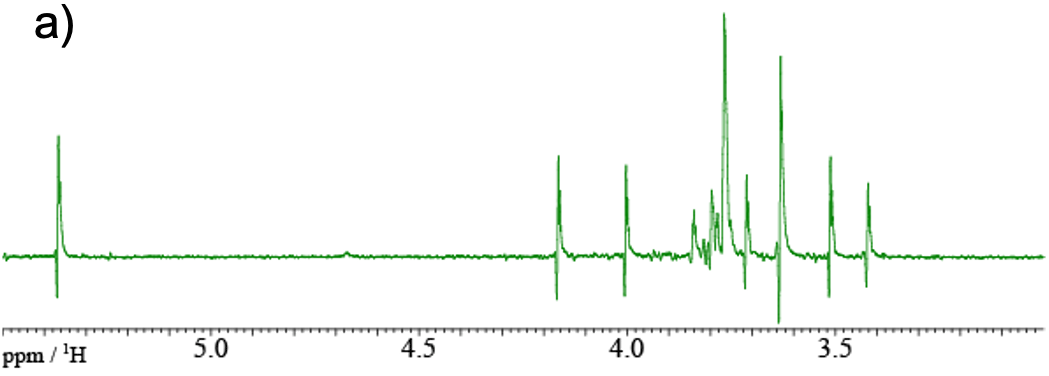

Fig. 2: Pure shift spectra collected with lock phase intentionally shifted by 45 degrees a), and with optimum lock phase b).
To adjust lock phase, either adjust lock phase manually while lock is on (1), or use the automatic lock phase optimization (2) as shown in Fig. 3. It is recommended to check and adjust lock phase after adjusting resolution of proton spectrum and tuning probe.
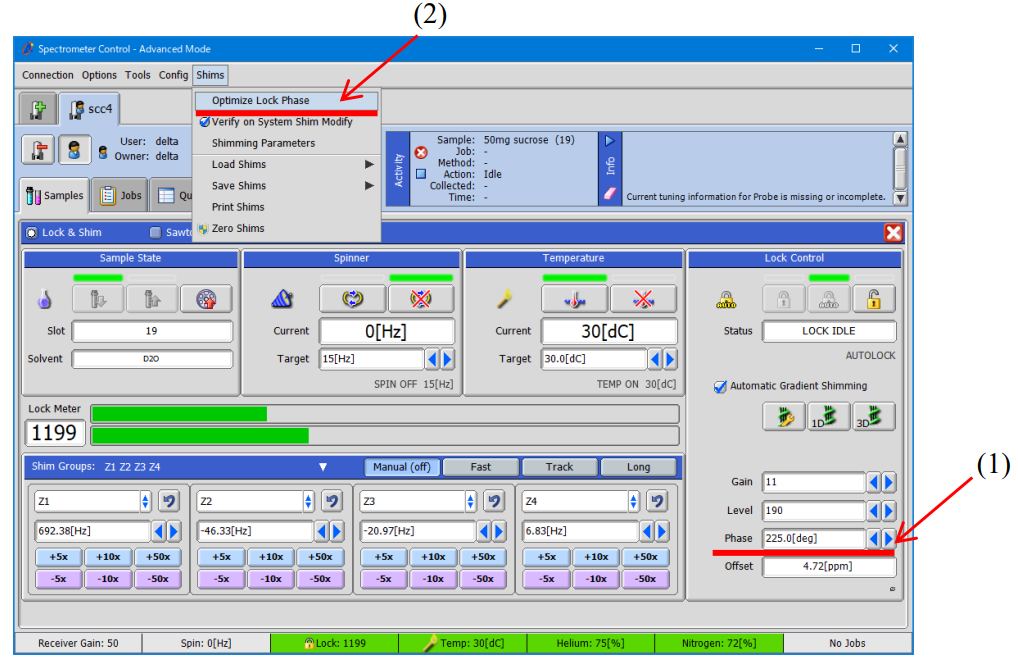
Fig. 3: Interactive panel of NMR software Delta
3. Offset of field gradient (FG) unit
If OFFSET of FG power supply unit is not adjusted correctly, intensity of FG pulse deviates from set value. As a result, line width increases and sensitivity decreases in pure shift spectra. This is demonstrated in Fig. 4.
Offset can be adjusted by turning the knob or screw on the FG amplifier as shown in Fig. 5. This work does not need to be done on every and each sample. If offset is not correct, not only pure shift experiments but all experiments using field gradients are affected. For this reason, it is recommended to check offset of FG unit once a month as a part of regular maintenance.
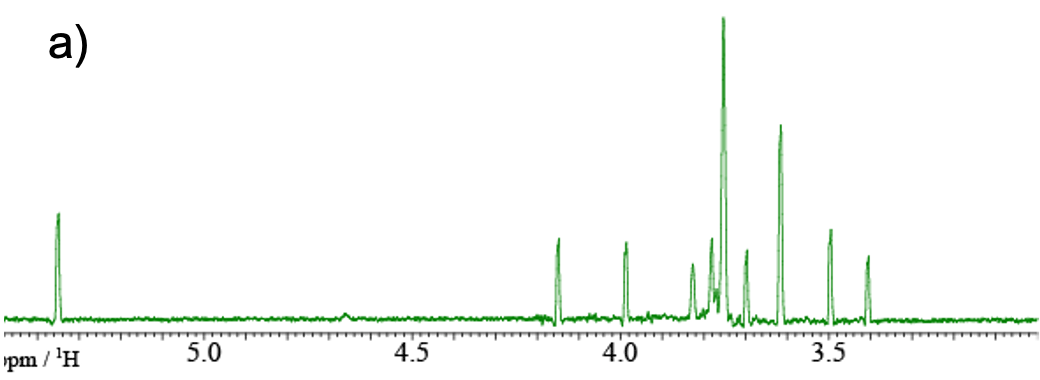

Fig. 4: Pure shift spectrum collected with FG offset not tuned a), and with FG offset retuned b).
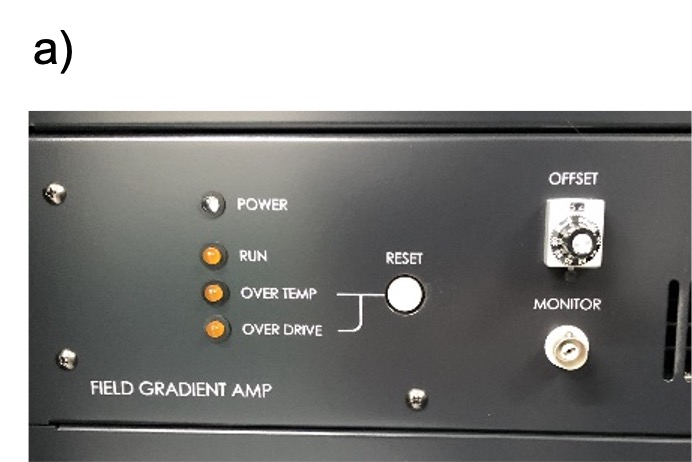
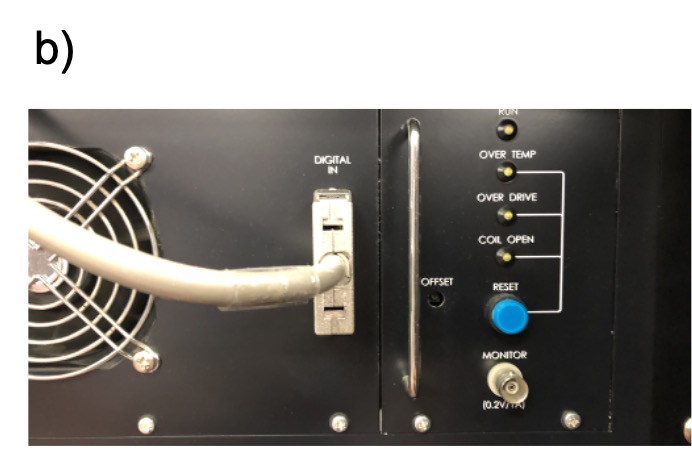
Fig. 5: The offset adjustment knob on a 10 A FG amplifier a), and the offset adjustment screw on a 30 A FG amplifier.
Solutions by field
Related products


Are you a medical professional or personnel engaged in medical care?
No
Please be reminded that these pages are not intended to provide the general public with information about the products.