


Simultaneous Analysis of TBBPA, Phthalate Esters, and Brominated Flame Retardants by PY/TD-GC-MS
MSTips No. 500
1. Introduction

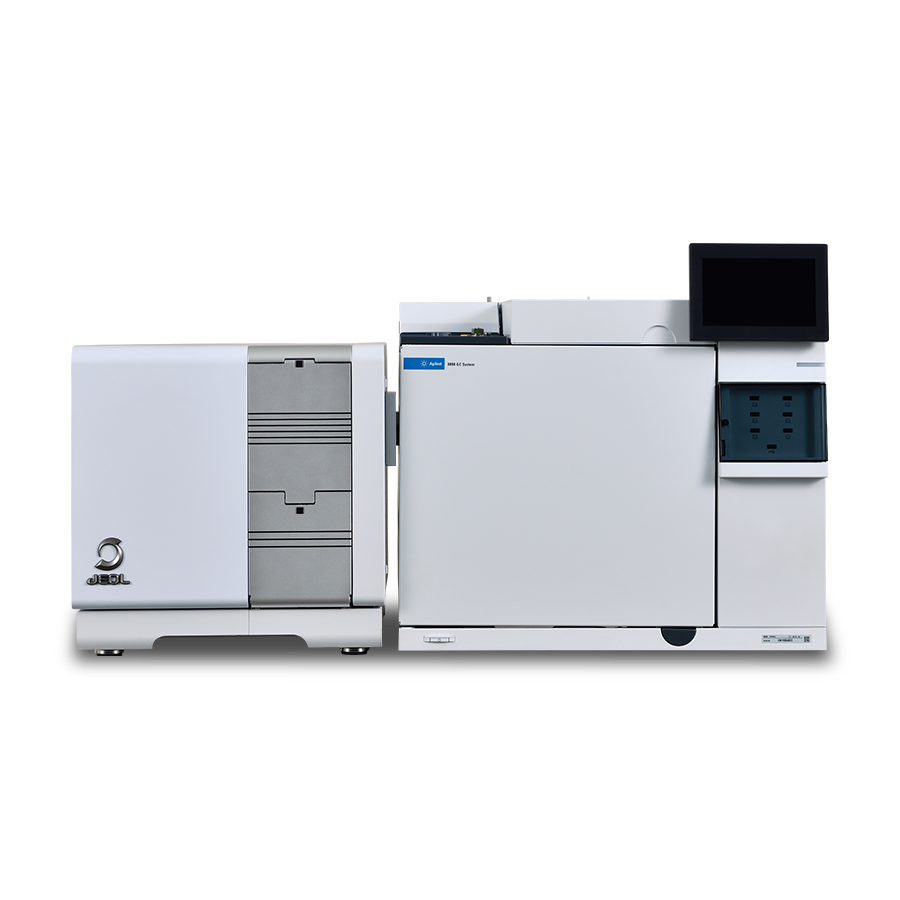
Gas chromatograph mass spectrometer JMS-Q1600GC UltraQuad™ SQ-Zeta
Tetrabromobisphenol A (TBBPA) is used as a flame retardant in a wide range of plastic products, such as ABS
resin, phenolic resins, and adhesives. However, due to concerns about human bioaccumulation, the regulation
of its use is being considered in various countries under the law such as the REACH regulation (EU), TSCA
(USA), and the Chemical Substances Control Law (Japan). As a screening analysis for judgment of
containing/not containing on the same kind regulation target such as Phthalate esters and PBDE, there is an
analysis method using Thermal Desorption(TD)-GC-MS in the IEC62321-8. This method allows direct analysis
without sample pretreatment as shown in MSTips No.298.
In this study, we tried to simultaneously analyze TBBPA, Phthalate esters and DecaBDE by TD-GC-MS method
using the JMS-Q1600GC UltraQuad™ SQ-Zeta.
2. Experiment
TBBPA standard reagent, NMIJ CRM 8152-a and ERMⓇ-EC591 were used as samples. NMIJ CRM 8152-a is PVC resin that contains 9 types of phthalate esters, each at about 1000 ppm. ERMⓇ-EC591 is PP resin that contains 10 types of brominated flame retardants, each at about 1000 ppm. In an eco-cup, about 0.5 mg of each resin was placed and 2 μL of TBBPA at a concentration of 0.05 µg/µL in THF solution was added (100 ppm for about 1.0 mg of resin). The measurement condition is shown in Table 1. In this report, the target compounds for analysis were selected as four phthalate esters (DIBP, DBP, BBP, and DEHP) and one brominated flame retardant (DecaBDE).
Table 1 Measurement Condition
| Thermal Desorption (EGA/PY-3030D, FRONTIER LAB) | MS | ||
|---|---|---|---|
| Furnace temp. | 200 °C-20 °C/min-300 °C-5 °C/min-340 °C (1 min) | Interface temp. | 300 °C |
| Interface temp. | 300 °C | lon source temp. | 250 °C |
| GC | lonization | El (70 eV, 50 μA) | |
| Column | UA-PBDE(Frontier Laboratories Ltd.), 15 mx0.25 mm id, 0.05 μm film thickness |
Acquisition mode | SIM/Scan |
| Column flow | 1.0 mL/min, He | SIM monitoring ion | DIBP, DBP:223, 205, 149 BBP 206, 91, 149 DEHP:279, 167, 149 TBBPA:528.8, 543.8, 526.7 DecaBDE:799.3, 797.3, 959.1 |
| Oven temp. | 300 °C | ||
| Inlet temp. | 300 °C | ||
| Injection mode | split (1/50) | Scan range | m/z 50-1000 |
3. Results
3.1 The verification of the thermal desorption temperature of TBBPA using the EGA-MS method.
Using the EGA-MS method, we verified whether the extraction of TBBPA is possible at the thermal desorption temperature condition of 200 ℃-20 ℃/min-300 ℃-5 ℃/min-340 ℃(1 min), in accordance with IEC 62321-8. The EIC(m/z 529) of the EGA-MS measurement (80 ℃-20 ℃/min-600 ℃) is shown in Figure 1. The peak area within the 200-340 ℃ range accounted for more than 90% of the total peak area (grey), which indicates that TBBPA can be effectively extracted under these conditions.
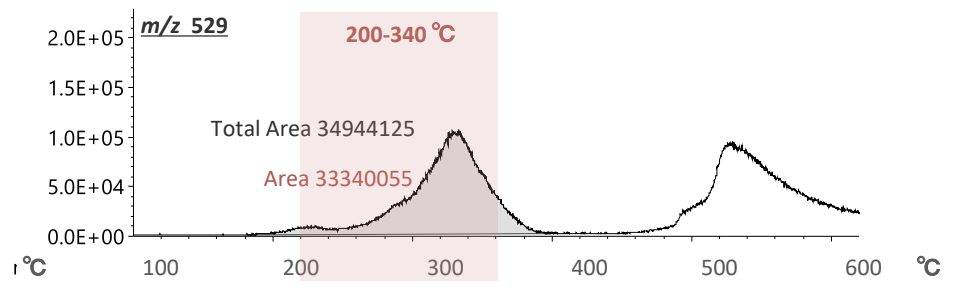
Figure 1. EIC(m/z 529) of EGA-MS(scan) measurement
※m/z 529:Base peak of TBBPA mass spectrum
3.2 SIM chromatogram
The SIM chromatograms of the target compounds obtained from SIM/Scan measurement are shown in Figure 2. It can be confirmed that all chromatograms show good peak separation.
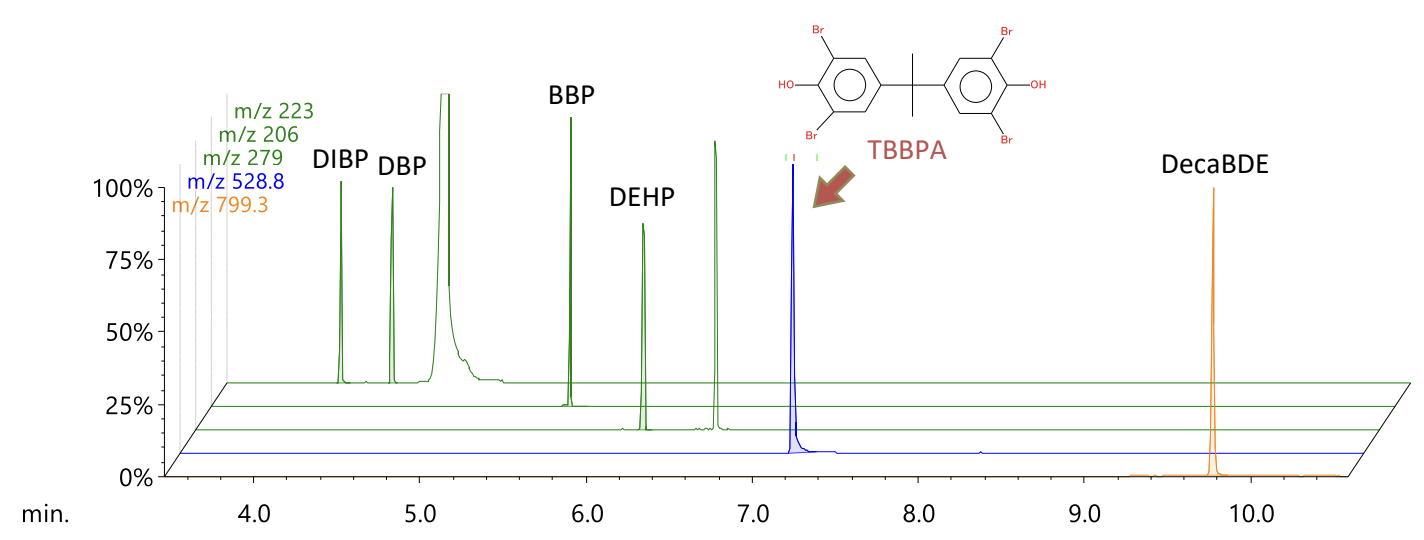
Figure 2. SIM chromatograms of each component
3.3 Sensitivity and Repeatability
Figure 3 shows each SIM chromatogram of TBBPA when SIM/Scan measurements were performed with n=3 trials. Table 2 shows the coefficient of variation (C.V.) in the weight area ratio* of the target compounds. The TBBPA peak was detected with sufficient intensity, and the C.V. was less than 10% for all target compounds.
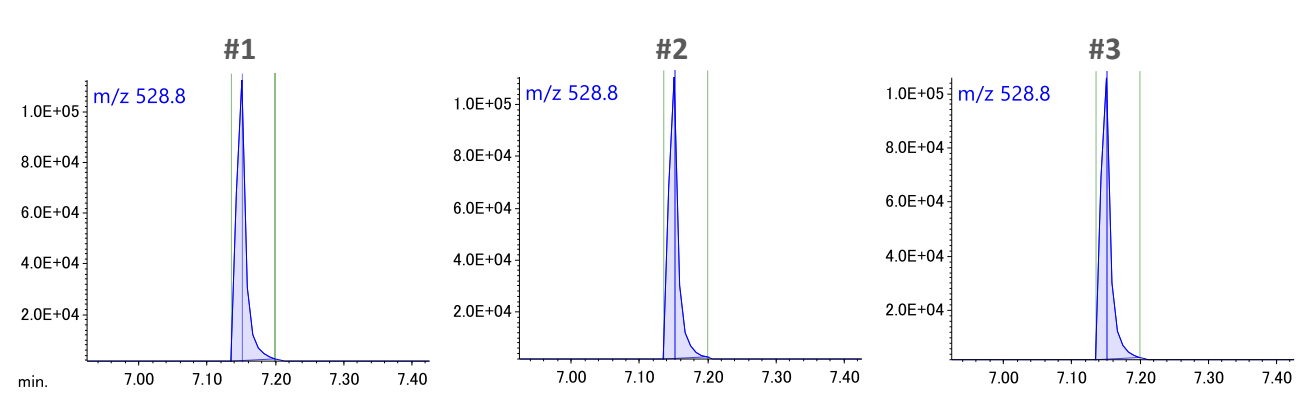
Figure 3. SIM chromatograms of TBBPA (n=3)
Table 2. Weight area ratio and C.V. of each component
| Compound name | Weight area ratio | C.V. | ||
|---|---|---|---|---|
| #1 | #2 | #3 | ||
| DIBP | 623811 | 617668 | 617858 | 0.5 |
| JEM-1400 | 543706 | 531217 | 534302 | 1.0 |
| BBP | 1276263 | 1293680 | 1262182 | 1.0 |
| DEHP | 636690 | 620154 | 612234 | 1.6 |
| TBBPA | 228580 | 226292 | 333957 | 1.0 |
| DecaBDE | 126182 | 141878 | 118888 | 7.4 |
*The ratio of peak area value to resin weight value, TBBPA is not converted due to constant amount addition.
Conclusion
We tried to simultaneously analyze the resin additive TBBPA, which has recently become a concern due to its harmfulness to the human body, together with phthalate esters and brominated flame retardants by TD-GC-MS method using a JMS-Q1600GC UltraQuad™ SQ-Zeta. The results showed good sensitivity and repeatability, which indicates that this method is suitable for screening analysis.
Solutions by field
Related products
Related information


Are you a medical professional or personnel engaged in medical care?
No
Please be reminded that these pages are not intended to provide the general public with information about the products.