


End group analysis of poly(methyl methacrylate) using MALDI-TOFMS and GC-TOFMS
MSTips No. 404
Mass spectrometry can be used to analyze synthetic polymers, providing a variety of information, such as the main chain structure, end group structure, and molecular weight distribution (average molecular weight, polydispersity). Analysis of end group structure is particularly important for the following reasons.
The physical properties of polymer materials can change depending on the end groups, even though they are relatively small part of the whole polymer molecules.
End group structure might change (or degrade) due to environmental exposures.
End group structure can provide insight into the polymerization mechanism.
MALDI is a soft ionization method that allows the observation of polymer molecules as singly charged ions. Using high-resolution MALDI-TOFMS, it is possible to elucidate the elemental compositions of end groups from the accurate masses. On the other hand, pyrolysis GC-TOFMS analyzes the pyrolysis products produced by instantaneous heating of a polymer. Mainly monomers and dimers are observed, but if pyrolysis products containing end groups are observed, structural information on the end groups can be obtained. In this report, we performed structural analysis of the end groups of poly(methyl methacrylate) by using MALDI-TOFMS and pyrolysis GC-TOFMS in a complementary manner.
Experiments
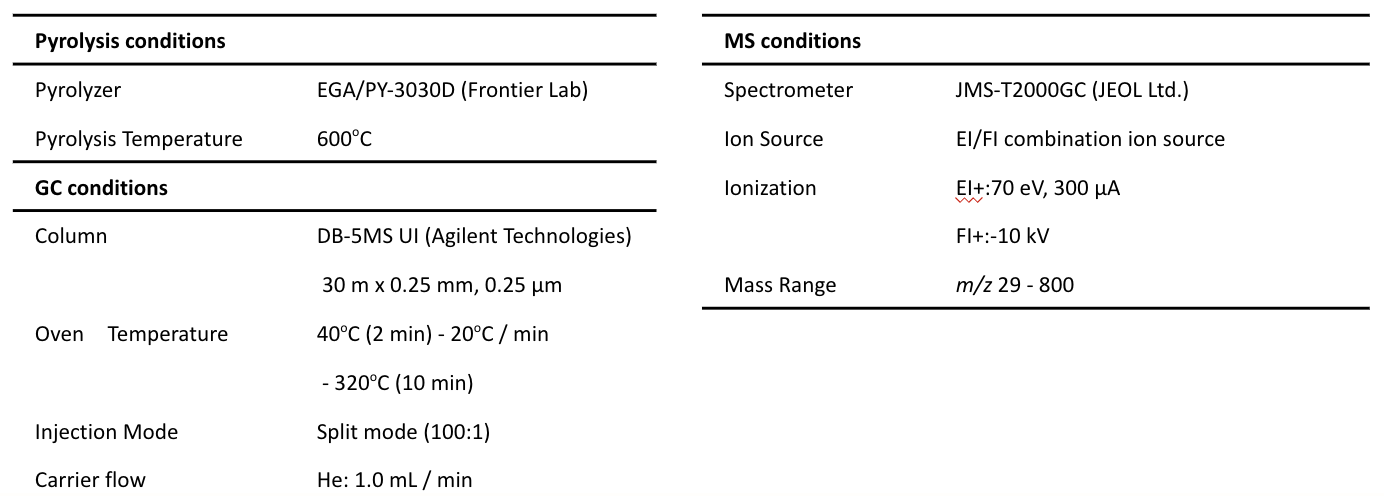
Two types of commercially available PMMA (Mw 7 kDa and 10 kDa) were used as samples. Each was dissolved in THF at the concentration of 10 mg/mL. For MALDI-TOFMS measurements, DCTB was used as the matrix and sodium trifluoroacetate was used as the cationization agent. Mass spectra were acquired using JMS-S3000 (JEOL Ltd.) in Spiral positive ion mode. For the pyrolysis GC-TOFMS measurements, a gas chromatograph time-of-flight mass spectrometer JMS-T2000GC (JEOL Ltd.) equipped with a pyrolyzer EGA/PY-3030D (Frontier Labs) was used. 10 uL of the sample solution was placed in an eco cup and allowed to dry. The obtained data was subjected to differential analysis using msFineAnalysis AI (JEOL Ltd.).
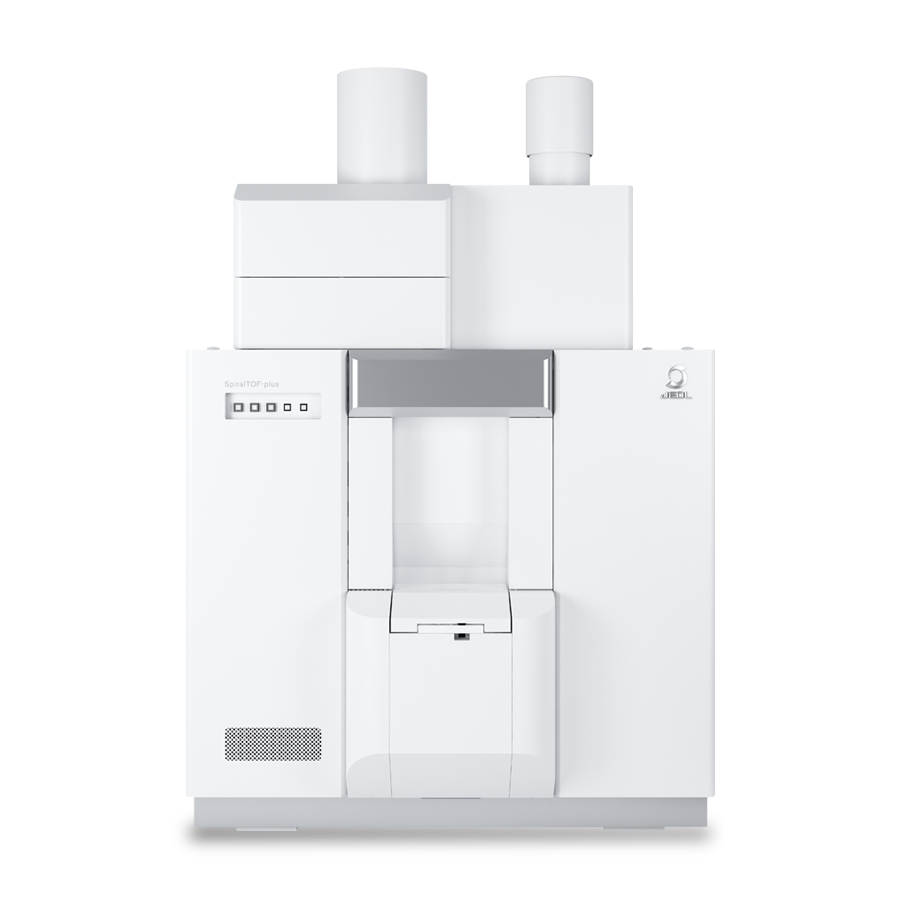
JMS-S3000
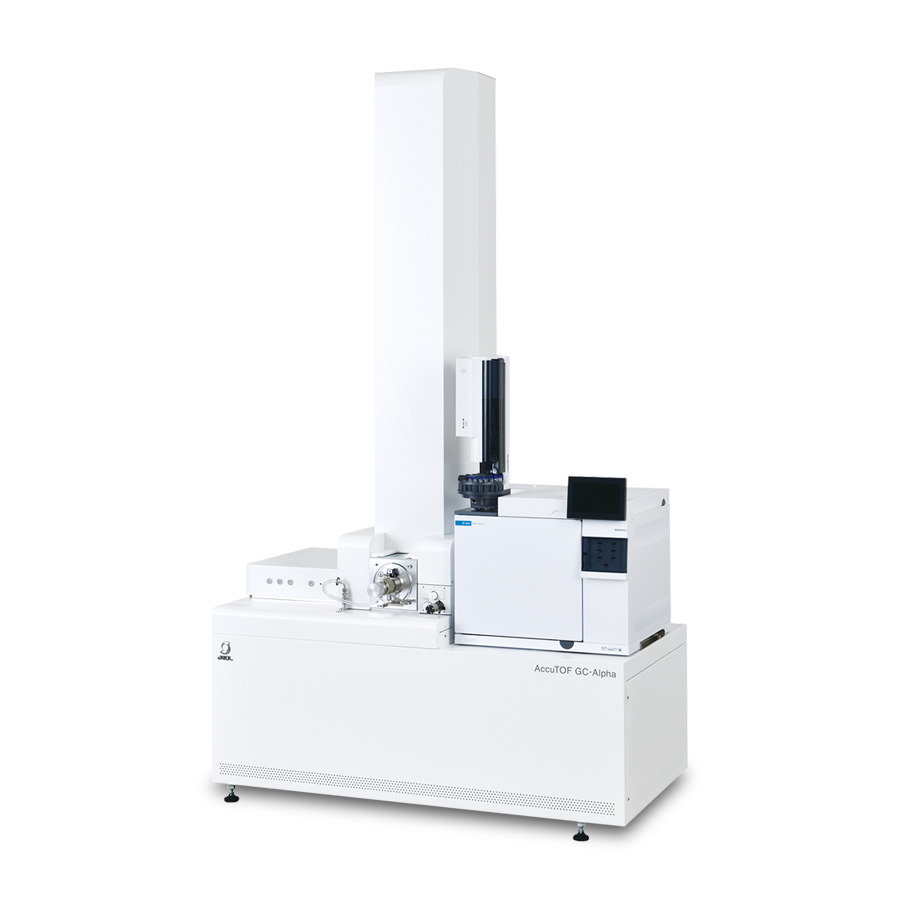
JMS-T2000GC
Table 1 Py-GC-TOFMS measurement and analysis conditions
MALDI-TOFMS measurement results
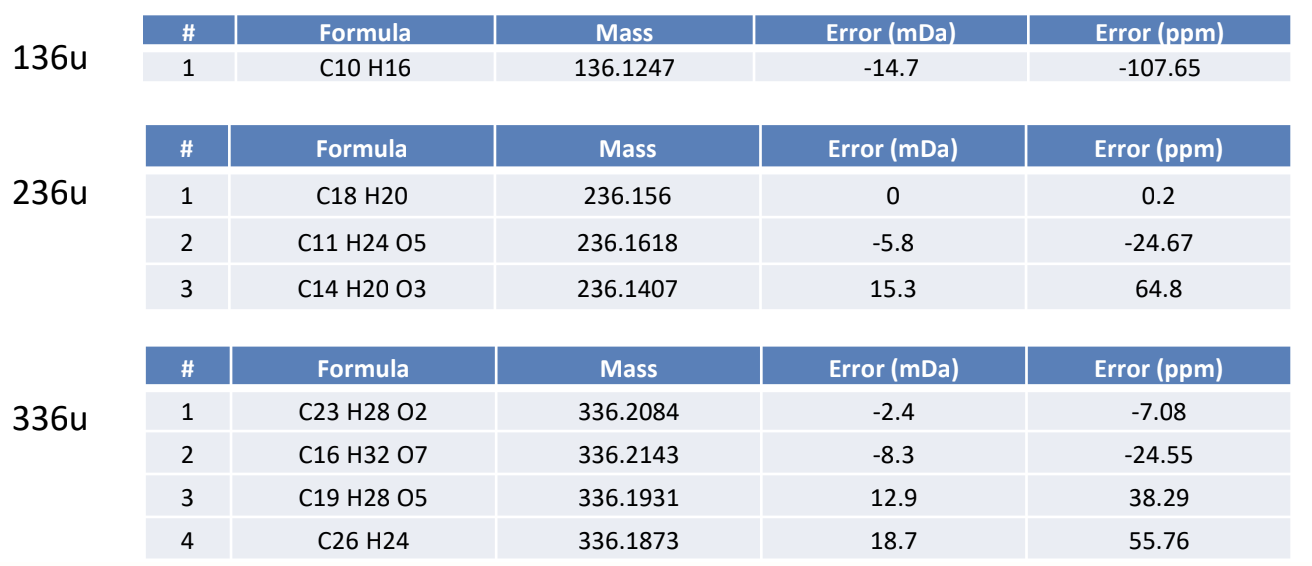
Figure 1 shows the mass spectrum of a mixture of PMMA 7 kDa and 10 kDa. In the mass spectrum, two distributions were observed in the molecular weight range of 2,000 to 13,000. Zooming in on the m/z range of 7350 to 7850 reveals that both distributions (Mw 7 kDa ▼ , Mw 10 kDa ▼) have peaks with the C5H8O2 interval, which is the PMMA monomer, but there is a mass difference between two distributions due to the different end groups. Since the degree of polymerization of each peak cannot be determined from the mass spectrum, the mass difference due to the difference in the end groups of the two components has an uncertainty of the number of repeating units (C5H8O2). Therefore, possible candidates for the total mass of both end groups include 136.110, 236.156, and 336.206u. The elemental compositions elucidated from these mass differences are shown in Table 2. Since the end groups of PMMA 7 kDa are known to be H/H based on the elemental composition elucidation for the low molecular weight region, the elemental composition of the combined end groups of PMMA 10 kDa is elucidated to be those in Table 2 plus +2H.
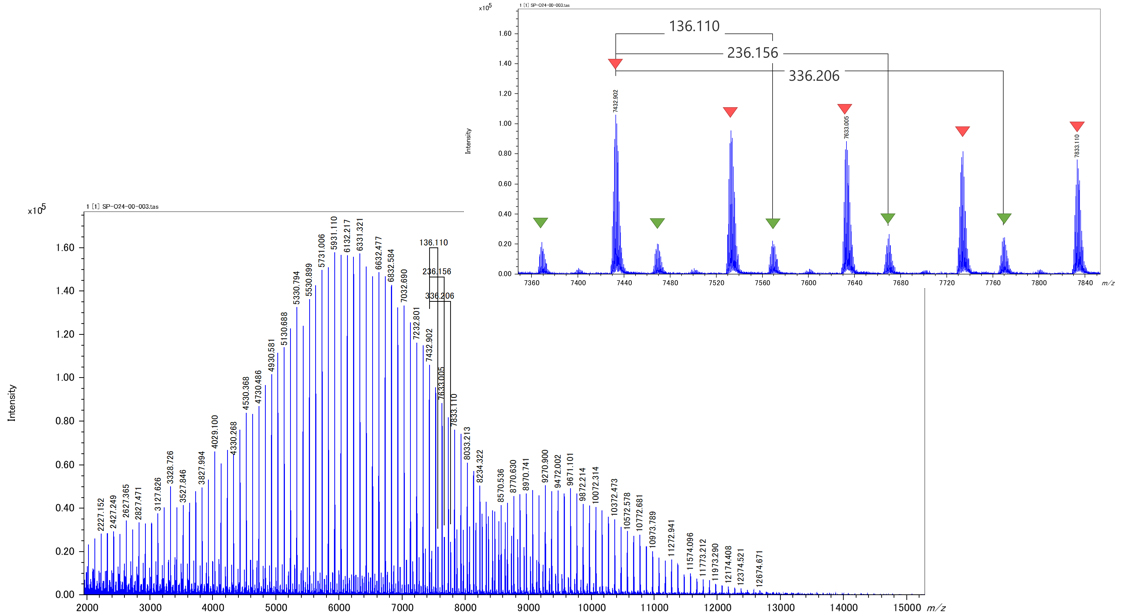
Figure 1. Mass spectrum of sample mixture of PMMA 7 kDa and 10 kDa
Table 2. Elemental composition analysis of mass difference of PMMA 7 kDa and 10 kDa
Pyrolysis GC-TOFMS measurement results
Next, the results of differential analysis between PMMA 7 kDa and 10 kDa are shown. Figure 2 (a) shows the TICC of EI, in which monomers are observed as the main component. Next, Figure 2(b) shows an enlarged view of 10-12.5 min. The red peaks are characteristic of PMMA 10 kDa, and three components, ID: 050, 056, and 057, were observed. The results of the integrated analysis of these three components are shown in Table 3, and their structural formulas are shown in Figure 3. Assuming that the end group structure of PMMA 10 kDa is C18H21/H, the structure of ID:056 (and ID:057) and the result of 236u difference #1 in Table 2 (MALDI-TOFMS results) show good agreement. Since ID:050 is a partial structure of ID:056, there is no contradiction here either. Therefore, PMMA 10 kDa is considered to be produced by anionic polymerization using 1,1-diphenylhexyllithium as an initiator.
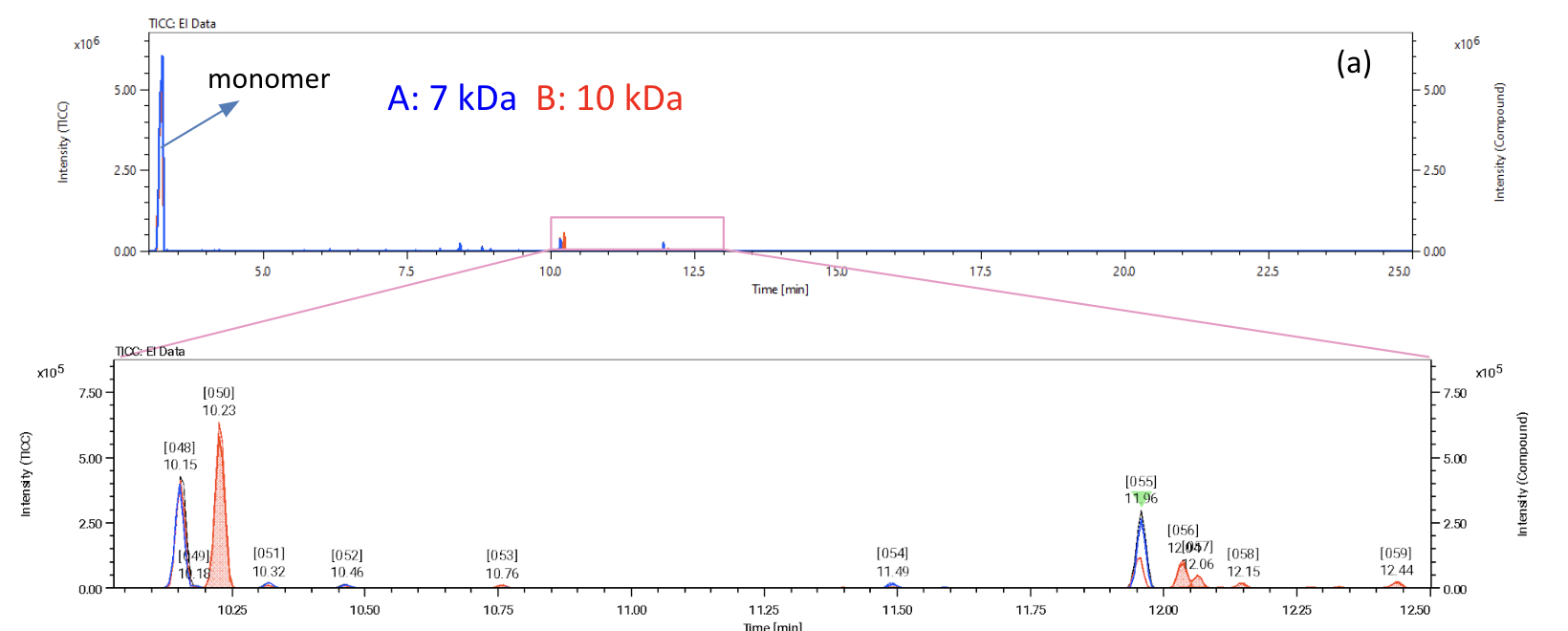
Figure 2. Difference of TICC of EI data between PMMA 7 kDa and 10 kDa
Table 3. Integrated qualitative analysis result of PMMA 7 kDa and 10 kDa

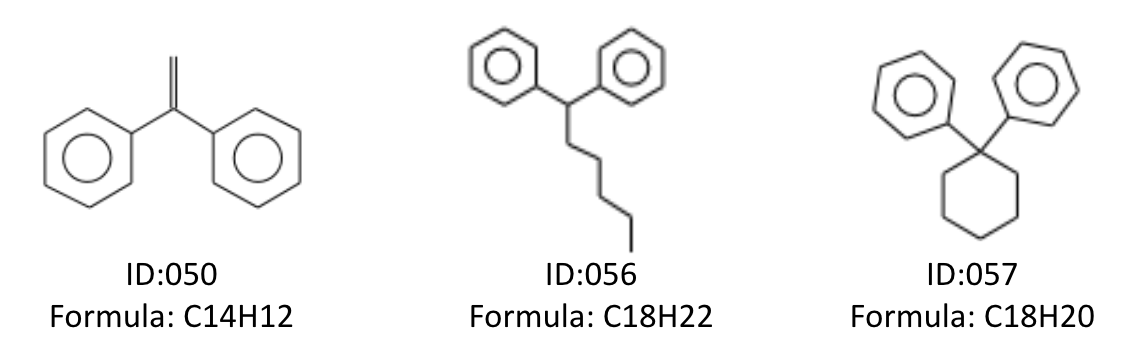
Figure 3. Structure of pyrolysis product observed only in PMMA 10 kDa
Conclusion
The end group analysis of PMMA was carried out using complementary techniques of MALDI-TOFMS and pyrolysis GC-TOFMS. MALDI-TOFMS can observe the molecular weight distribution, and the elemental composition of the sum of both end groups can be obtained with high mass accuracy up to a molecular weight of about 10,000. However, uncertainty arises because the degree of polymerization cannot be determined from the exact masses. On the other hand, the results of pyrolysis GC-TOFMS mainly provide information on the main chain structure. Furthermore, by identifying pyrolysis products that contain end group information from among the trace components, it is possible to obtain structural information on the end groups. Thus, the complementary use of MALDI-TOFMS and pyrolysis GC-TOFMS in the analysis of polymer end groups is extremely effective.
Solutions by field
Related products
Product category


Are you a medical professional or personnel engaged in medical care?
No
Please be reminded that these pages are not intended to provide the general public with information about the products.