


DIC Corporation
A century of trust, challenges for the next generation (TEM & SEM version)
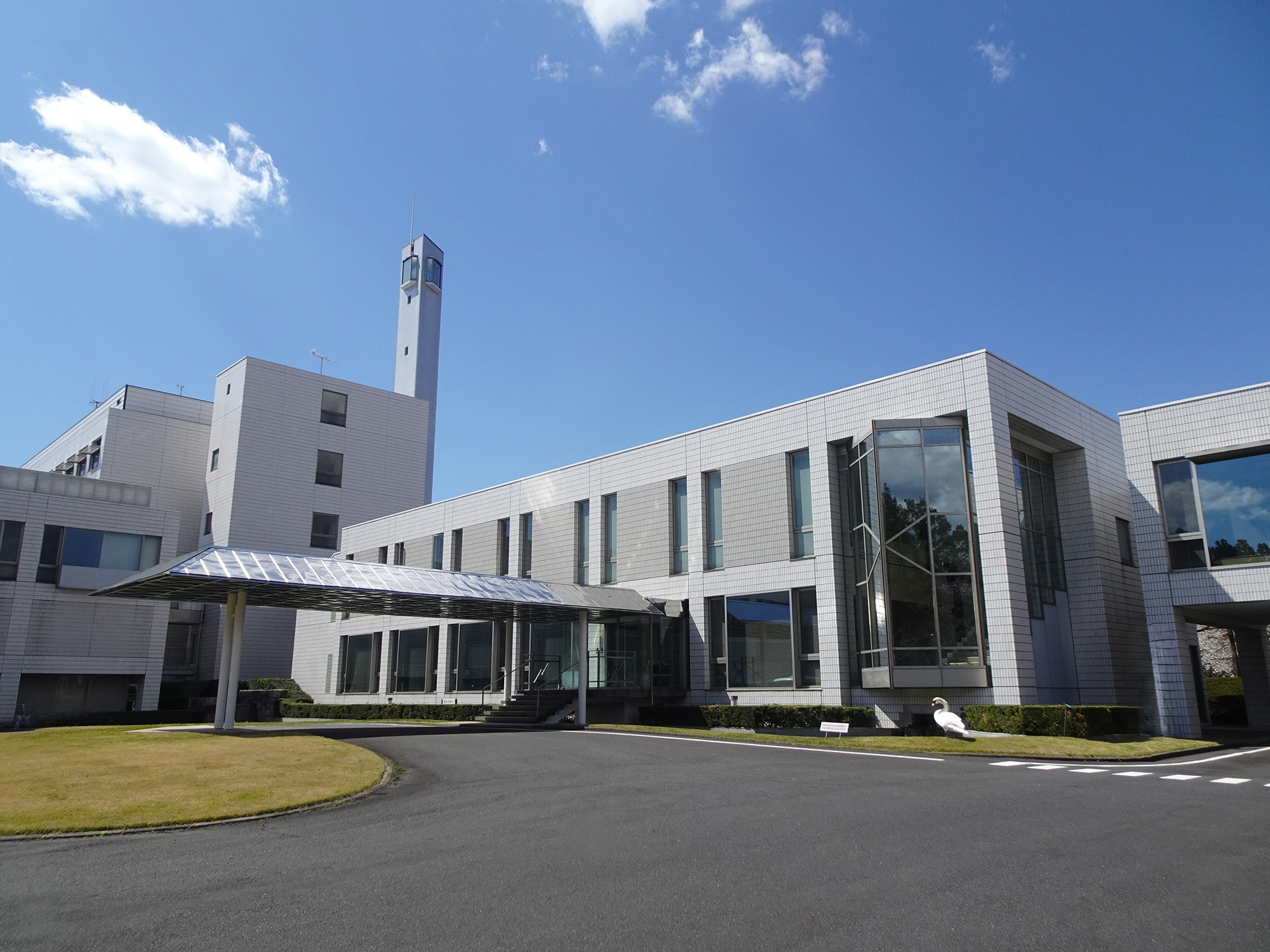
DIC Corporation - A global manufacturer in chemistry with the world's top share in the printing ink field. With a history of more than 100 years, the company always continues to take on the challenge of creating new value. Its Central Research Laboratories in Sakura City, Chiba aim to create next-generation businesses in harmony with the environment. While progressing its core technologies, such as "color engineering", "dispersion", "application evaluation", "organic materials design", and "polymer design", they are also venturing into new fields such as "inorganic materials design" and "biomaterial design".
At the Advanced Research Center (ARC), which supports research and development activities, a variety of analytical technologies are utilized to analyze hierarchical structures spanning from the nano to the macro scale. These efforts promote elucidation of material functions and the development of processes toward commercialization.
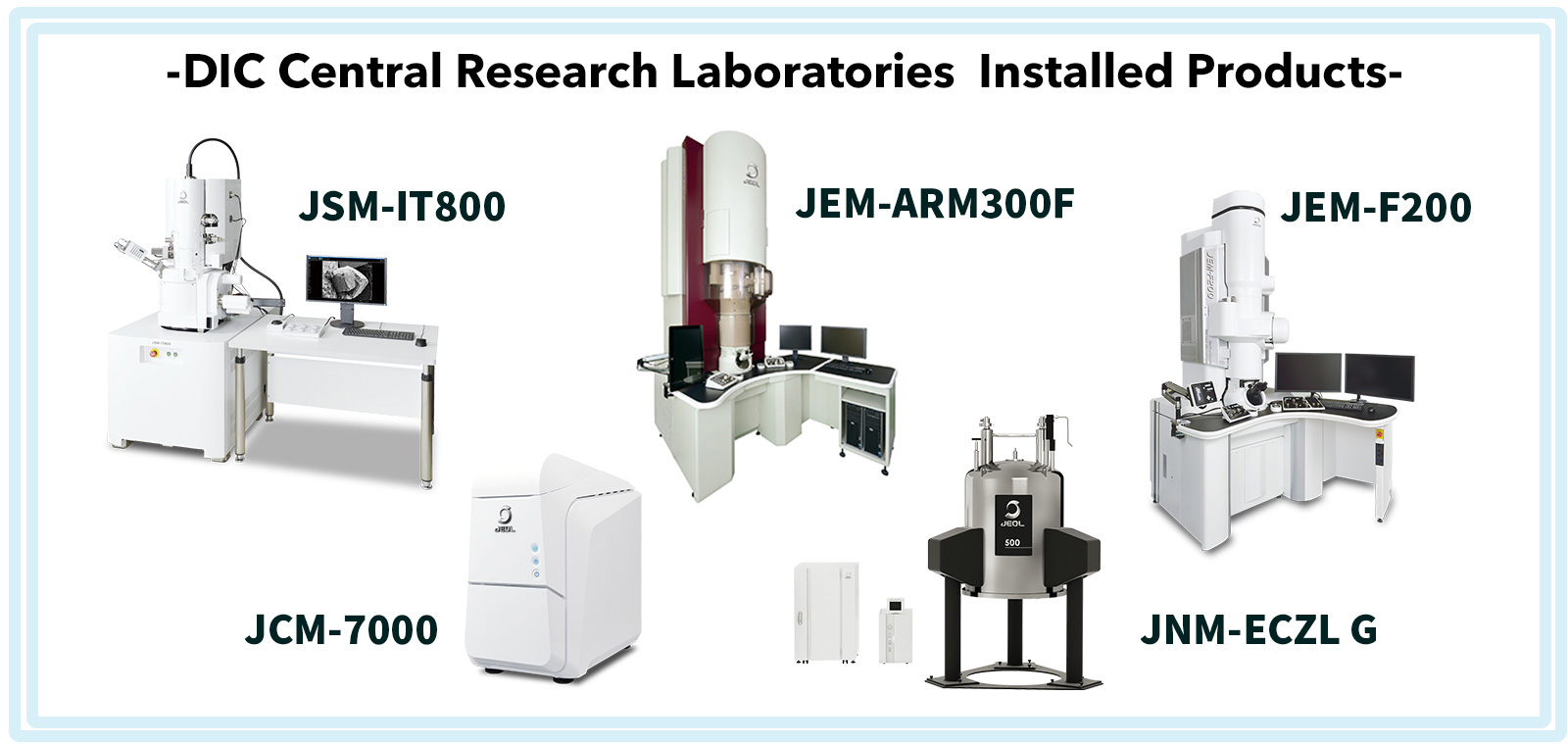
In such situations, JEOL analytical instruments such as TEM, SEM, and NMR are utilized as indispensable tools for routine observation, analysis, and structural evaluation.
We interviewed researchers who use these instruments about the background behind the introduction of TEM and SEM, their user experience, and the quality of service support.
▼ Please refer to the below for introduction of NMR.
A century of trust, challenges for the next generation (NMR version)
DIC Corporation - A global manufacturer in chemistry with the world's top share in the printing ink field. With a history of more than 100 years, the company always continues to take on the challenge of creating new value. We interviewed DIC Corporation on how JEOL analytical tools such as TEM, SEM, and NMR, are utilized as indispensable tools for routine observation, analysis, and structural evaluation.
Besides performance, ease of use and sincere support as the deciding factors
―What is your impression of JEOL's TEM?
Uota: We are planning to introduce the JEM-F200(TEM) in the near future, and Mr. Kawaguchi and Ms. Ohtsubo are responsible for the selection.
Kawaguchi: As a user, I appreciate that the instrument status and required parameters can be thoroughly checked when something happens. That kind of visibility is extremely helpful.
Ohtsubo: Our impression of JEOL is that whenever we make a request, they make a sincere effort to satisfy our requests. This is one of the key reasons we ultimately decided to choose JEOL.
Kawaguchi: I guess that software and services can be a point for differentiation, in addition to the performance of the instrument.
Uota: Once it is introduced, I would like to try things like automated measurements.
―What is your impression of JEOL's SEM?
Fujino: In the past, we selected the JSM-7800F. My impression is that the software was easy to use and the system was robust and durable.
―Your company has been using JEOL products for many years. Are there any particular benefits you have noticed with the latest models?
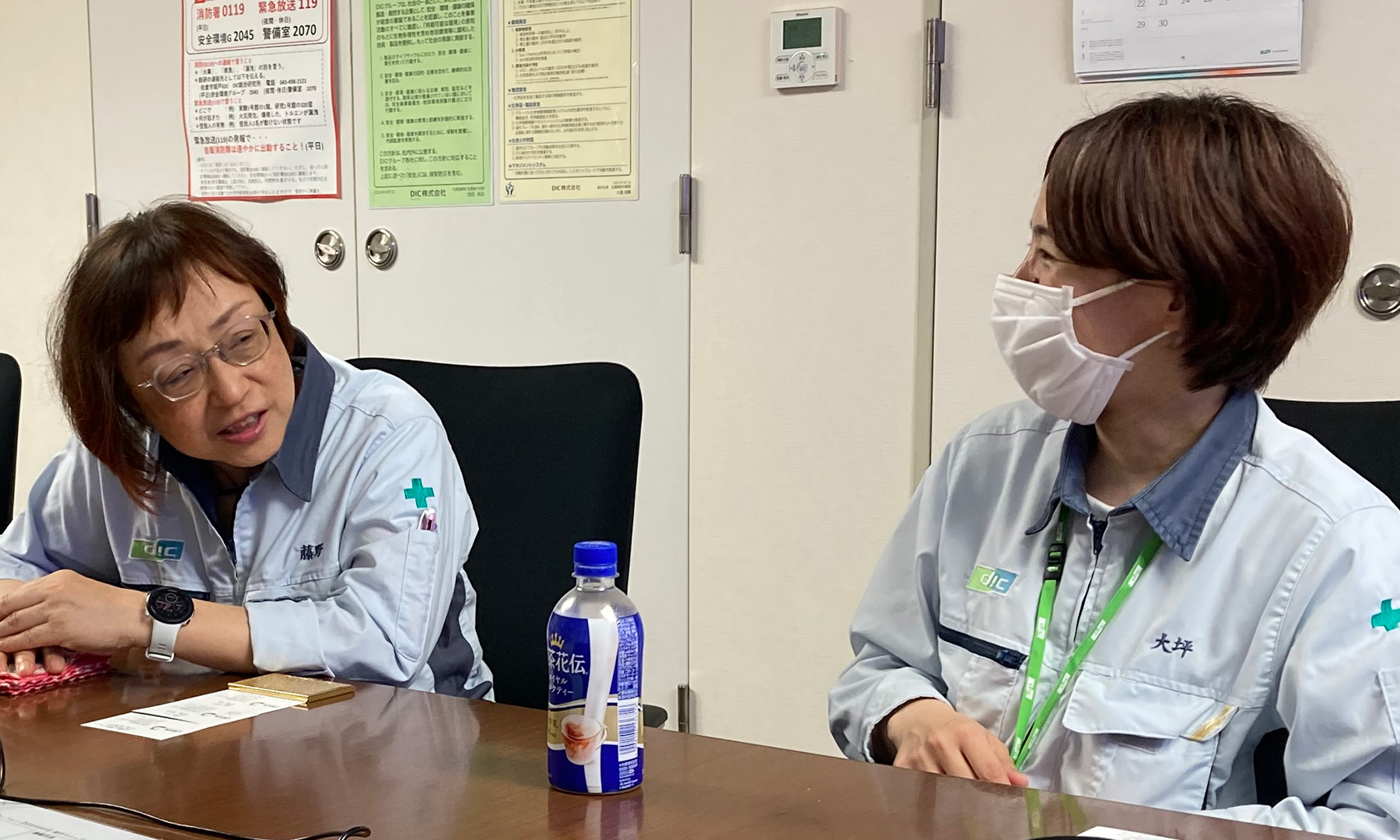
From left: Ms. Fuijno, Ms. Ohtsubo
Fujino: With SEMs in particular, I felt that the vacuum pumping became much faster. You load the sample, and before you know it, the process is already completed.
Ohtsubo: Another thing I've noticed is that the stability has improved. When we installed the JSM-IT800, it was already nearly stable and ready for use right after being delivered from the factory, which was impressive.

From left: Dr. Uota, Dr. Yoshimura
Yoshimura: I believe that the user interface is important. For example, having a workflow that naturally flows from right to left so that a single task is completed smoothly, or using icons that are intuitive and easy to understand. In that respect, your company's benchtop SEM, the Nanamaru-kun (JCM-7000), is excellent. It is also very user-friendly as a piece of equipment, of course.
Accelerating the R&D Cycle with High-End Instruments
―How do you utilize high-end instruments?
What kinds of samples do you observe?
Ohtsubo: We observe a wide range of samples from inorganic to organic materials. Recently, we seem to work more with inorganic materials for TEM.
Kawaguchi: That's true. As for organic materials, we introduced OBF(*1) or EDM(*2) which enables observation with reduced damage to samples, with the JEM-ARM300F. These are the areas that have traditionally been challenging for electron microscopes. But since organic materials are our core focus at DIC, we would like to actively take advantage of these capabilities. There have already been quite a few presentations on OBF at academic conferences, so we would like to keep pace and not fall behind.
*1 OBF (optimum bright field) method:A high-sensitivity observation technique that has developed recently. It is well suited for samples that are sensitive to electron beams or that contain light elements.
*2 EDM (Electrostatic Dose Modulator): A system that enables fast and quantitative control of irradiation volume of electron beams applied to a sample while maintaining microscope stability.
ーHigh-end instruments require significant investment. Has introducing them been worthwhile?
Uota: The instruments are in operation almost every day. It is very important that we have our own instruments in-house in terms of accelerating our research and development cycle. In order to introduce these instruments, we present data to management to clearly explain the necessity of the instruments and their usefulness within the company. Additionally, when explaining our work to customers, image data is very intuitive and easy to understand, which makes it especially useful.
ーHow do you find Gather-X(*3) (EDS) that you introduced for SEM?
Ohtsubo: Many of the samples that we observe are organic materials. So, we primarily use it to observe light elements. In practice, we were surprised that the detection sensitivity is quite high. It has all the functions we need, and we feel it is more than sufficient for our applications.
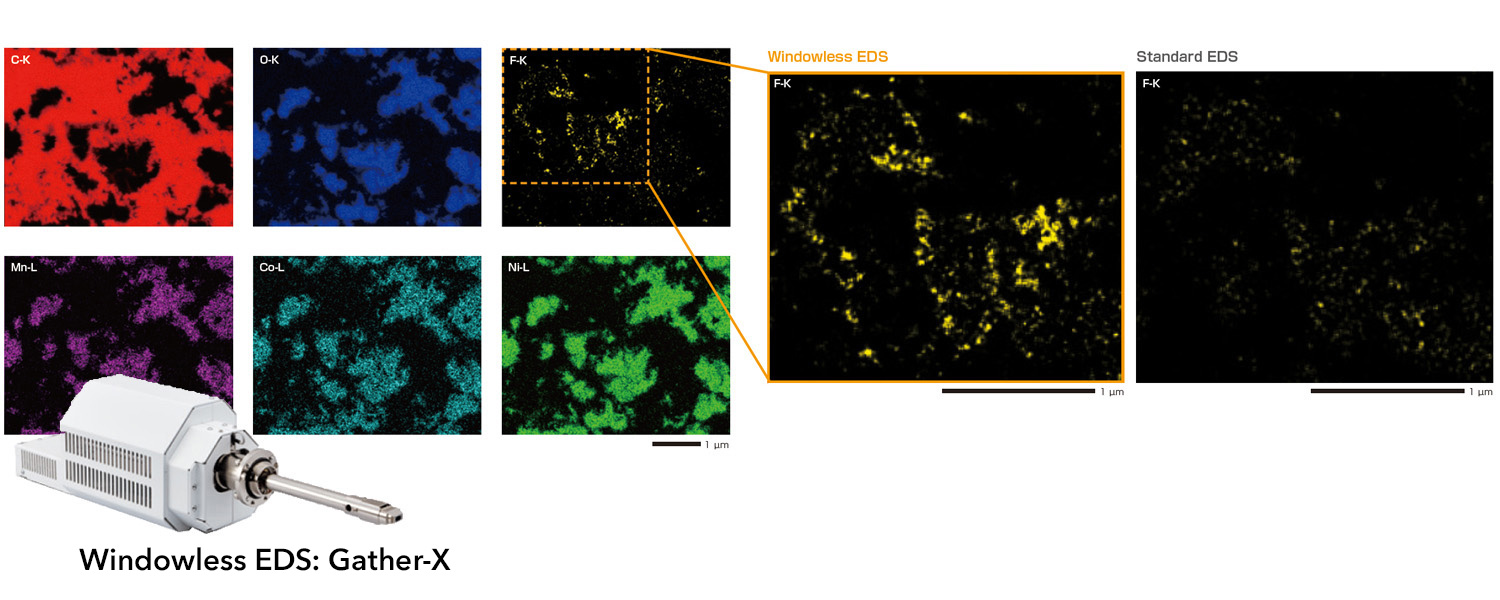
*3 Gather-X: An EDS detector that can be installed on the JSM-IT800. Its windowless design(window material covering the detector is eliminated) enables high sensitivity analysis of light elements which are typically difficult with conventional EDS system.
Quick and attentive support - Why JEOL's Service Earns Trust
ーHow do you feel about JEOL's service and application support?
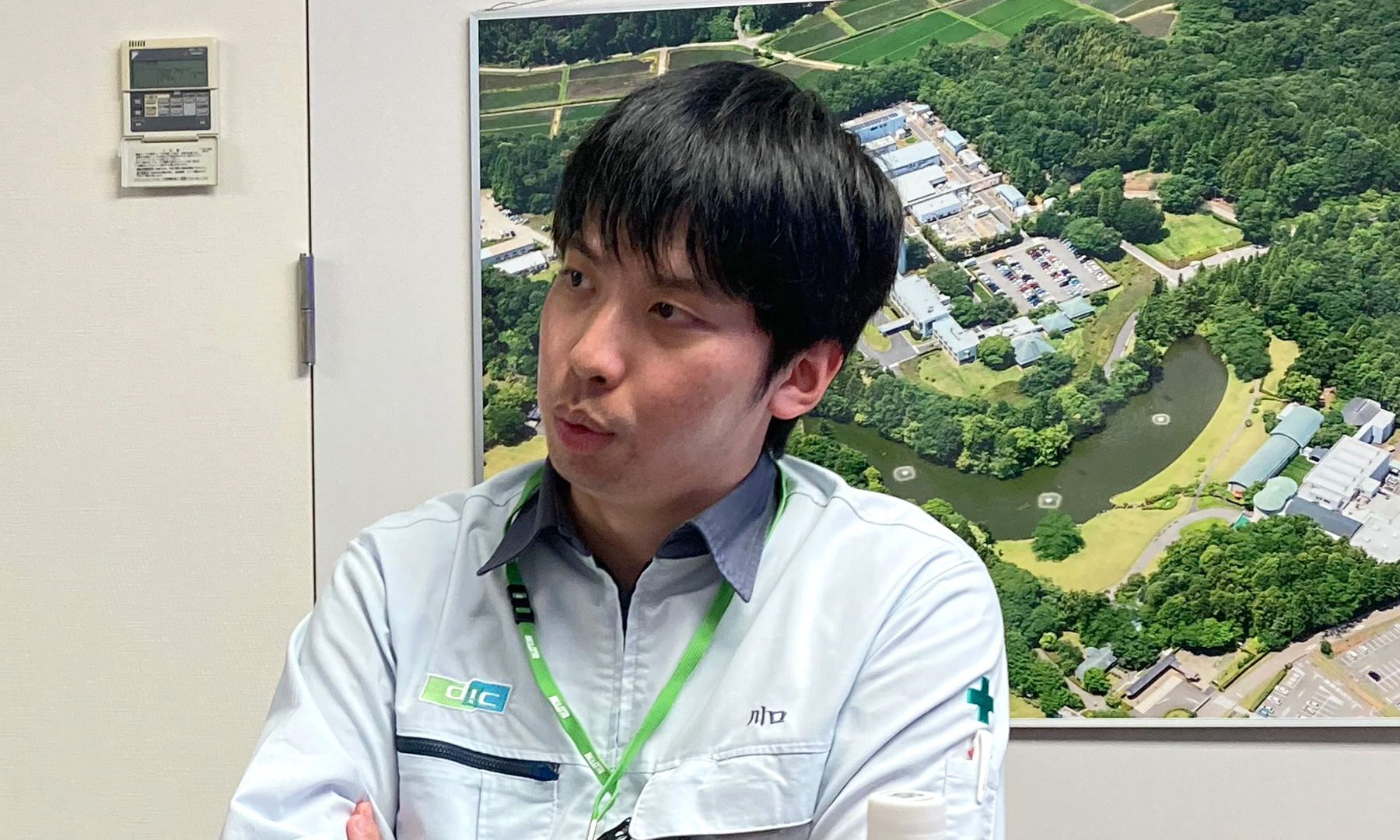
Mr. Kawaguchi
Kawaguchi: They respond quickly, which is extremely helpful for us. We sometimes make requests that may sound quite demanding to the sales staff, but they respond sincerely by clearly telling us "We can do up to this point" or "We cannot do this". The fact that they keep in close contact with us also makes us feel that they are truly engaged and working with us.
Uota: When issues arise, service support typically responds very quickly--often within about a day. I've been using microscopes since my student days, and I've been supported by JEOL ever since.
Yoshimura: We weren't able to do this during the COVID period, but for the past seven to eight years, we have held SEM technical exchange meetings with staff from JEOL's application department. It's very valuable to have opportunities to discuss our challenges directly. In addition, SEMs are installed not only at the Central Research Laboratories but also at various plants. So, we can share the knowledge gained across sites and make broad use of it. In that sense, we feel that JEOL provides very comprehensive and technically rich support.
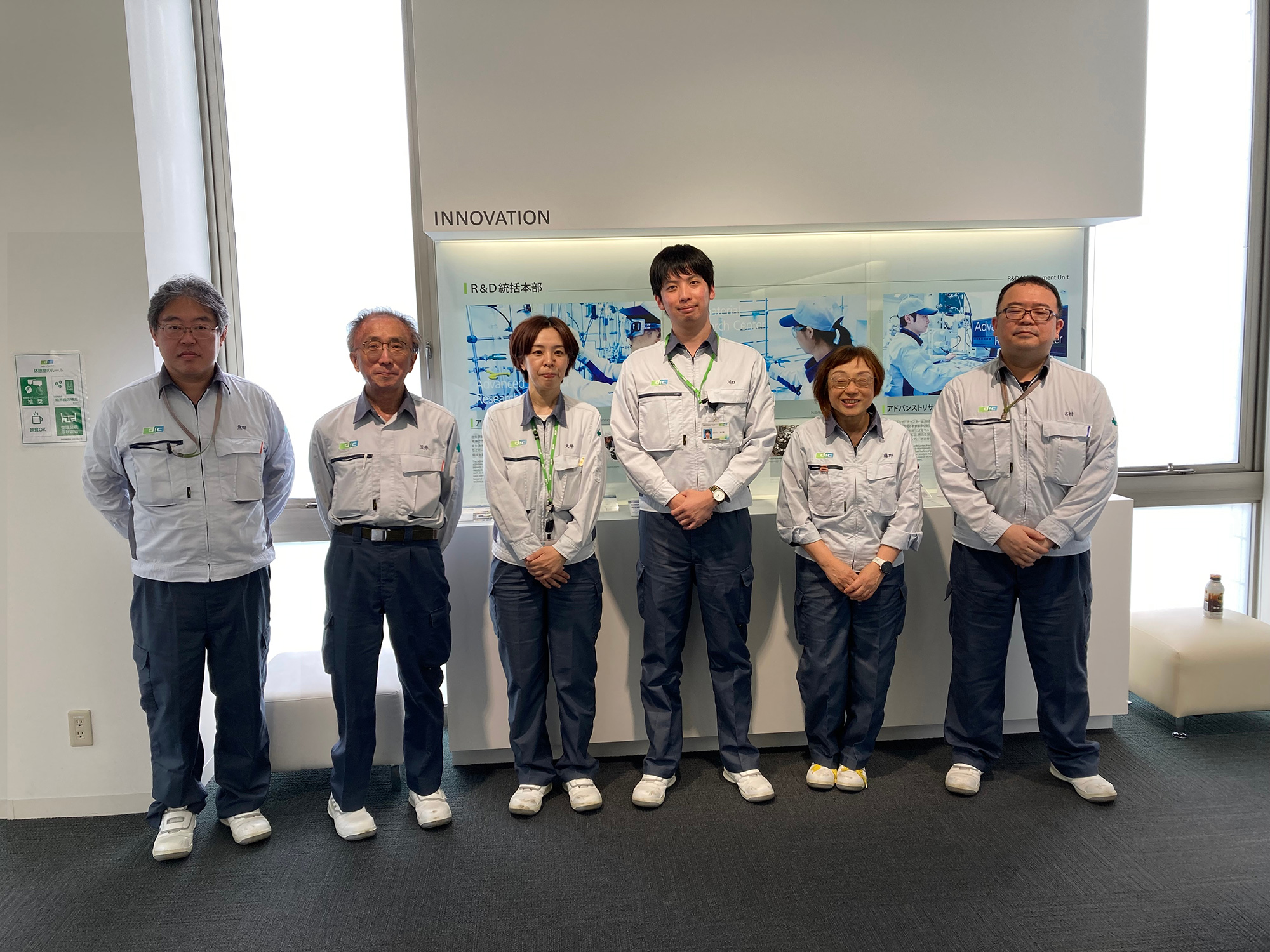
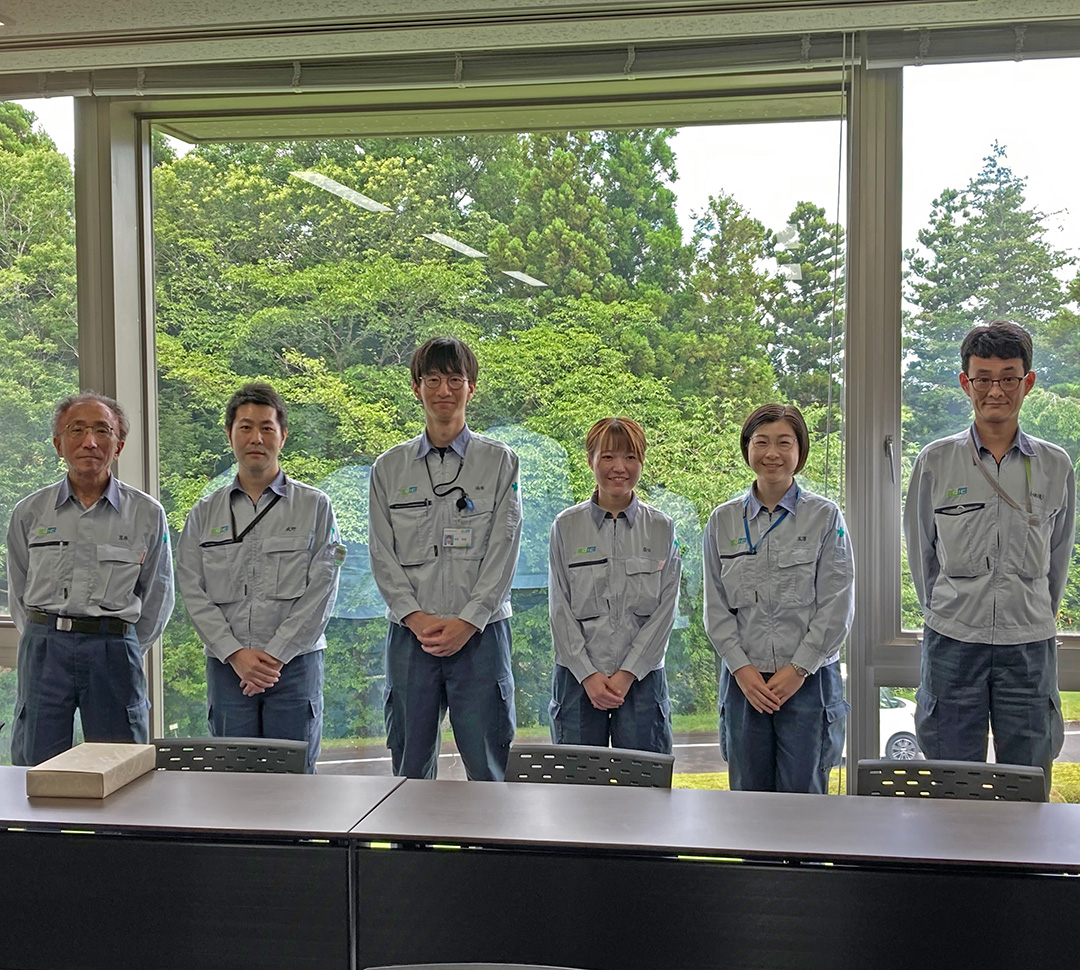
Photo from left: Dr. Uota, Mr. Kasai, Ms. Ohtsubo, Mr. Kawaguchi, Ms. Fujino, Dr. Yoshimura
*This article is based on the interview held by Team A, the 40th KF committee.