


DIC Corporation
A century of trust, challenges for the next generation (NMR version)
DIC Corporation - A global manufacturer in chemistry with the world's top share in the printing ink
field. With a history of more than 100 years, the company always continues to take on the challenge of
creating new value. Its Central Research Laboratories in Sakura City, Chiba aim to create next-generation businesses
in harmony with the environment. While progressing its core technologies, such as "color
engineering", "dispersion", "application evaluation", "organic materials design", and "polymer design", they
are also venturing into new fields such as "inorganic materials design" and "biomaterial design".
At the Advanced Research Center (ARC), which supports research and development activities, a variety of
analytical technologies are utilized to analyze hierarchical structures spanning from the nano to the macro
scale. These efforts promote elucidation of material functions and the development of processes toward
commercialization.
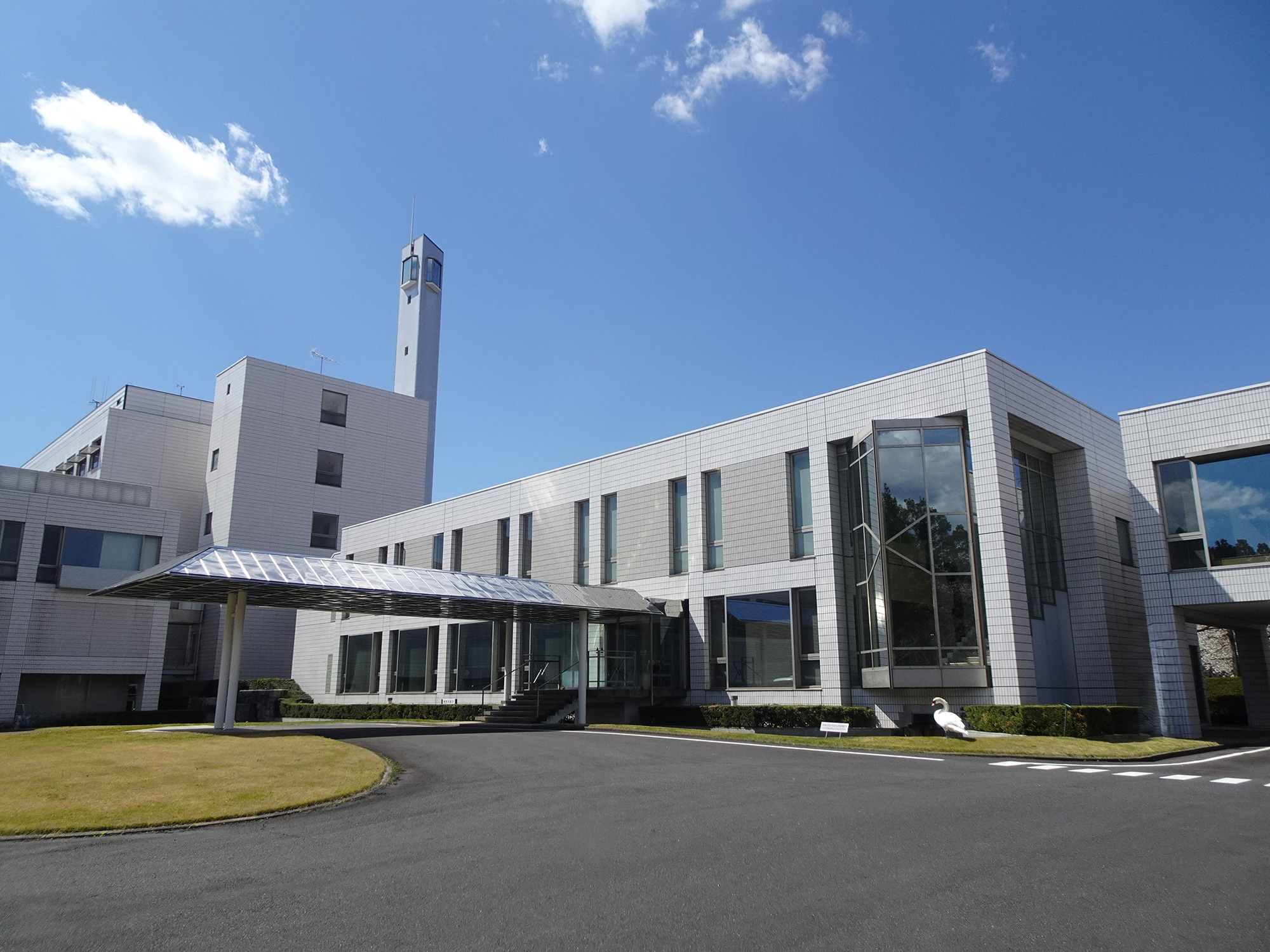
In such situations, JEOL analytical instruments such as TEM, SEM, and NMR are utilized as indispensable tools
for routine observation, analysis, and structural evaluation.
We interviewed researchers who use these instruments about the background behind the introduction of TEM and
SEM, their user experience, and the quality of service support.
▼ Please refer to the below for introduction of TEM&SEM.
A century of trust, challenges for the next generation (TEM &SEM version)
DIC Corporation - A global manufacturer in chemistry with the world's top share in the printing ink field. With a history of more than 100 years, the company always continues to take on the challenge of creating new value. We interviewed DIC Corporation on how JEOL analytical tools such as TEM, SEM, and NMR, are utilized as indispensable tools for routine observation, analysis, and structural evaluation.
NMR playing active roles at the forefront of product development
―Have many NMR users been using NMR since their student days?
Kasai: I think that there are about 20 to 30 employees who use NMR in one form or another. Even among those who did not use NMR during their student years, many begin using the NMR after joining the company. Rather, those who were accustomed to NMR experiments as students may only be a small number. Basically, we do job assignments based on their suitability after they join the company.
―How are NMR systems utilized in analysis?
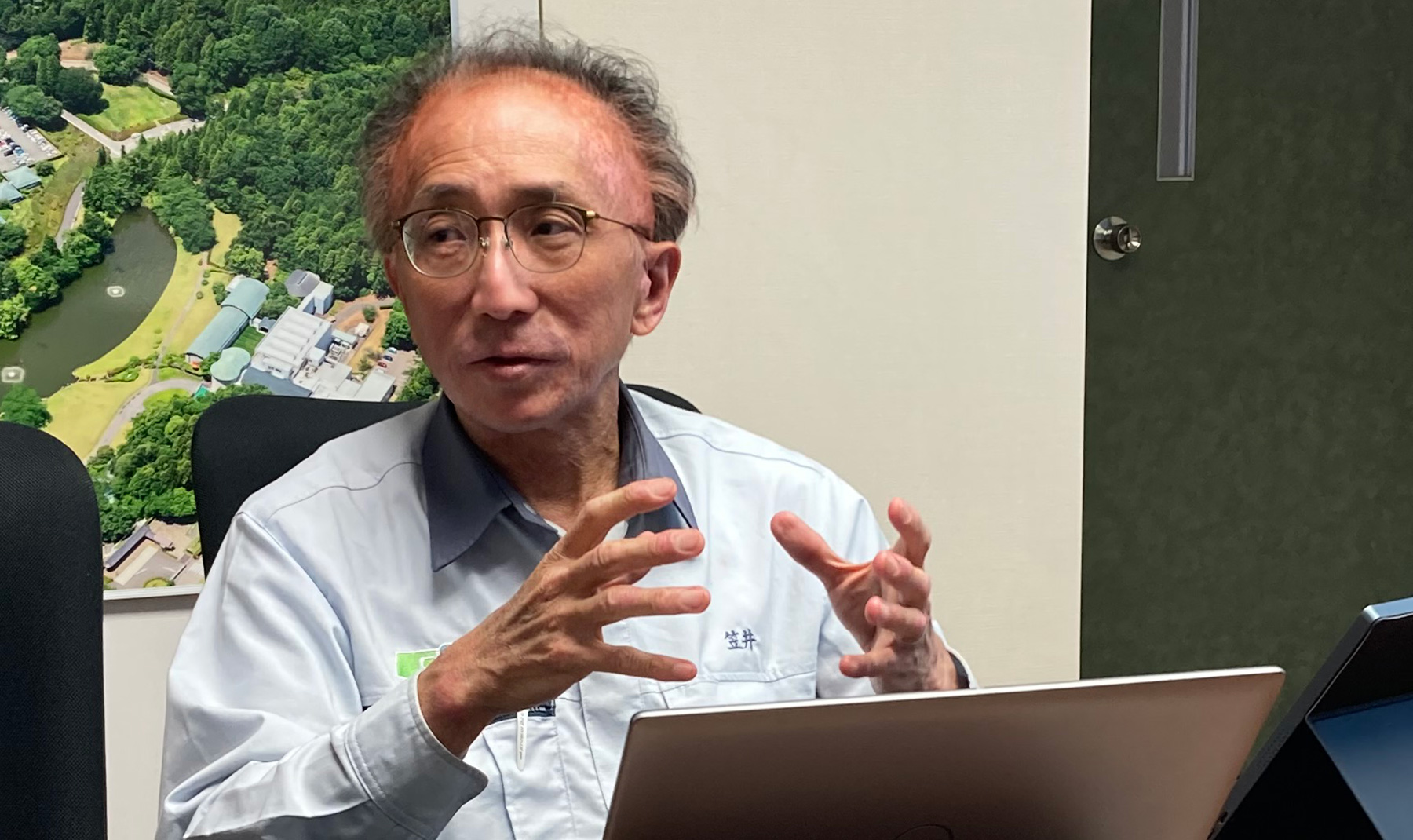
Mr. Kasai,
Group Manager, Analysis 1 Group,
Advanced Research Center
Kasai: The analysis group of Advanced Research Center belongs to the R&D Management Division, and its primary role is to support product development. We conduct analyses of new products and improved products developed by the technical groups. Occasionally, we also investigate the cause of issues of troubled products brought to us, but roughly 100% of our use of the instruments is for development purposes.
As for the target of our analysis, it is fair to say that we analyze almost all products of DIC that can be measured by NMR. The Central Research Laboratories is in charge of the fundamental aspects common to product development, while other factories support the development of different types of samples such as polymers, inks, and urethane-based materials, depending on their specific focus.
Koike: As Mr. Kasai mentioned, the Central Research Laboratories mainly perform analyses of samples related to new R&D themes. We have instruments and attachments that are available only at the Corporate Research Institute, which allows us to perform measurements using these unique capabilities. We also measure samples sent from other factories.
Yufu, Tamazawa: At the Chiba Factory, NMR has been used in R&D, as well as for product performance
evaluation. We mainly handle polymer products and their raw materials in Chiba Factory.
We observe and analyze samples prepared by the development departments to confirm that they are the
intended substances.
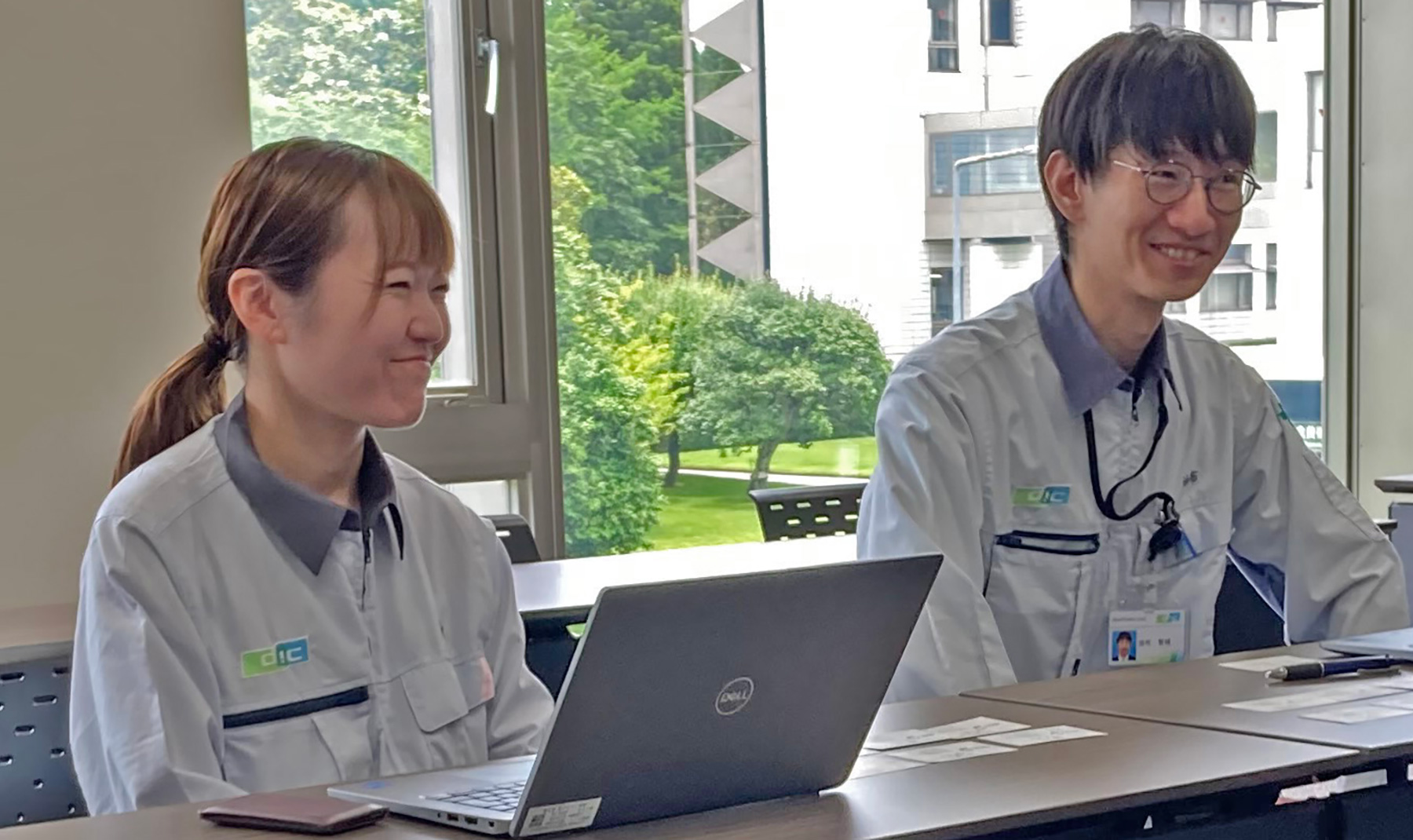
From left Ms. Taniguchi, Mr. Yufu
Intuitive operation that is easy to use for everyone--from beginners to intermediate users, and even experienced professionals
―Are there any features that you use particularly often?
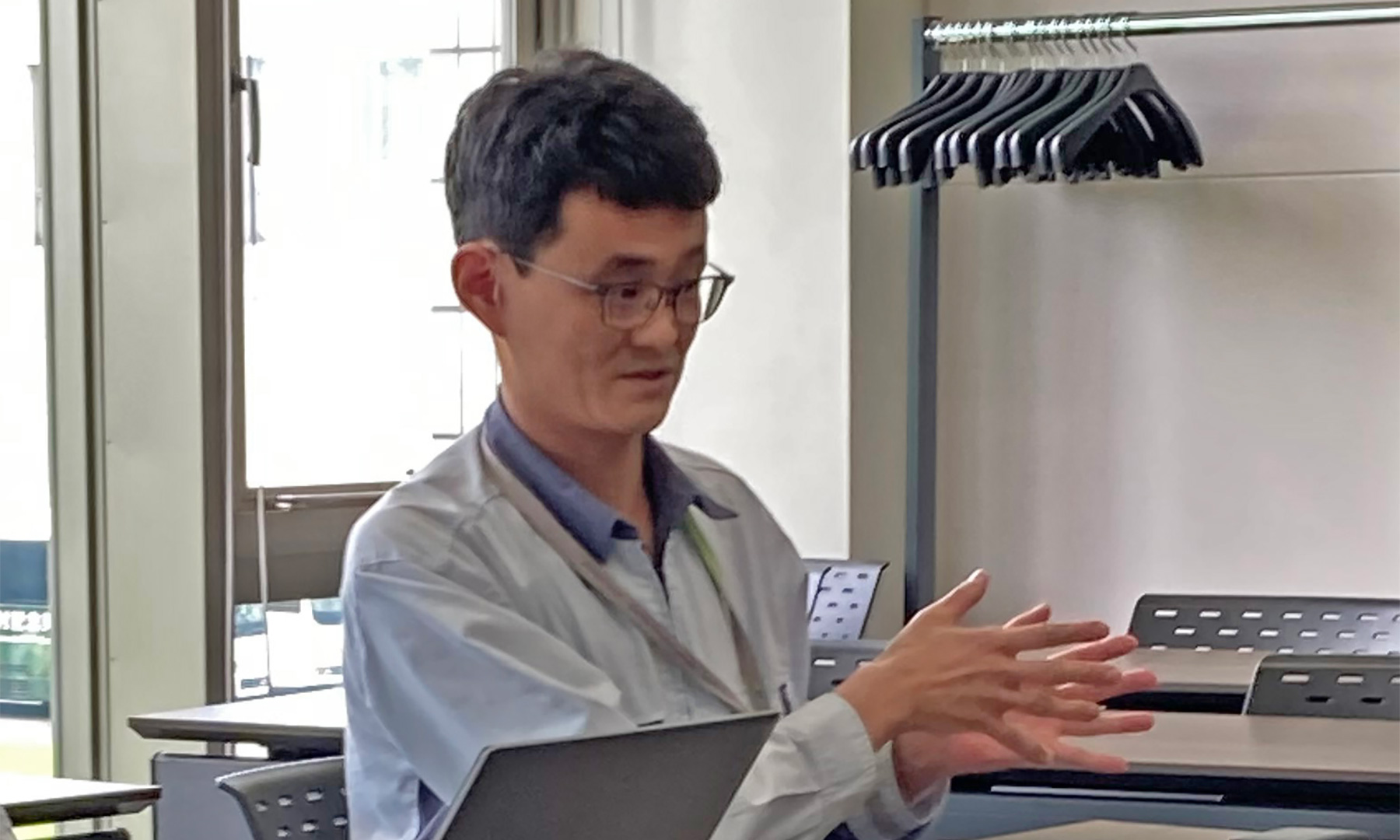
Dr. Koike
Koike: We use almost all of the available functions. We also try out new features while using it. The recent analysis software has functions that make use of the NMR enjoyable. For example, the ability to listen to signals as sound, which adds a sense of playfulness that we find appealing. Whenever there are functions that we are not familiar with, we receive excellent support from JEOL's technical staff.
―Please tell us your impression and satisfaction with NMR instruments of JEOL.
Koike: Since the analysis software was updated to Delta(*1), it has become much easier to understand what each parameter represents. I am also impressed by how easy the pulse programs are to read. I believe that JEOL's instruments have user-friendly designs from beginners, to intermediate users, as well as experienced professionals.
Taniguchi: By registering frequently used functions in the Favorites menu, measurements can be performed with just simple settings. This means that even users without much prior knowledge can carry out measurements, which is something beginners really appreciate.
Yufu: It may sound paradoxical, but one distinctive point is that I don't really have any particular complaints. The analysis software is very user friendly, and it includes advanced functions such as spectral (waveform) separation and detailed analysis tools, which I find satisfying.
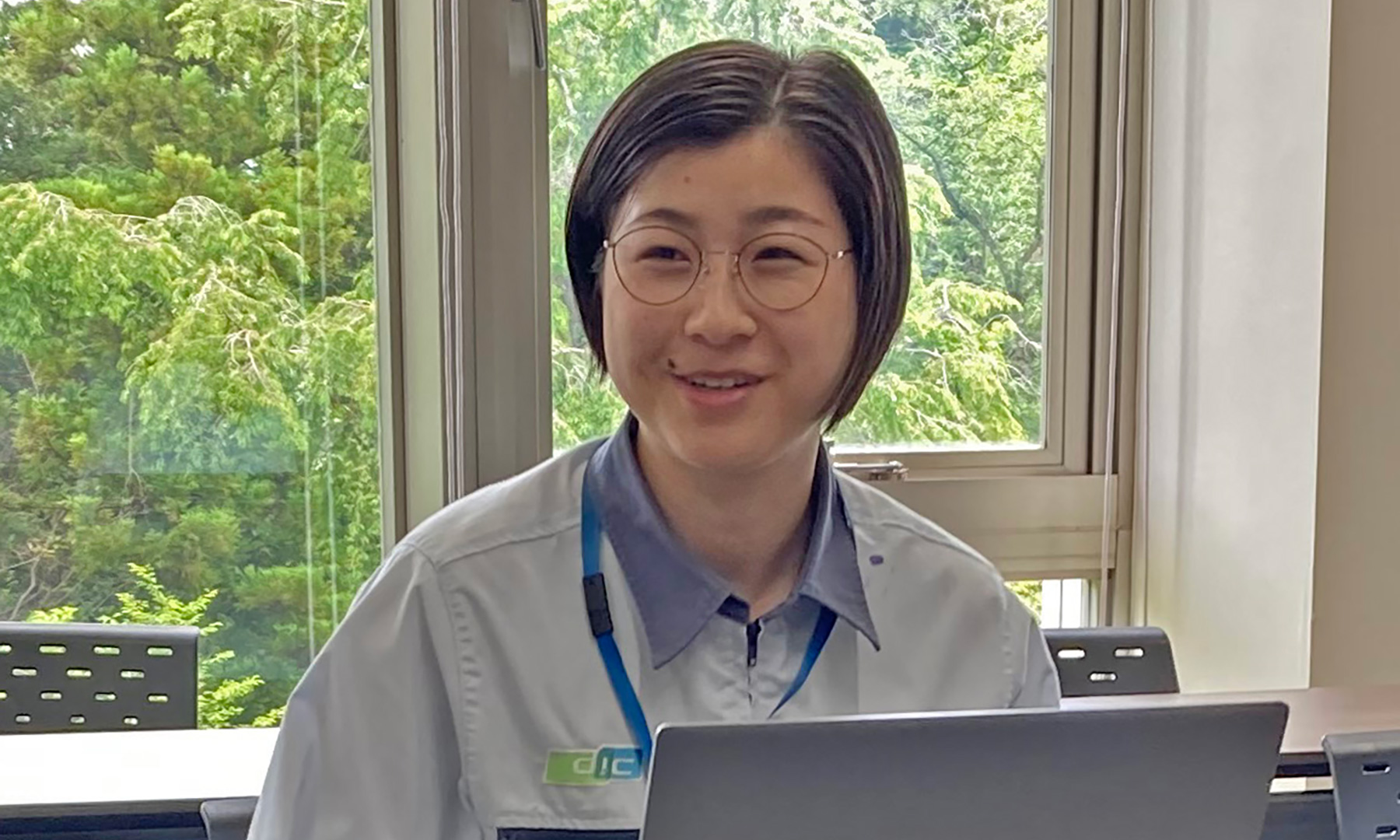
Ms. Tamazawa
Tamazawa: The UI (User Interface) is very easy to understand, and where to push can be understood at a glance. In the Chiba factory, measurements are often carried out by temporary staff, but once they learn the operation, they are able to perform the measurements immediately. I think it is a great advantage.
*1 Delta: System control/data processing software employed by JEOL NMR instrument. There are three measurement modes that can flexibly respond to the needs of users, from basic to advanced. For data processing, in addition to the general analysis, dedicated tools are provided according to the various uses.
NMR operating rate of 70-80% and a stable operation system
―Please tell us about the rate of operation and how issues are handled when problems occur.
Koike: The rate of operations for two NMR systems in the Central Research Laboratories is around 70% to 80%. If one of the instruments is down, we sometimes ask other sites to perform measurements using their systems. For solution samples (*2), we can also handle the measurements with a 400 MHz instrument. The response in the event of trouble is extremely fast, which we truly appreciate.
Yufu: In the Chiba factory, instrument failures are relatively rare, although there are occasional issues that make the system unavailable for one or two days. Overall, the operating rate is high, with the instrument running about 70-80% of the time, both day and night.
*2 Solution and solid NMRs: Generally, solid-state samples require higher sensitivity than solution samples, and a high-sensitivity 600 MHz instrument is advantageous.
Collaborative relationship from the measurement site, improving technology together
―We host around 70 webinars a year. Do you make use of them?
Taniguchi: We use webinars quite often. That they are available anytime is a great advantage.
Kasai: Each employee chooses and attends the webinar that they feel are necessary, and they have
become part of our everyday tools, I believe. Also, at DIC, we have had JEOL engineers visit us on several
occasions to conduct training sessions.
Face-to-face sessions help engineers build closer relationships, allowing for deeper and more advanced
discussions through mutual learning. They also make it easier to ask questions about minor equipment
issues, and we feel these sessions are valuable opportunities.
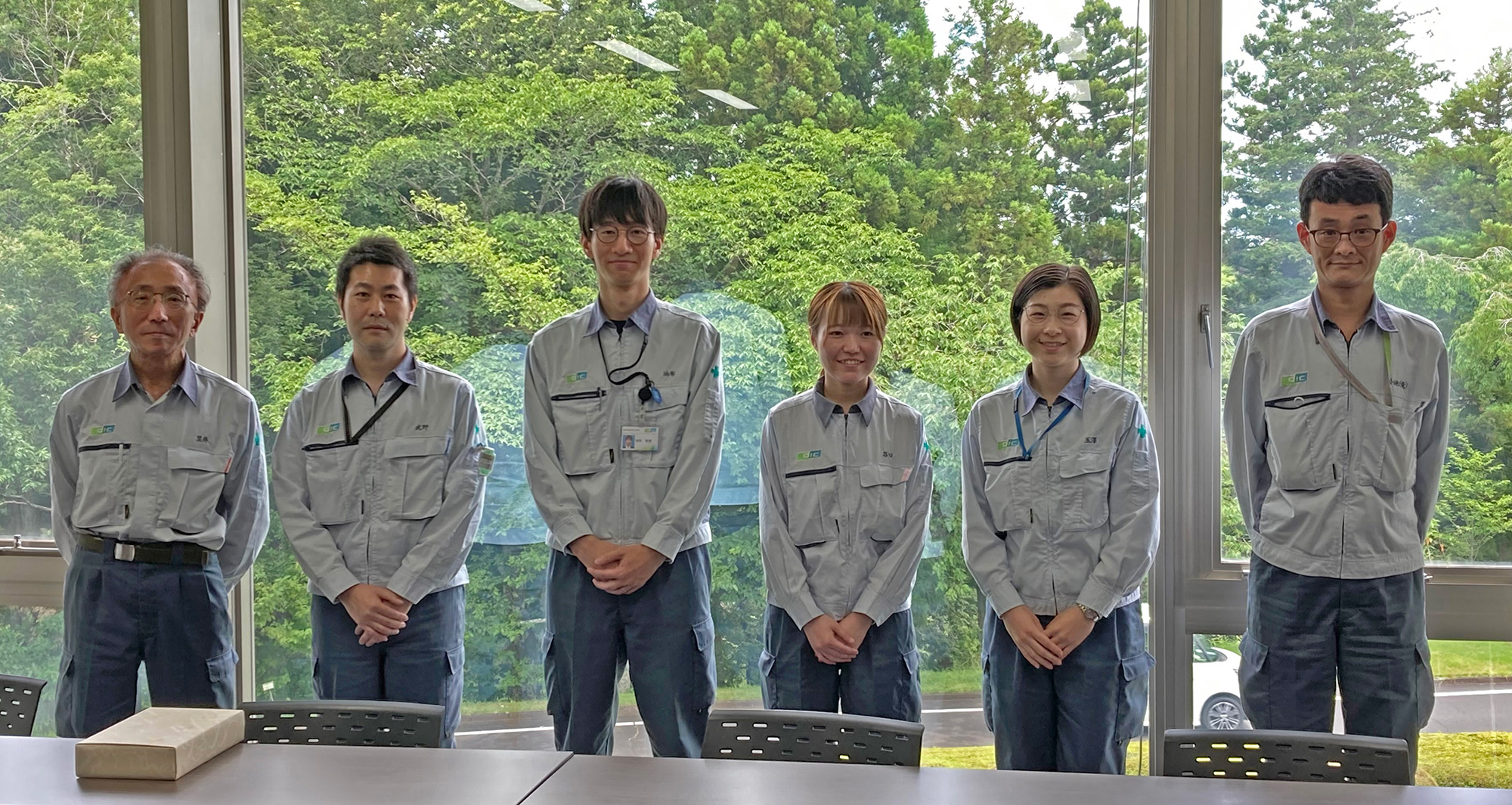
From Left: Mr. Kasai, Dr. Takeno, Mr. Yufu, Ms.Taniguchi, Ms. Tamazawa, Dr. Koike
*This article is based on the interview held by Team A, the 40th KF committee.