


msFineAnalysis iQ Ver.2 Target Analysis Example Ⅳ
Analysis of Aroma Compounds in “Hojicha” using Thermal Desorption GC-MS and Exploration of Pyrazines
MSTips No. 506
1. Introduction
Pyrazines are known as key aroma compounds that characterize the roasted aroma of Hojicha, and in recent years, they have attracted attention for their potential health benefits. Thermal desorption (TD)-GC-MS is an analytical method used for analyzing food aroma components. Although the method enables highly sensitive and comprehensive analysis of aroma compounds in samples, searching for specific target compounds among the many detected components can be time-consuming.
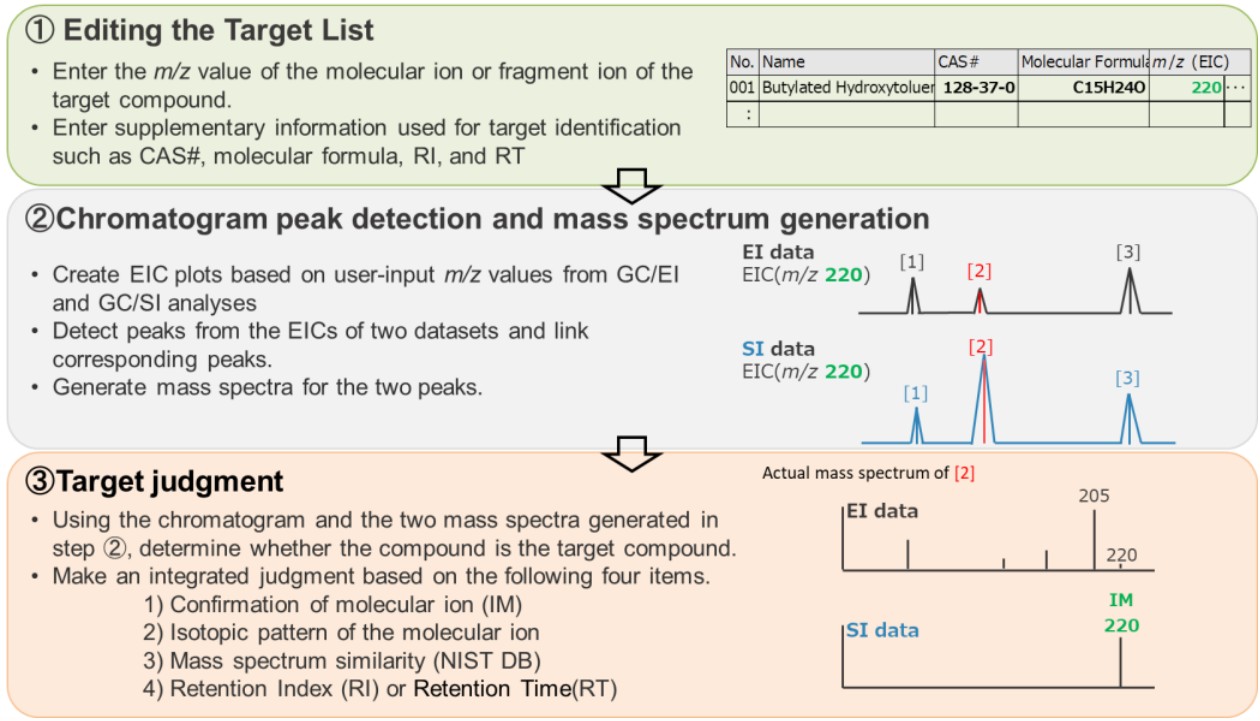
Target Analysis function on the msFineAnalysis iQ is a method for fast and accurate search and evaluation of only the target compounds based on integrated qualitative analysis1) with EI and Soft Ionization (SI) data. In this method, it is necessary to register the CAS RN® and/or molecular formula (or molecular weight), fragment composition formula of target compounds in the “Target List” in advance. Based on the registered information, each extracted ion chromatogram (EIC) is plotted for EI and SI measurement data and peaks are detected. The molecular ion peak in the mass spectrum, its isotopic pattern, similarity and retention index with the NIST database are confirmed about the detected peak to determine whether it is the target compound. This time, we analyzed the aroma components of Hojicha using the TD-GC-MS and rapidly identified only pyrazines through Target Analysis.
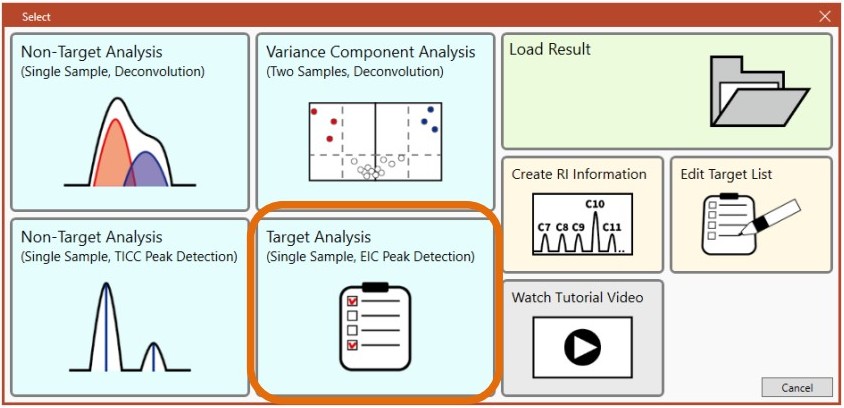
Integrated qualitative analysis software msFineAnalysis iQ Ver.2
Target Analysis flow
2. Experiment
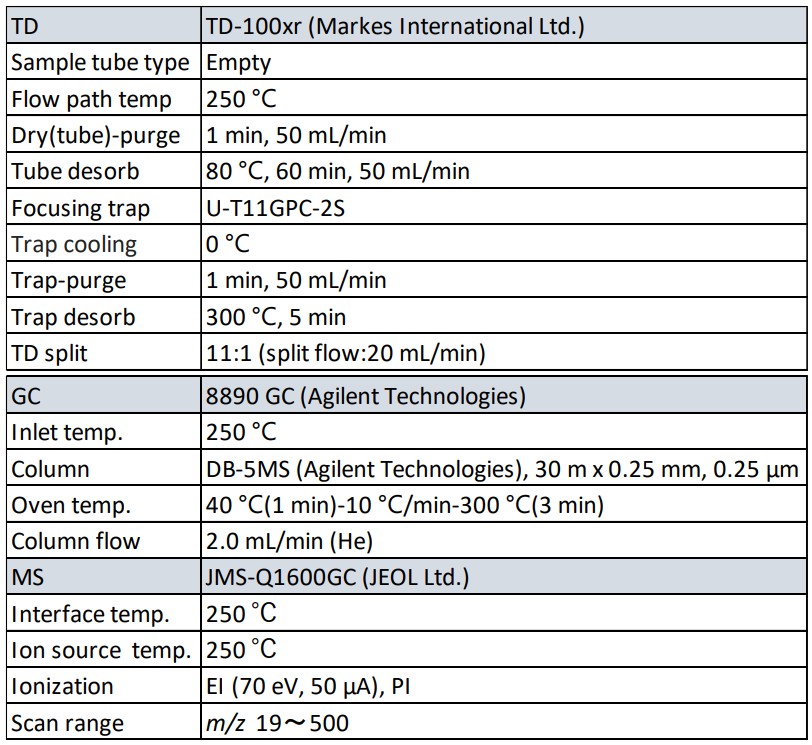
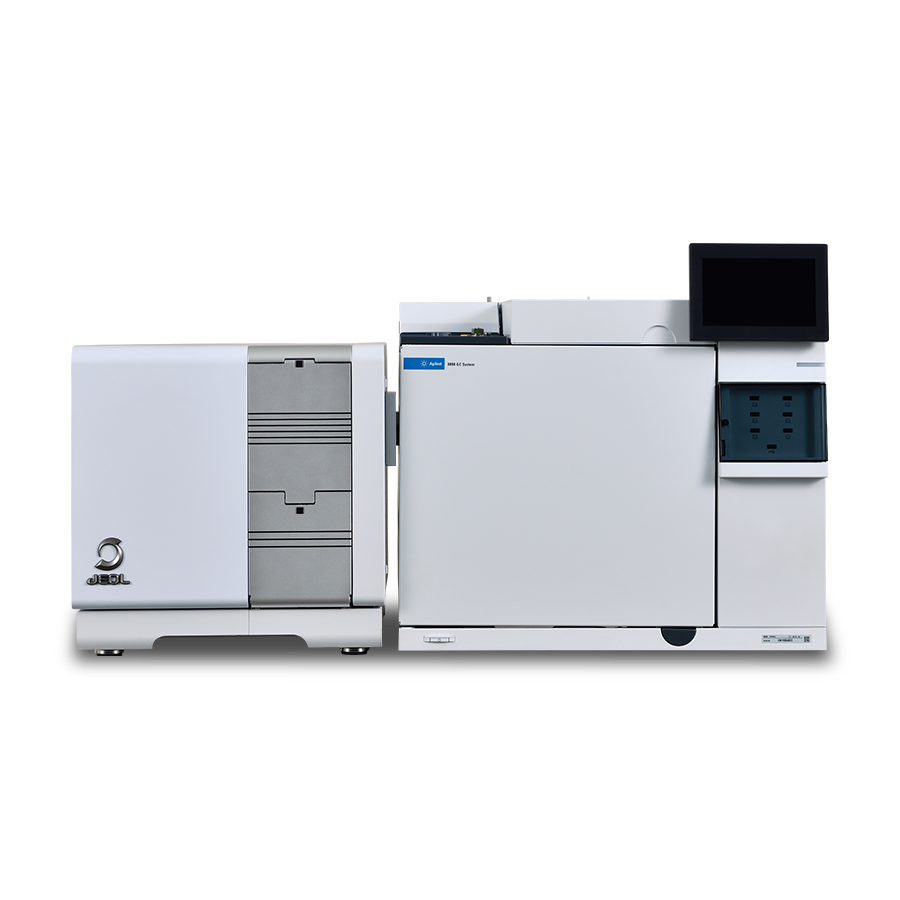
A Hojicha leaves (Yabukita cultivar) produced in Shizuoka Prefecture weighing approximately 200 mg was used as a sample and placed into a sample tube. The measurement was performed using GC-MS (JMS-Q1600GC, JEOL Ltd.) equipped with TD pre-treatment device (TD-Xr100, MARKES International Ltd.). The ionization methods used were EI and PI as SI. The data obtained were analyzed using the "Target Analysis" function in the integrated qualitative analysis software called msFineAnalysis iQ. The measurement conditions are shown in Table 1.
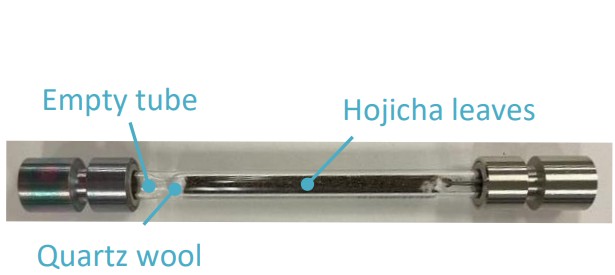
Sample
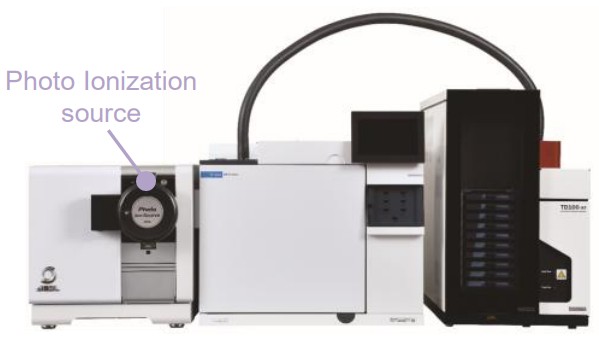
TD100-Xr,
JMS-Q1600GC UltraQuad™ SQ-Zeta
Table 1 Measurement Condition
3. Results
3.1 Non-target analysis
The TICC of TD-GCMS measurement is shown in Figure 1. 2-Furanmethanol and DDMP which are known to be produced by the Maillard reaction (roasting) and contribute to the roasted aroma, (E,E)-2,4-Heptadienal and Neophytadiene which contribute to the grassy aroma of tea leaves, and caffeine were detected as major peaks. Therefore, it was shown that the analysis of aroma compounds in Hojicha is possible by using TD-GC-MS.
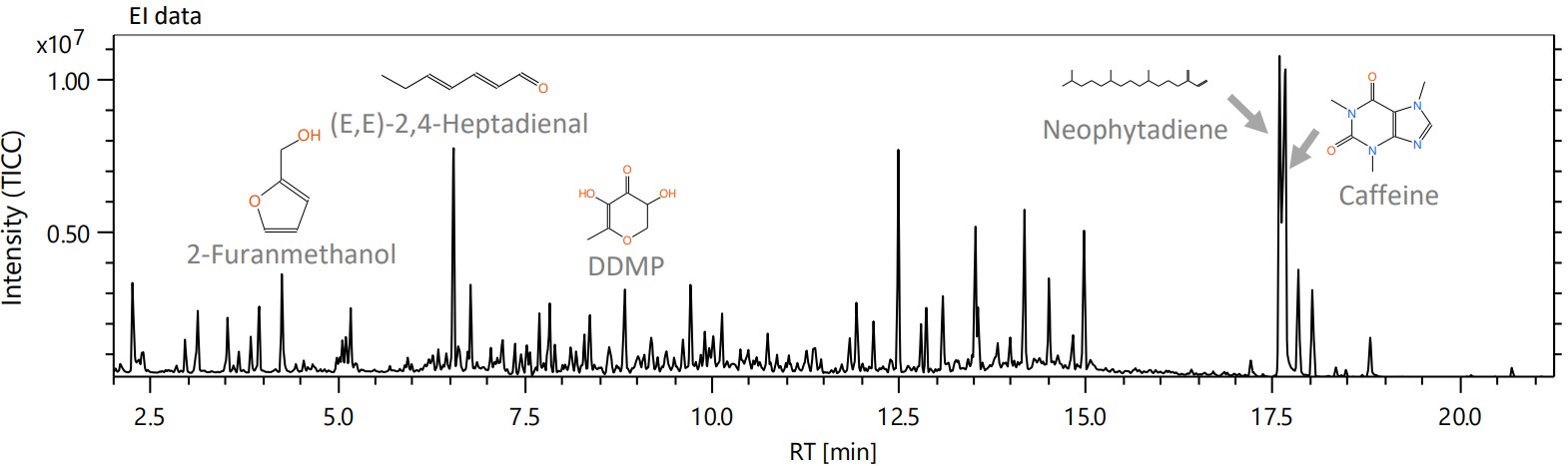
Figure 1 TIC chromatogram of GC/EI data
3.2 Editing the target list
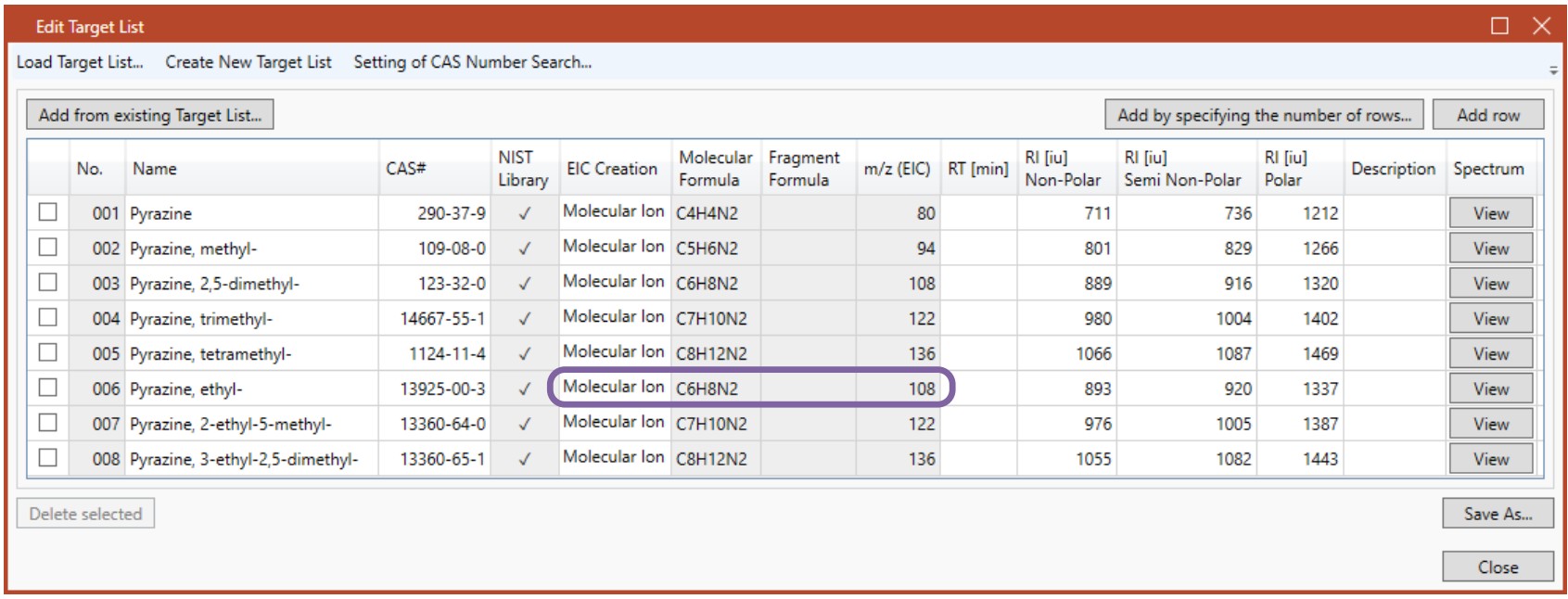
Table 2 shows the target list registering eight types of pyrazines. In Target Analysis, compounds can be searched using information such as molecular formula, fragment formula, or m/z value. In this study, molecular formula information was used.
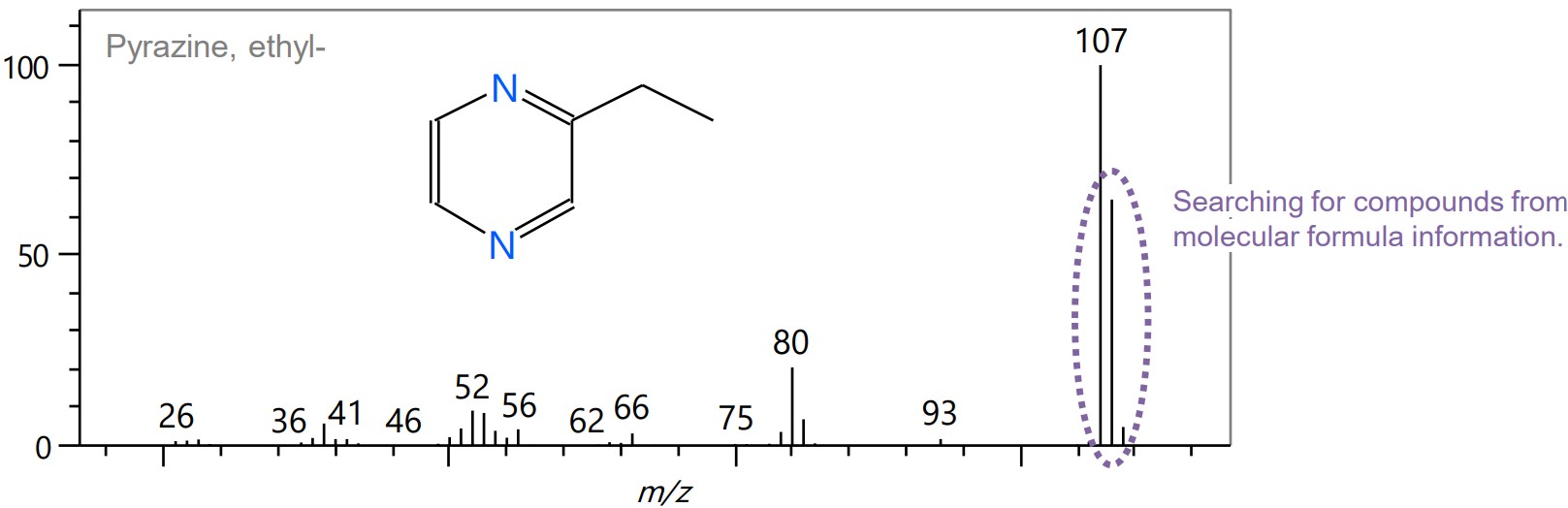
Figure 2 EI mass spectrum of Ethyl pyrazine
Table 2 Target List
3.3 Target Analysis Results of pyrazines
Figure 3 shows the results of Target Analysis. The presence of List ID : [T001]、[T002]、[T003]、 [T004]、[T007]、 [T008] was confirmed from the target information shown in the lower-left section of the figure (blue background). To search for the selected compound [T001] Pyrazine, m/z value of 80 was registered in the target list. A candidate compound peak was detected in the extracted ion chromatogram (EIC, m/z 80) of both EI and SI data.
Figure 4 shows the result of Target Judgment for the peak at RT 2.73 min (▼). The presence of the target compound was judged by the following results. First, each molecular ion peak was observed in both EI and PI data. Next, the difference between the measured RI value and the database RI value (ΔRI: within ±30 is acceptable) was -8 [iu]. Regarding spectrum similarity score (maximum 999), since it decreased due to the low ion intensity of this peak, the spectrum was judged NG. However, since the reverse similarity(*) was 801, indicating a favorable result, Target Judgement was manually changed to [OK] in this case.(□) From the above, it was confirmed that pyrazine was detected at RT 2.73 min.
Therefore, Target Analysis allows for the identification of compounds with very low ion intensities that may be missed in non-target analysis.
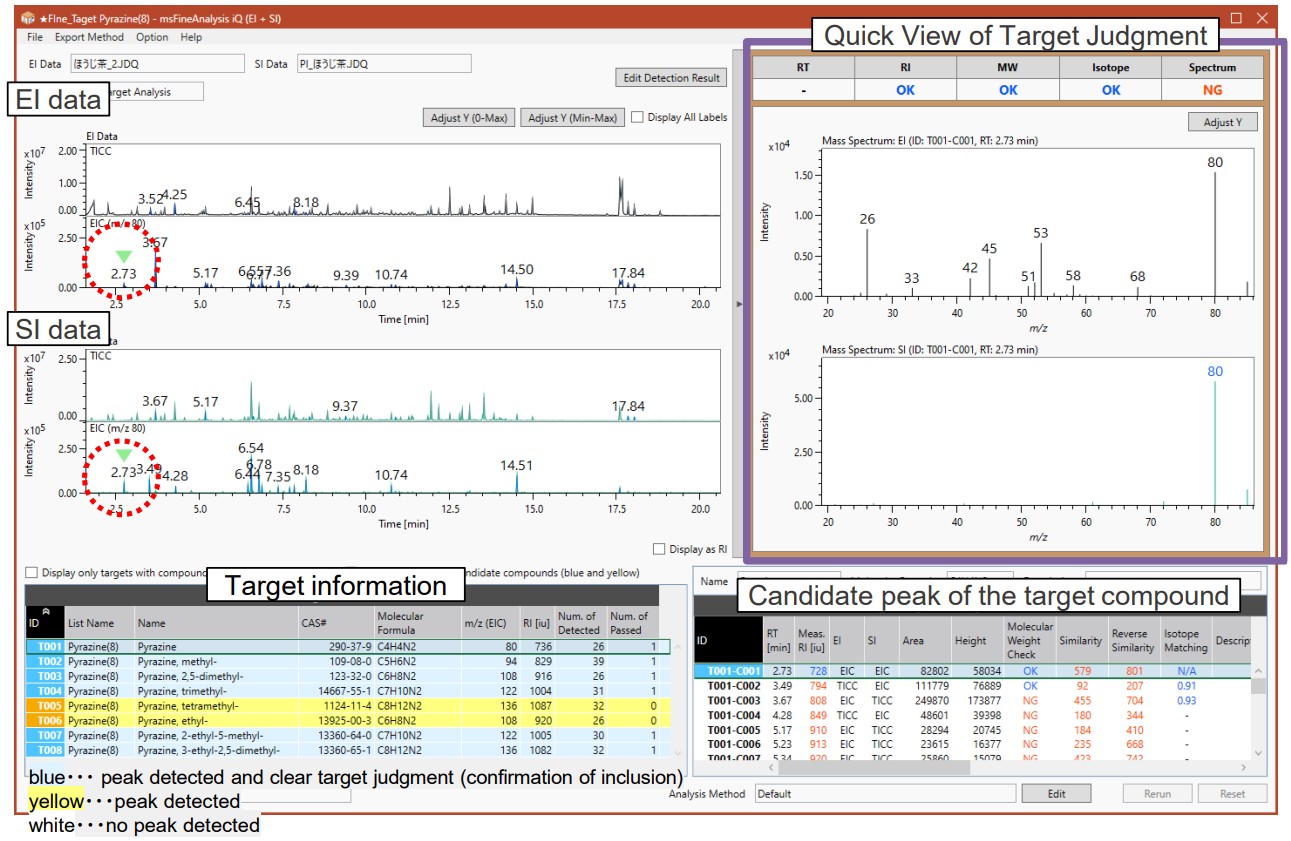
Figure 3 Result of Target Analysis
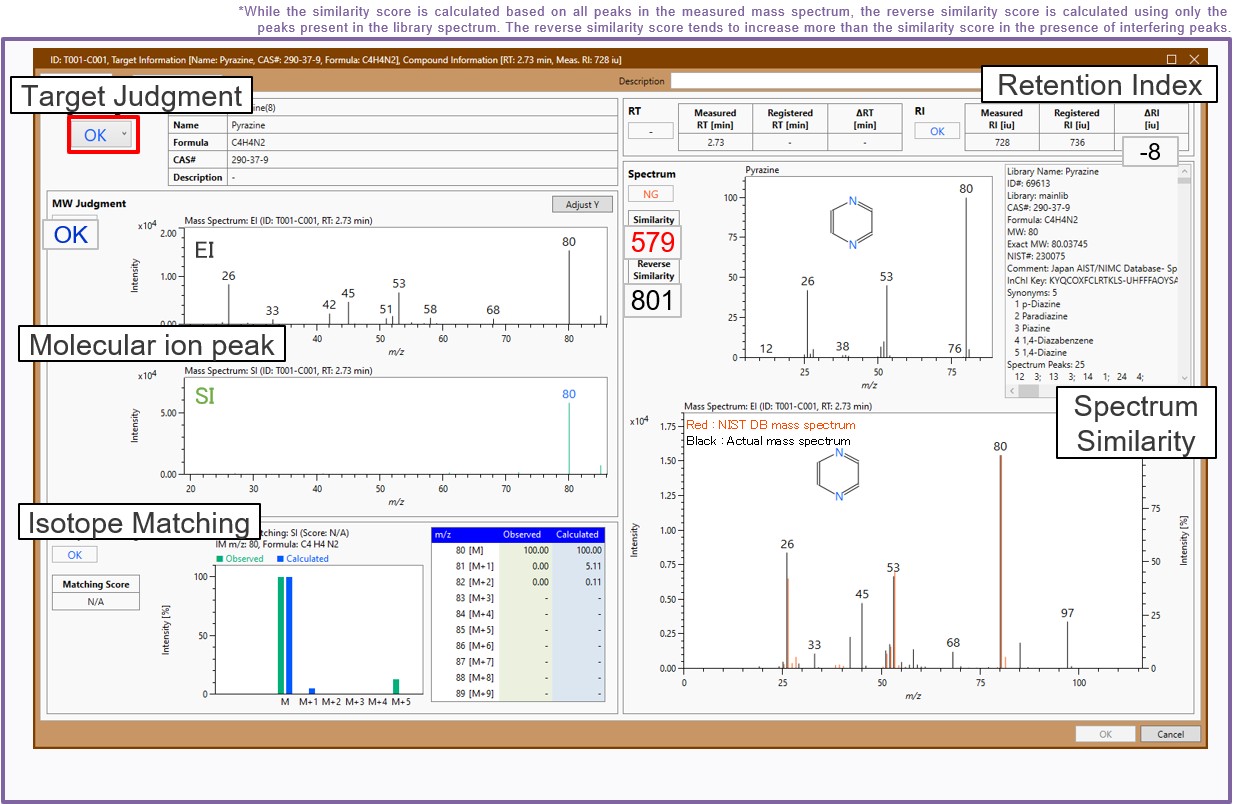
Figure 4 Result of Target Judgment
Conclusion
Using the TD-GC-MS method, we measured the aroma components of Hojicha and performed Target Analysis to search for pyrazines. As a result, the presence of pyrazines. was rapidly confirmed. Among them, pyrazine had such a low ion intensity that it could have been missed in non-target analysis, but its presence was clearly confirmed through Target Analysis. This report shows that Target Analysis can rapid and accurately identify specific compounds.
References
1) M. Ubukata et al, Rapid Commun Mass Spectrum., 34 (2020). DOI: 10.1002/rcm.8820
Solutions by field
Related products


Are you a medical professional or personnel engaged in medical care?
No
Please be reminded that these pages are not intended to provide the general public with information about the products.