


Sample preparation 1
ER230004E
Sampling of solid sample
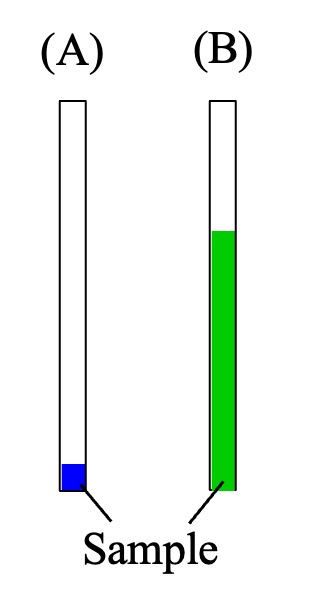
Figure 1. Sample preparation using capillary tube.
An appropriate sample volume and sample tube must be carefully selected for solid samples that are affected by specific factors such as dielectric loss, electrical conductivity, and water content. When the effects of dielectric loss and electrical conductivity are significant, the microwave current flowing through the sample causes a loss of microwave power. In such cases, it is recommended to either cool the sample to an extremely low temperature where these characteristics decrease, or use a small amount of the sample in a standard or narrower sample tube. For samples with high water content, drying the sample and using a standard or narrower sample tube is recommended. For samples such as biological tissue, the sample can be placing on the stage of a tissue cell (ES-LC20) and covering them for measurement. In cases where the sample is highly viscous, it can be taken at the tip of a capillary tube and then placed in the sample tube (as shown in Figure 1 (A)). For samples such as paints, they can be coated on the surface of a capillary tube as shown in (B), dried, and then placed in a sample tube for measurement.
Example of ESR measurement
Free radicals have various substance, including unstable highly reactive ones and less reactive stable ones. Generally, the reactivity of a free radical typically depends on the density of unpaired electrons on specific atoms. Free radicals with unpaired electrons delocalized over multiple atoms within the molecule and with low unpaired electron density on specific atoms are stable. On the other hand, free radicals with unpaired electrons localized on specific atoms in a molecule are unstable. Therefore, even if a substance is stable, it can react to form covalent bonds when approached by other active free radicals.
Figure 2 shows the ESR signal of the diphenyl picrylhydrazyl (DPPH) powder which is a stable organic free radicals. This sample has a sharp line-width and is often used to determine the concentration of unpaired electrons and the g-value. At room temperature, the ESR signal of DPPH is observed at around g = 2.0036. A clear ESR signal can be observed even at very small amounts (a few mg) of this sample at room temperature.
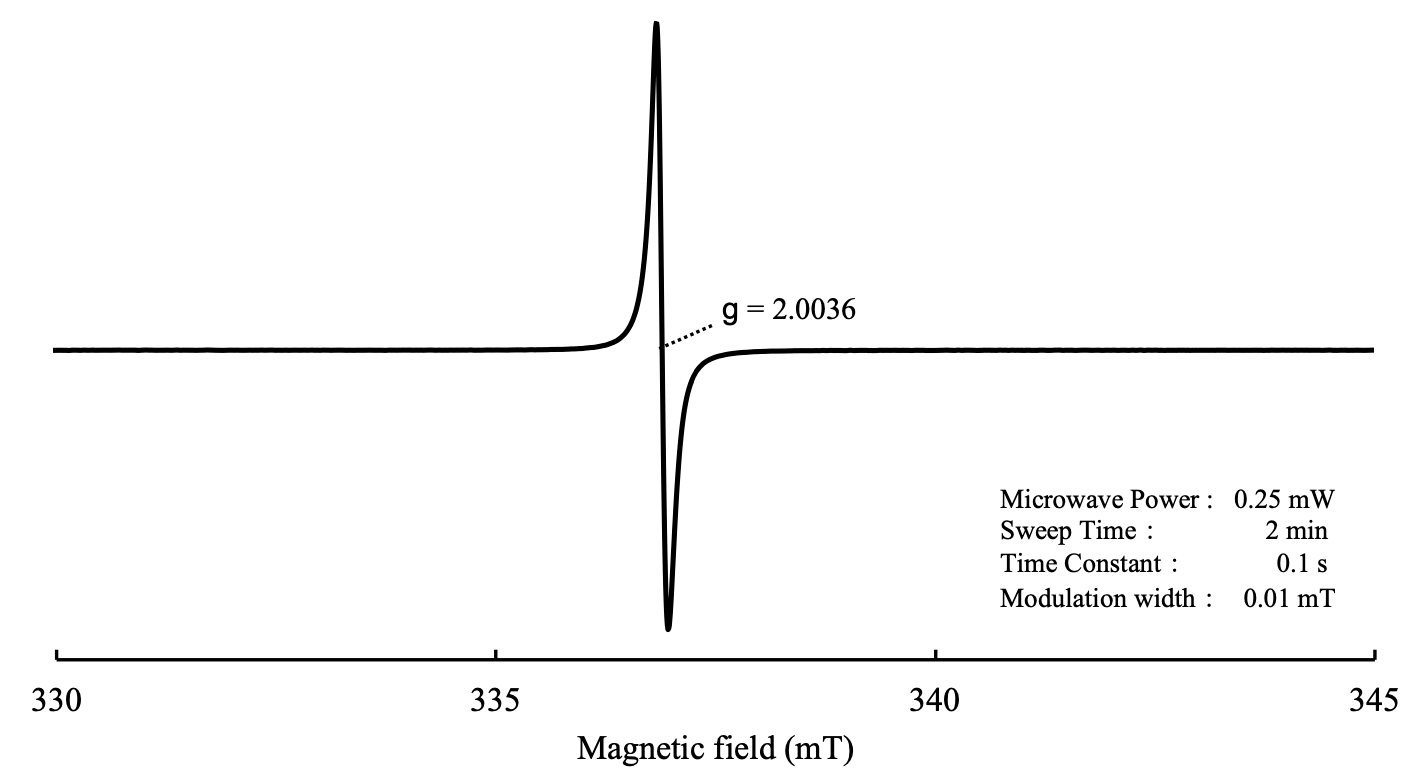
Figure 2. ESR signal of DPPH
Solutions by field
Electrical / Electronic Component
Related products


Are you a medical professional or personnel engaged in medical care?
No
Please be reminded that these pages are not intended to provide the general public with information about the products.