


ESR measurement condition ** Microwave power ② **
ER220005E
Microwave power dependence - room temperature and low temperature
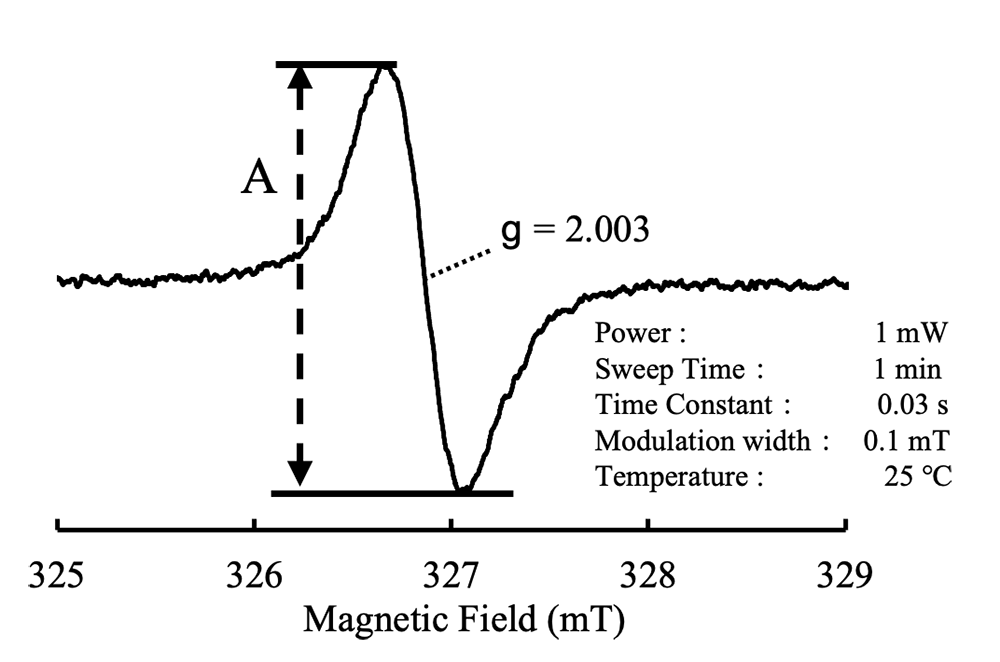
Figure 1. ESR signal of carbon sample
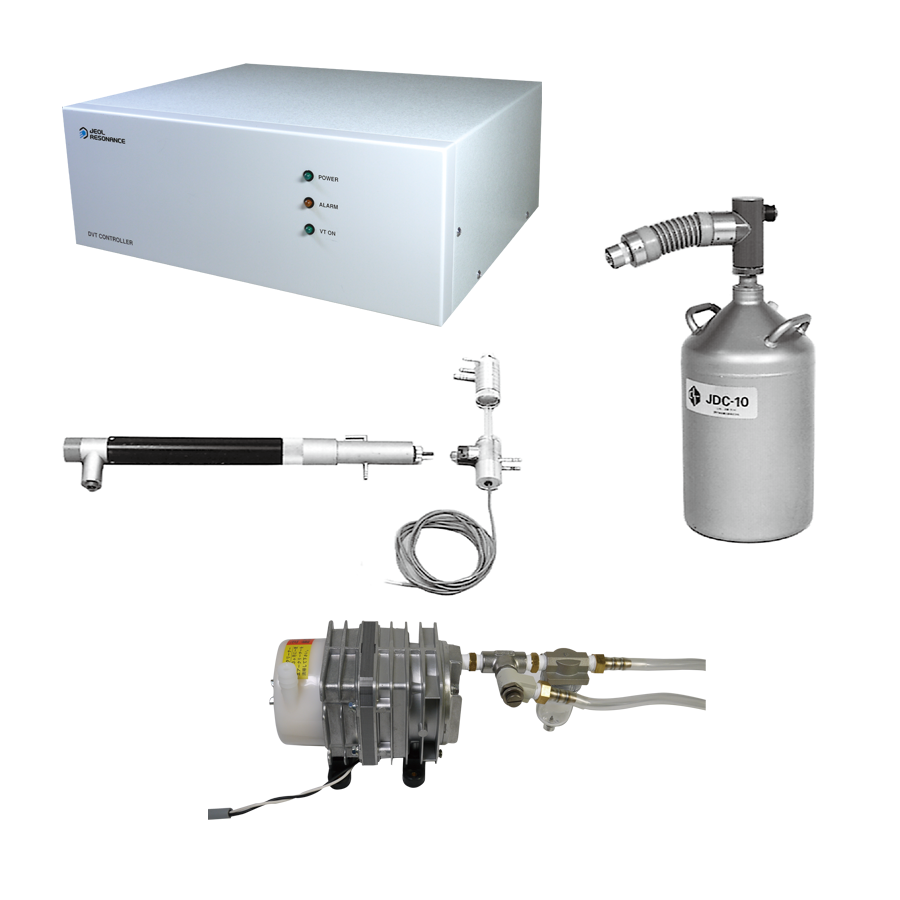
The microwave power dependence of the ESR signal of carbon sample was measured at 25 °C and -150 °C. A variable temperature controller (ES-13060DVT5) was used for temperature control. Figure 2 shows the ESR signal intensity (A in Figure 1) changes with the square root value of microwave power.
Generally, the saturation phenomenon of the ESR signal due to microwave power is affected by the unpaired electron concentration and temperature. Saturation of the ESR signal intensity is more likely to occur due to the longer spin-lattice relaxation time T1 when the unpaired electron concentration is low or at low temperatures. For observing unsaturated ESR signal, it is necessary to confirm the microwave power dependence at the measuring temperature for each sample and use the microwave power within the range where the signal intensity increases linearly.
The saturation of the ESR signal intensity was observed at around 0.36 mW (square root value: 0.6) when carbon sample is measured at 25 °C. The saturation of the ESR signal intensity was observed at around 0.09 mW (square root value: 0.3) when carbon sample is measured at -150 °C. In the case of carbon sample, the microwave power must be set to 0.09 mW or less in order to observe the ESR signal from room temperature to -150 °C without saturation. Therefore, confirmation is required when measuring an unknown sample because appropriate microwave power varies depending on the sample and measurement temperature.
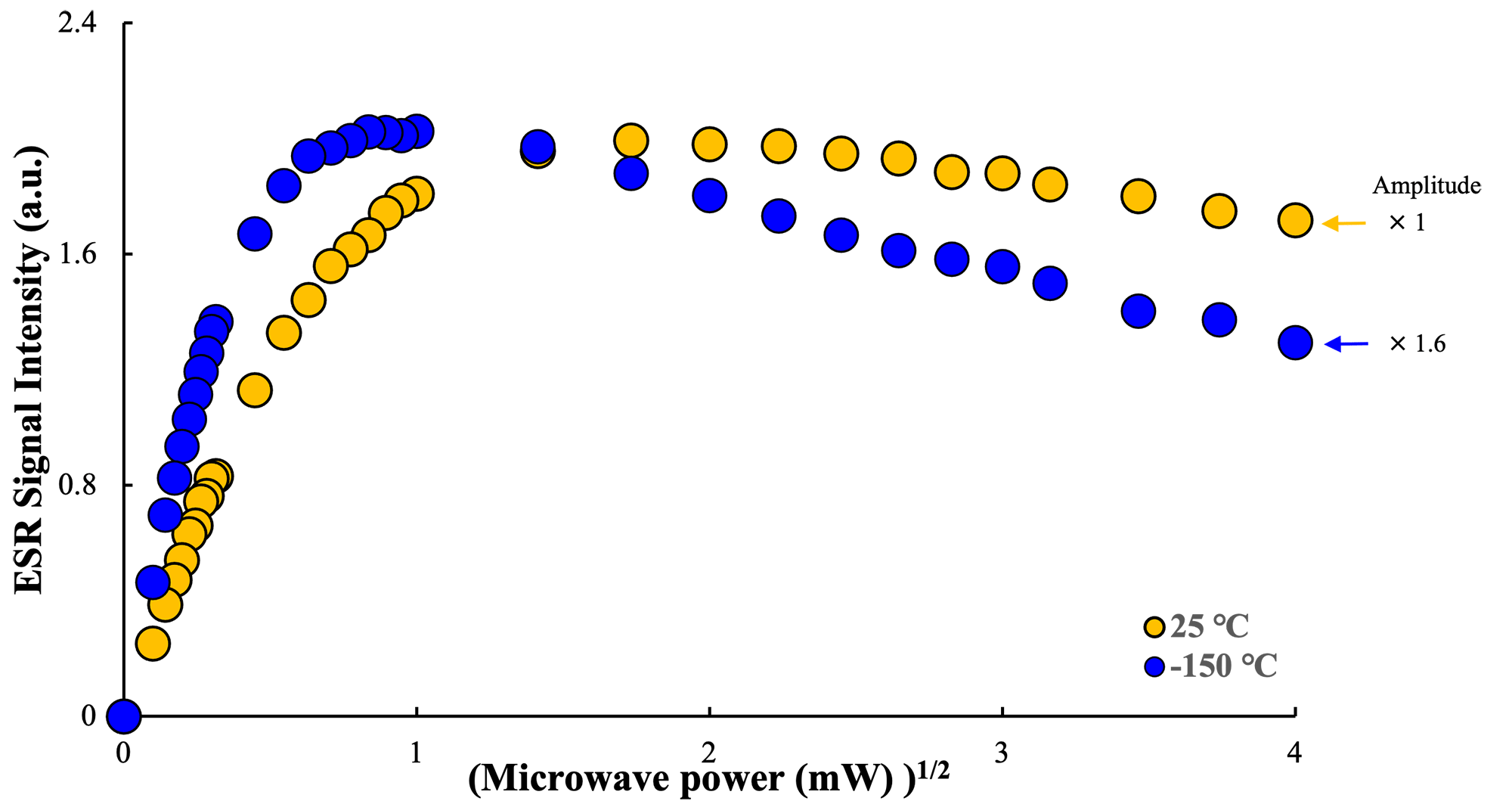
Figure 2. Microwave power dependence of carbon sample ( 25 °C and -150 °C)
Solutions by field
Related products


Are you a medical professional or personnel engaged in medical care?
No
Please be reminded that these pages are not intended to provide the general public with information about the products.