


ESR measurement condition **Sweep time and time constant**
ER220004E
Relationship between sweep time and time constant
A balance is important in setting the sweep time and the time constant, and selecting an inappropriate combination may result in a decrease in resolution or a decrease in sensitivity. Figure 1 shows the results of measuring perylene with a fixed sweep time of 8 min and varying time constants. With a short time constant, even fine signals can be observed, but at the same time, they are strongly affected by noise. With a long time constant, it will not be able to follow changes in the signal and a broad signal will be detected. A longer time constant is better for S/N, and a smaller one is better for signal responsiveness. The optimum time constant for recording ESR signal can be estimated by using Equation (1). In this case, the time constant τ is 0.075 s, so we can find that the measurement at 0.03 s satisfies this condition.
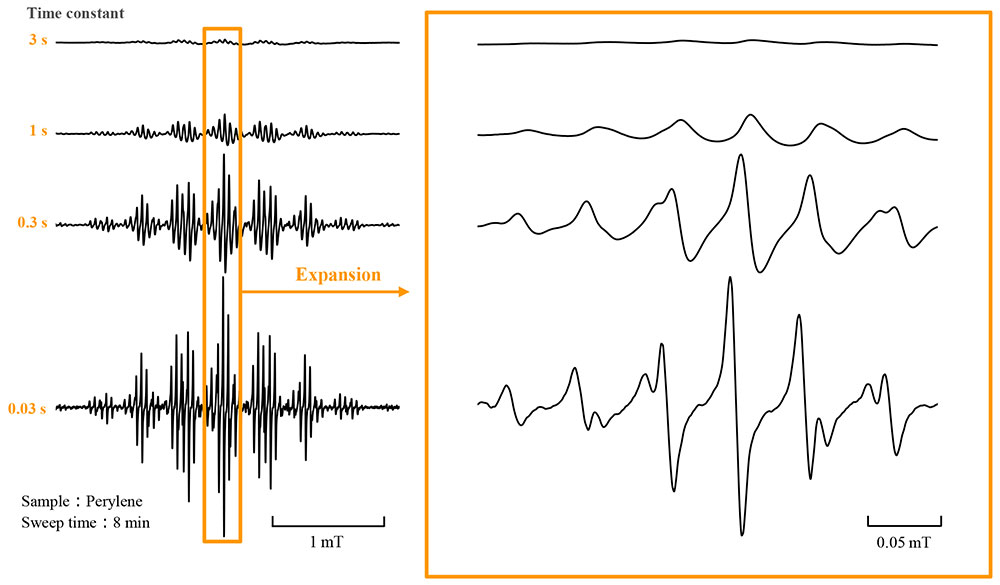
Figure 1. Change of the ESR signal with the time constant

Solutions by field
Related products


Are you a medical professional or personnel engaged in medical care?
No
Please be reminded that these pages are not intended to provide the general public with information about the products.