


Analysis of Cracks in Brass Piping Parts
Identification of source of trouble by XRF and EPMA
Introduction
In order to understand the cause and minimize the recurrence of a product malfunction, it is necessary to pursue defects at an early stage.
An X-ray fluorescence spectrometer (ED-XRF) can provide fast, non-destructive elemental analysis for any sample state such as solid, liquid, or powder. It can be utilized as a quick screening instrument to track down the source of problems.
ED-XRF
A brass pipe used for water-cooling showed cracks which resulted in water leaking. Using ED-XRF, we conducted elemental analysis at the crack defect and also away from the defect area.
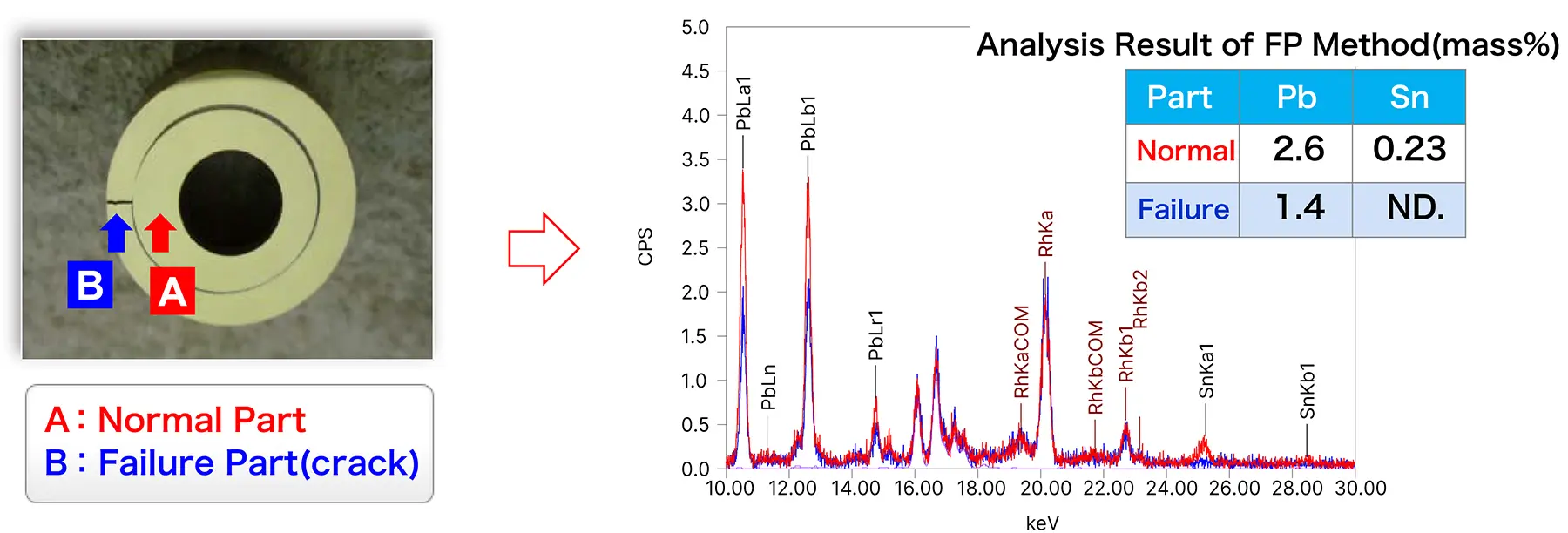
The elemental analysis results reveal that there is a difference in the content of Sn and Pb. Since the element distribution in the cracked part differs from the normal area, we conducted additional tests using EPMA.
EPMA
EPMA can confirm not only the composition but also the spatial distribution.
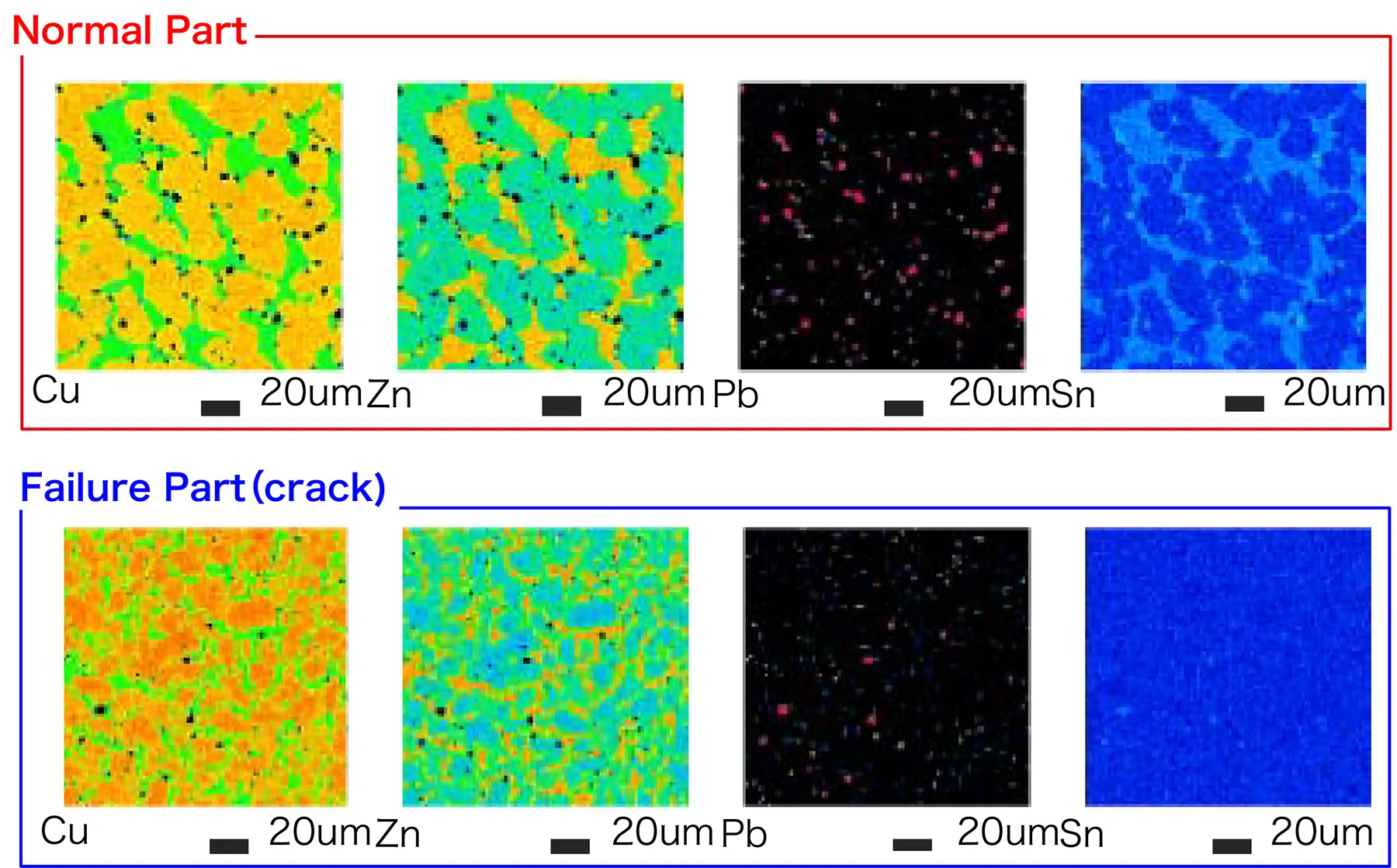
Elemental mapping using EPMA showed that the size of structure of the major elements Cu and Zn differ in the failed area versus the normal section.
Summary
With ED-XRF, information about the elements contained can be obtained quickly and easily. In addition, based on this element information, it is possible to then determine what type of additional analysis would support this investigation. EPMA's elemental mapping enables acquisition of elemental distribution state and organization information, helping to identify the source of trouble.
Solutions by field
Related products


Are you a medical professional or personnel engaged in medical care?
No
Please be reminded that these pages are not intended to provide the general public with information about the products.