


Electrode formation supporting world-leading nitride optoelectronic device research
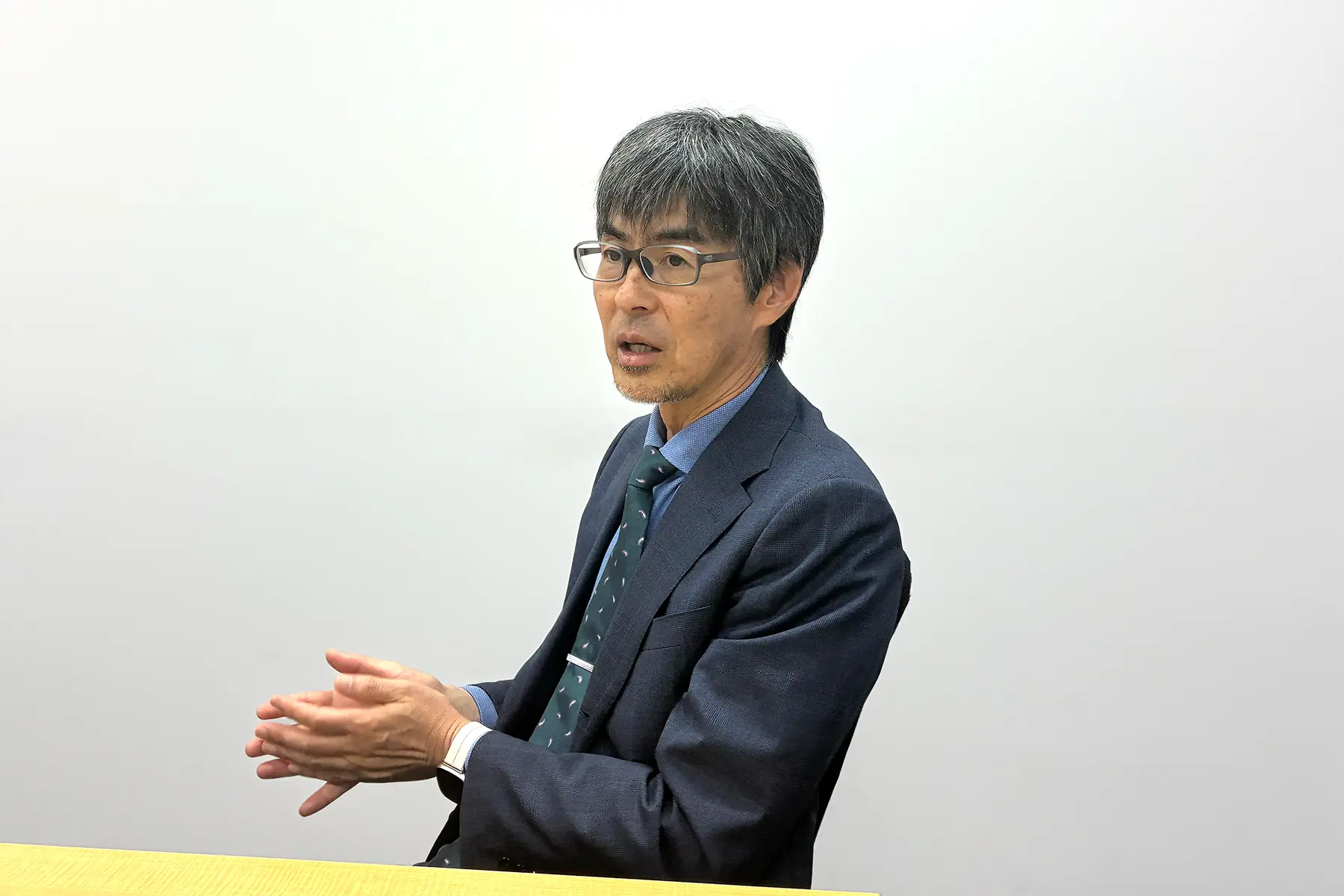
INTERVIEW 19
Prof. Tetsuya Takeuchi
Director, Optoelectronic Device Research Center
Department of Chemistry and Materials Science,
Faculty of Science and Technology,
Meijo University
Blue vertical-cavity surface-emitting lasers (VCSELs) and deep-ultraviolet(UV) LEDs based on nitride semiconductors. The Takeuchi Laboratory is pursuing research aimed at developing optoelectronic devices with world-leading performance. One of the essential steps in this research is electrode formation, which is performed during the final stage of device creation.
In 2013, the Takeuchi Laboratory adopted "BS Series" electron beam deposition source for research and development from JEOL. Since then, the system has been used to form electrodes for VCSELs and deep UV LED. What is the value of the BS Series, which has supported research for over 10 years since its introduction? We asked Professor Takeuchi about the background behind the introduction of the system, its performance and usability in the research environment, and prospects for the future.
Expanding the possibilities of nitride semiconductors through research on Blue VCSELs and Deep-UV LEDs
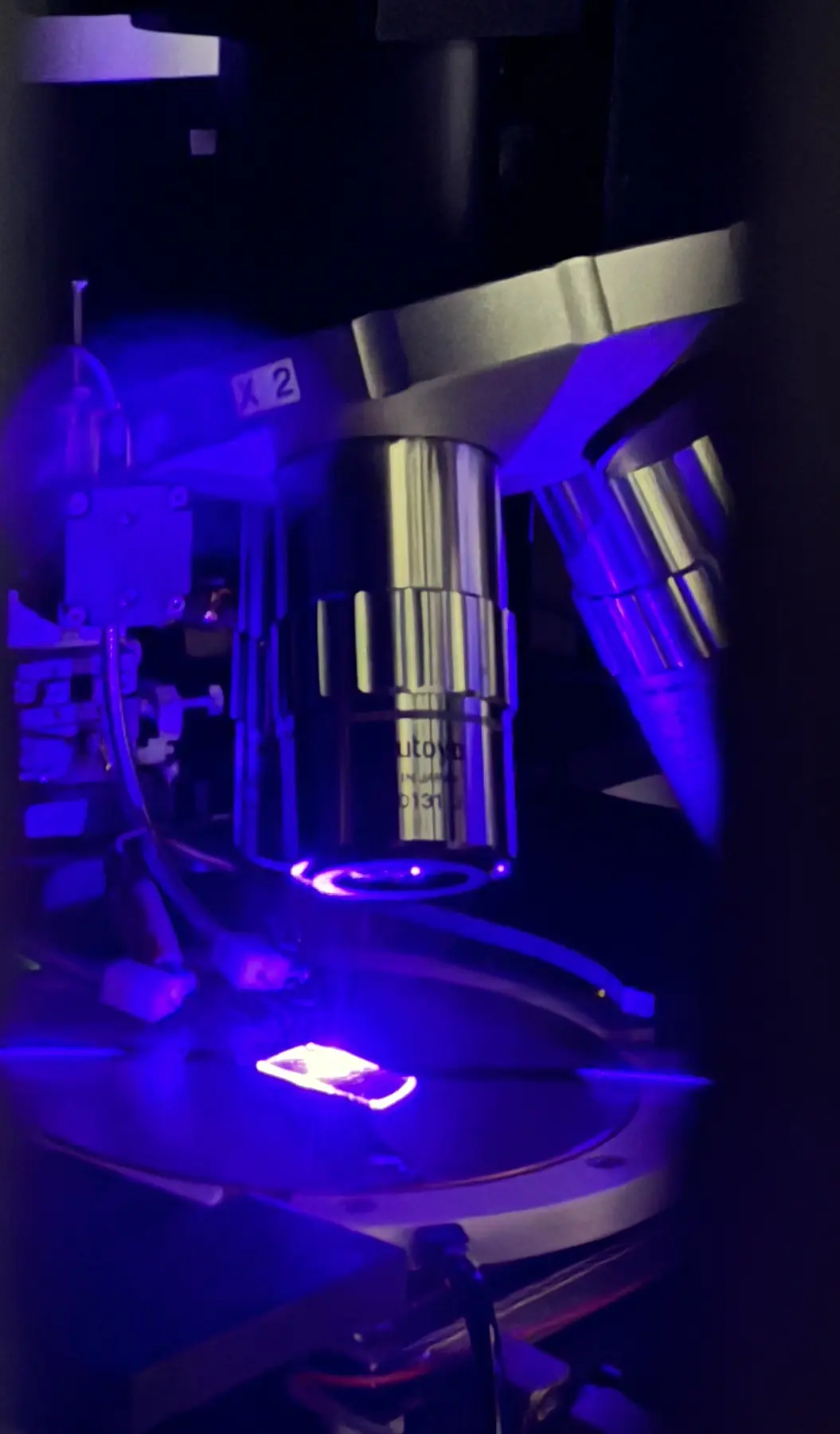
Professor Takeuchi's laboratory conducts research on optoelectronics devices based on nitride semiconductors. The laboratory's primary research themes are blue vertical-cavity surface-emitting lasers(VCSELs) and deep-UV LEDs.
Commercialization of blue LED has greatly expanded the possibility of nitride semiconductors. Prof. Takeuchi is aiming at the realization of new optical devices that lie beyond them. Currently, he is promoting research on the VCSEL and deep UV LED of higher performance as well as new application opportunities through joint research with other fields.
Profs. Takeuchi told us, "Research is not simply about creating devices."
"Of course, developing a world-class device is important. However, that alone is not enough for technology to become widely used in society. Going forward, I think it is important to think about including its application, such as "how the light can be utilized."
The search for an electrode formation device that keeps research moving
One of the important steps that can affect the performance of optical devices is electrode formation. The laboratory of Prof. Takeuchi uses an electron beam deposition source to form electrodes. The quality of this step greatly impacts the performance and reproducibility of the entire device.
Before adopting the BS Series, they had been using equipment from other manufacturers. However, they encountered difficulties in achieving stable evaporation during their research.
Prof. Takeuchi recalls those days.
"Electrode formation is the last step of producing a device. If it does not go well, all of the crystal growth and device fabrication processes carried out up to that point can be wasted. Therefore, achieving stable deposition was the most crucial requirement."
Given this background, Professor Takeuchi placed the highest priority on ensuring long term operational stability and therefore decided to consider introducing a new deposition system.
Laboratory-ready size and expandability: The decisive factors behind choosing the BS Series
While considering a new deposition device, Prof. Takeuchi focused primarily on whether the system was well suited to research and development applications.
In the laboratory, instead of using large mass production equipment, researchers repeatedly prototype and evaluate while adjusting conditions according to each research theme. For that reason, the equipment needed to offer high stability as well as flexibility to accommodate changes in the research content.
Prof. Takeuchi explains what led them to evaluate the BS Series highly, as follows.
"Its size was ideal for use in the laboratory, not too large, not too small. I found it to be a well-balanced instrument for research and development purposes."
The flexibility to integrate new features according to the research content was also a significant attraction.
Research is all about wanting to try new ideas and approaches. That's why the instrument needs to allow for options and expandability, I believe."
The size and expandability suited to these research and development applications were key factors in their decision to introduce the BS Series.
Efforts toward aluminum electrode formation and high reflectivity supported by the bombardment deposition source.
The laboratory of Prof. Takeuchi introduced and commissioned the second BS Series in 2020, after introducing the first BS Series in 2013.
"The first instrument we installed was equipped with an option for oxide film deposition. In practice, however, it was used mainly for metal deposition, while the oxide deposition option saw little use. We therefore decided to use the second unit exclusively for metal deposition."
"One of the challenges we wanted to overcome with the second unit was the insufficient aluminum deposition rate of the first unit. A sufficiently high deposition rate is essential for achieving adequate reflectance with aluminum films."
Prof. Takeuchi told us about the bombardment deposition source and its impact as noted below.
"Adequate reflectivity cannot be achieved with aluminum unless the deposition rate is sufficiently high. In this sense, the bombardment deposition source is very effective."
Initially, they considered adoption of resistance-heated evaporation source which would allow for a higher deposition rate. However, through repeated discussions with JEOL, they were presented with the idea of using a bombardment deposition source as a method for high-speed aluminum deposition, and they decided to adopt it.
It is also an important element supporting the research and development sites that the system configuration can be considered while technical proposals are provided according to the research themes and materials.
Equipment that never breaks supports world-class results
For research and development purposes, performance of equipment is one thing, and its property that it can stably serve is another. Prof. Takeuchi highly evaluated the "reliability" of JEOL's BS Series that he has used for a long time.
If an instrument is out of order, it will have an impact on the research itself.
"When the instrument is out of order, time and money are spent determining "how to fix it" and "when it will be restored."
Above all, in research of a compound semiconductor that needs many repeated experiments, the meaning of the ability of equipment to operate continuously and reliably is quite significant.
"We consider extensive experimentation essential to research. When we achieved the world's highest efficiency in blue vertical-cavity surface emitting lasers, we didn't measure five samples, we measured five hundred.
It is a world where breakthroughs are reached only by fabricating and evaluating large numbers of samples."
In reality, the deposition work itself takes an hour or two. According to Prof. Takeuchi, one can learn the basic operation of the instrument in three days, and can operate it alone in a week. It includes a wide range of automated functions, which is one of the reasons that the instrument is easy for students to operate.
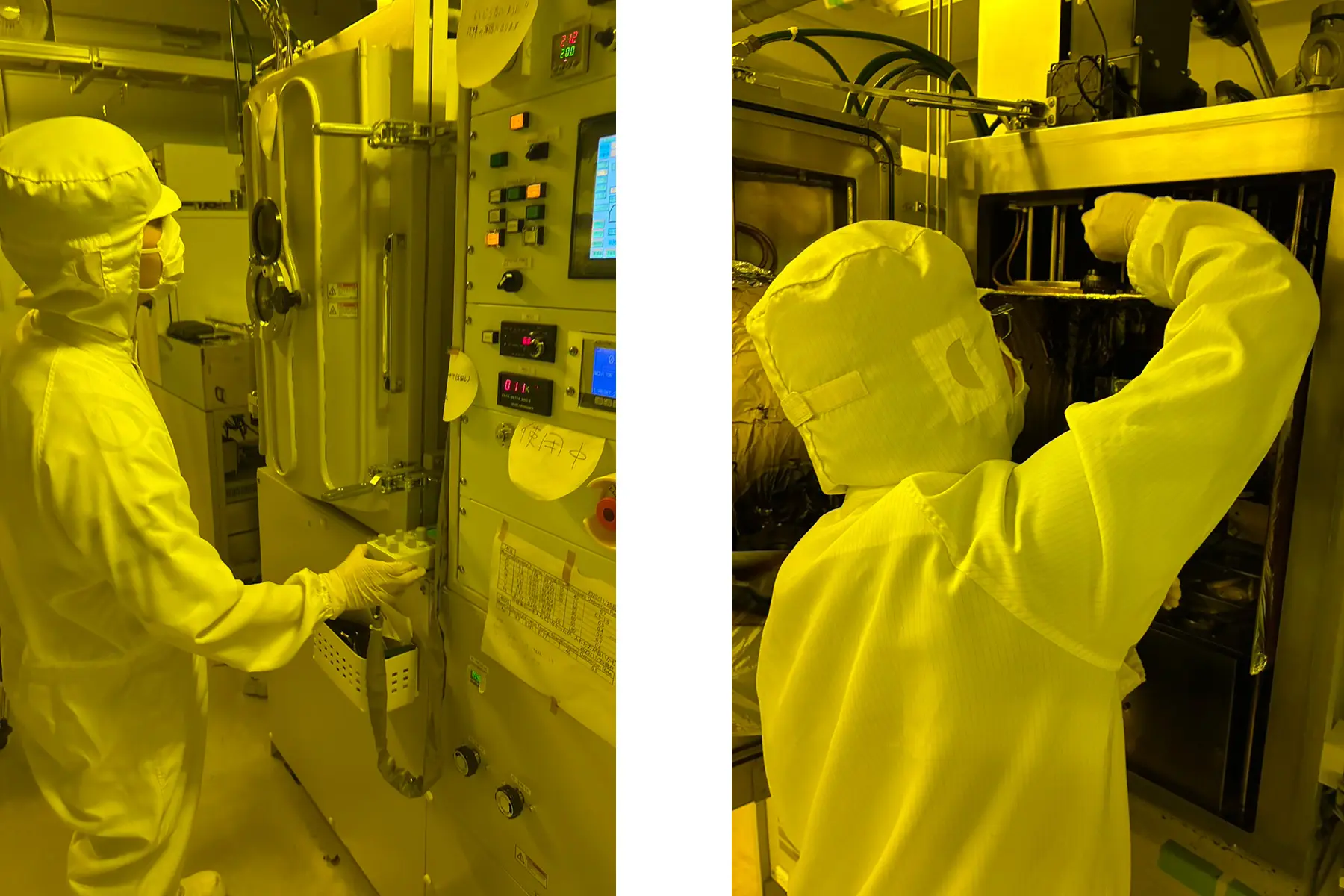
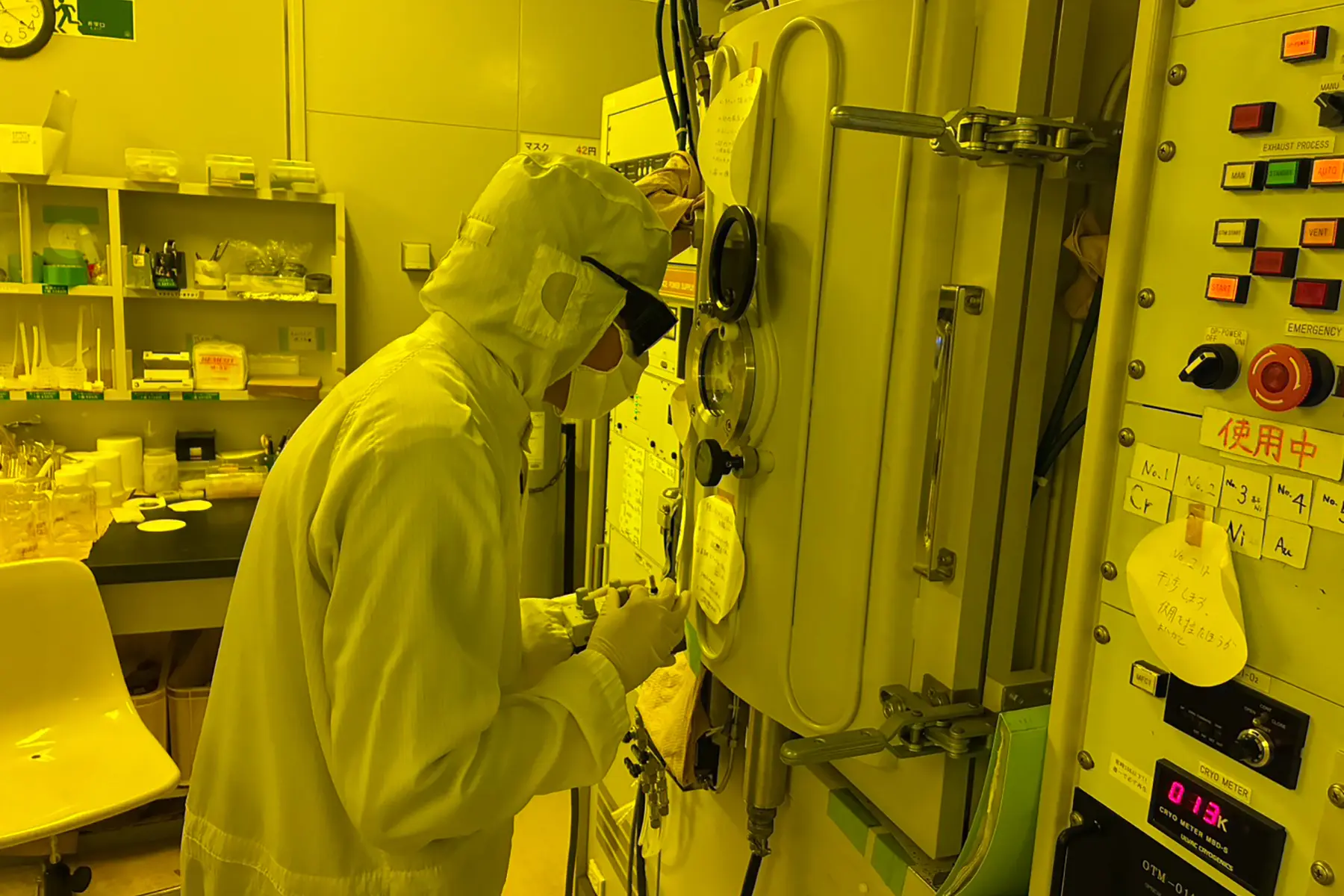
(Photo: Students using the BS Series in a clean room)
In addition, they evaluate the support structure of JEOL, in addition to the instrument itself.
"JEOL's support is very good, and they periodically ask us, "Don't you have any problems?" "Do you have any questions or concerns?".
I mostly replied to them "the instrument never breaks down, so you do not have to worry". Still, they continue following up with us, which made us feel very relieved.
Such instrument stability and continued support resulted in research outcomes.
"So far, we have published several papers reporting the world class performance. For example, we have reported the world's highest value of electricity conversion efficiency in blue VCSELs twice. The outcomes were obtained using the BS Series, and all of our research results on optical devices since 2013 have been produced with this system.
In research and development, the accumulation of each experiment result brings about successful outcomes. The continuance of daily research, without mechanical stoppage of instruments, is the base that supports development of world class devices.
Looking ahead: The future of optoelectronic devices and research tools that support them
The research of optical devices using nitride semiconductors shows the expansion to new application fields. Prof. Takeuchi believes that not only performance improvement of the device itself, but also how to utilize the light in society will be important.
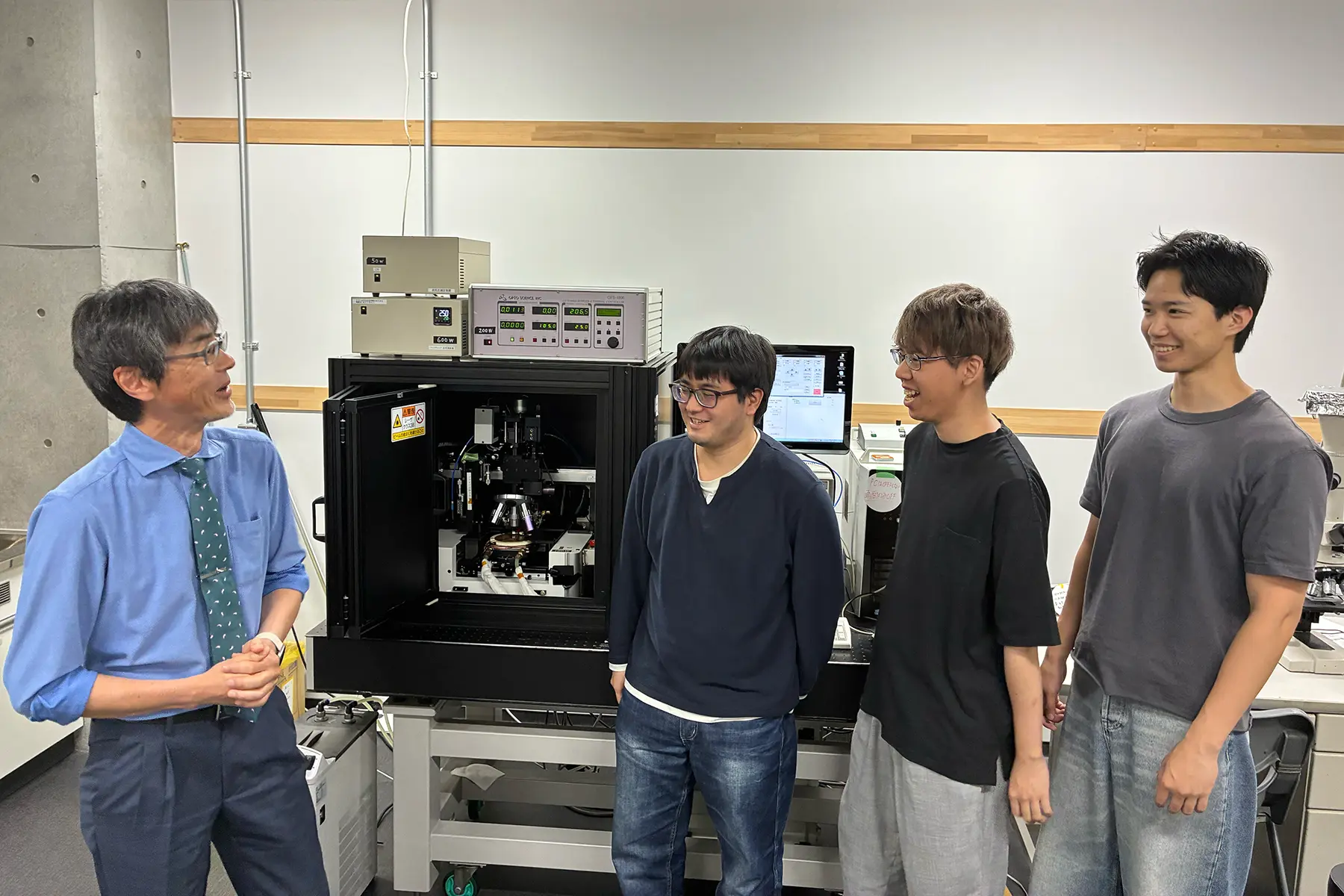
"Young researchers today value not only pursuing research because it is intellectually interesting, but also understanding how it contributes to society. As they have experienced infectious diseases closely, they are strongly aware of how their research can benefit society."
While research themes are widened, the instruments that support research and development are also required to flexibly take in new technologies and functions.
"Research themes change with time. Because it is an instrument for research and development, I hope that we can continue using the instrument for a long time while flexibly incorporating new technologies and functions.
In addition, they hope for a more compact instrument that can cover the necessary areas using the minimum amount of materials.
BS Series continued supporting the research in the laboratory of Prof. Takeuchi for more than a decade. While research themes continue changing, the instrument is also required to advance along with the research.
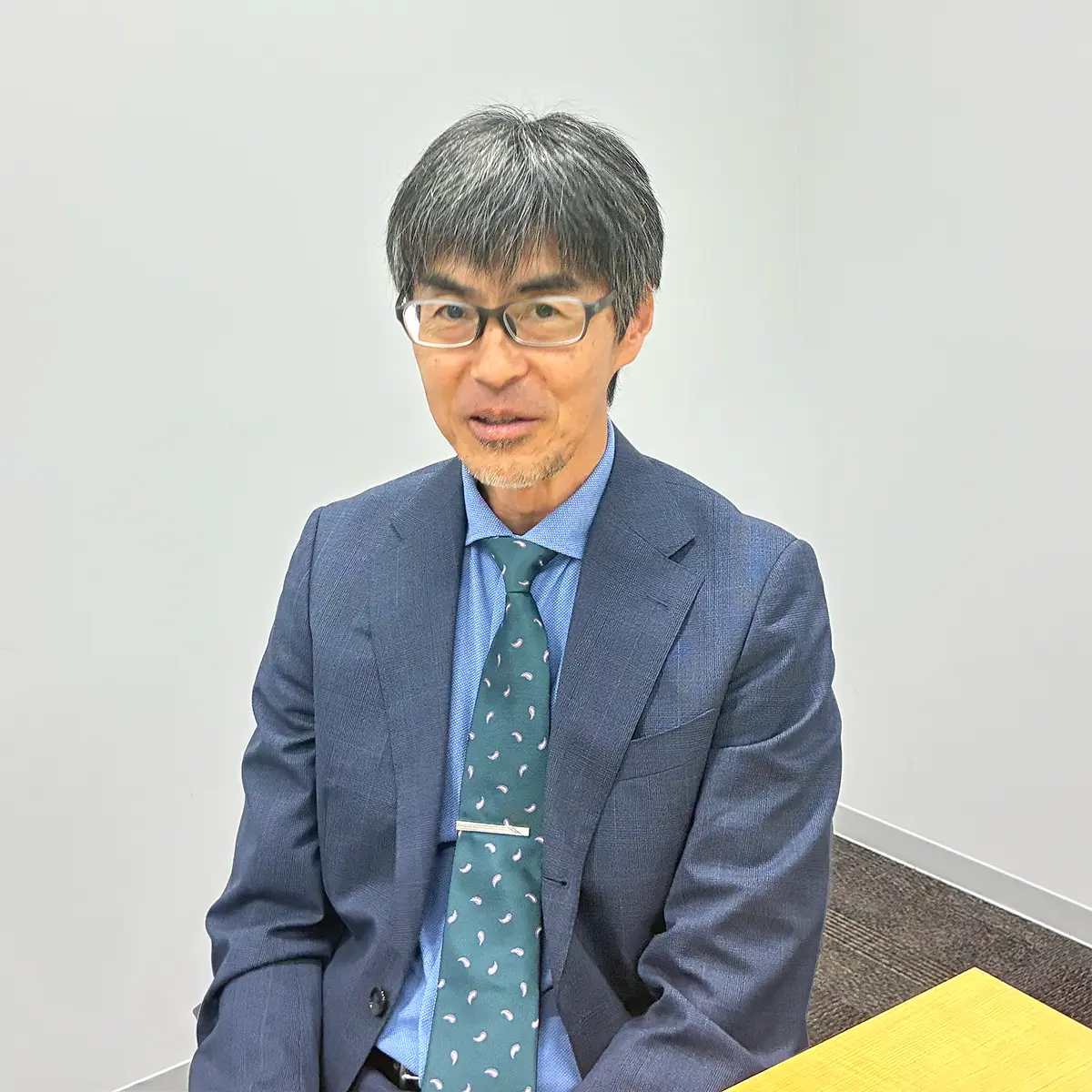
Tetsuya Takeuchi Ph.D.
Prof. Tetsuya Takeuchi
Director, Optoelctronic Device Research Center
Department of Chemistry and Materials Science,
Faculty of Science and Technology,
Meijo University
After working for private companies, he was appointed to Meijo University in 2010. Inheriting the lineage of blue LED research, he has been engaged in studies on vertical cavity surface emitting lasers (VCSELs) and deep UV LEDs. He is advancing research and development with the aim of realizing optical devices with world class performance.
Products
Thin Film Formation Equipment (E-Beam and Plasma Sources, etc.)