

Looking beyond the practical application - The frontline and challenges of all-solid-state batteries

INTERVIEW 18
Professor Shigeo Mori
Department of Materials Science
Graduate School of Engineering, Osaka Metropolitan University
All-solid-state batteries are expected to become the next-generation batteries for electric vehicles, yet
many challenges remain before full-scale commercialization can be achieved. At the All-Solid-State Battery
Research Center of Osaka Metropolitan University, multiple research groups are tackling these technological
issues while also promoting industry collaboration and human resource exchange through the "Consortium for
Practical Application of All-Solid-State Batteries."
Where exactly do the difficulties of all-solid-state batteries lie, and how does the university aim to
engage with industry? We spoke with Professor Shigeo Mori to learn more.
Advancing All-Solid-State Battery Development Through Industry-Academia Collaboration
There is a list known as the "Top 2% of the World's Most Influential Scientists"*1, which ranks researchers by the number of citations in each field. In the 2025 edition, five researchers from the All-Solid-State Battery Research Center at Osaka Metropolitan University were included.
*1 "Science-wide author databases of standardized citation indicators"- created and published by Stanford University (USA) and Elsevier (Netherlands).
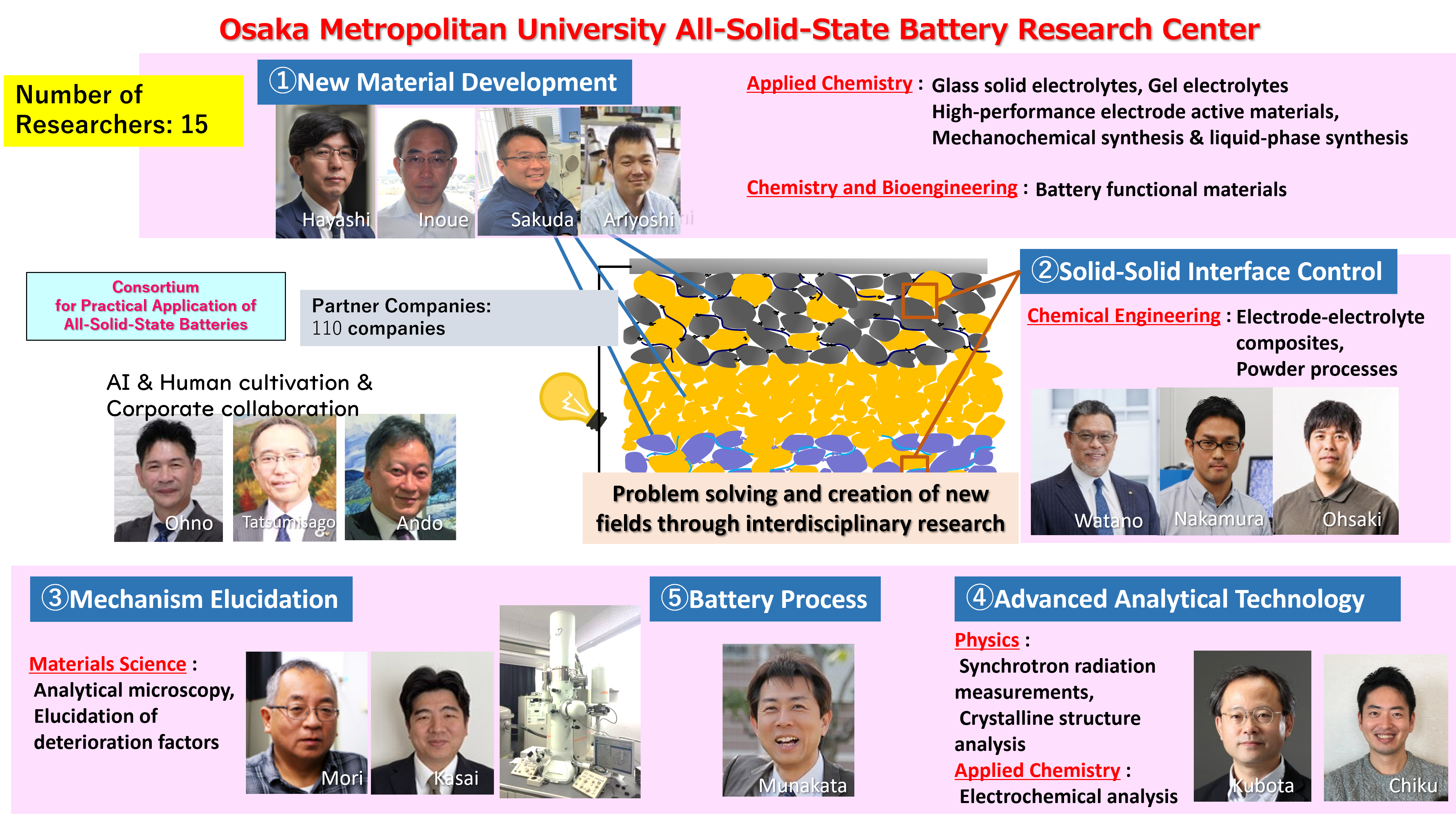
The center consists of five research groups--such as 1. new materials development and 2. solid-solid interface control--and nearly all of them include researchers listed among the world's most influential scientists.
Cited from News Letter No. 2, All-Solid-State Battery Research Center, Osaka Metropolitan University
Japan Patent Office: National Solid-State Battery Patent Application
Technology Trend Survey
List of Top Research Institutions by Number of Published Papers
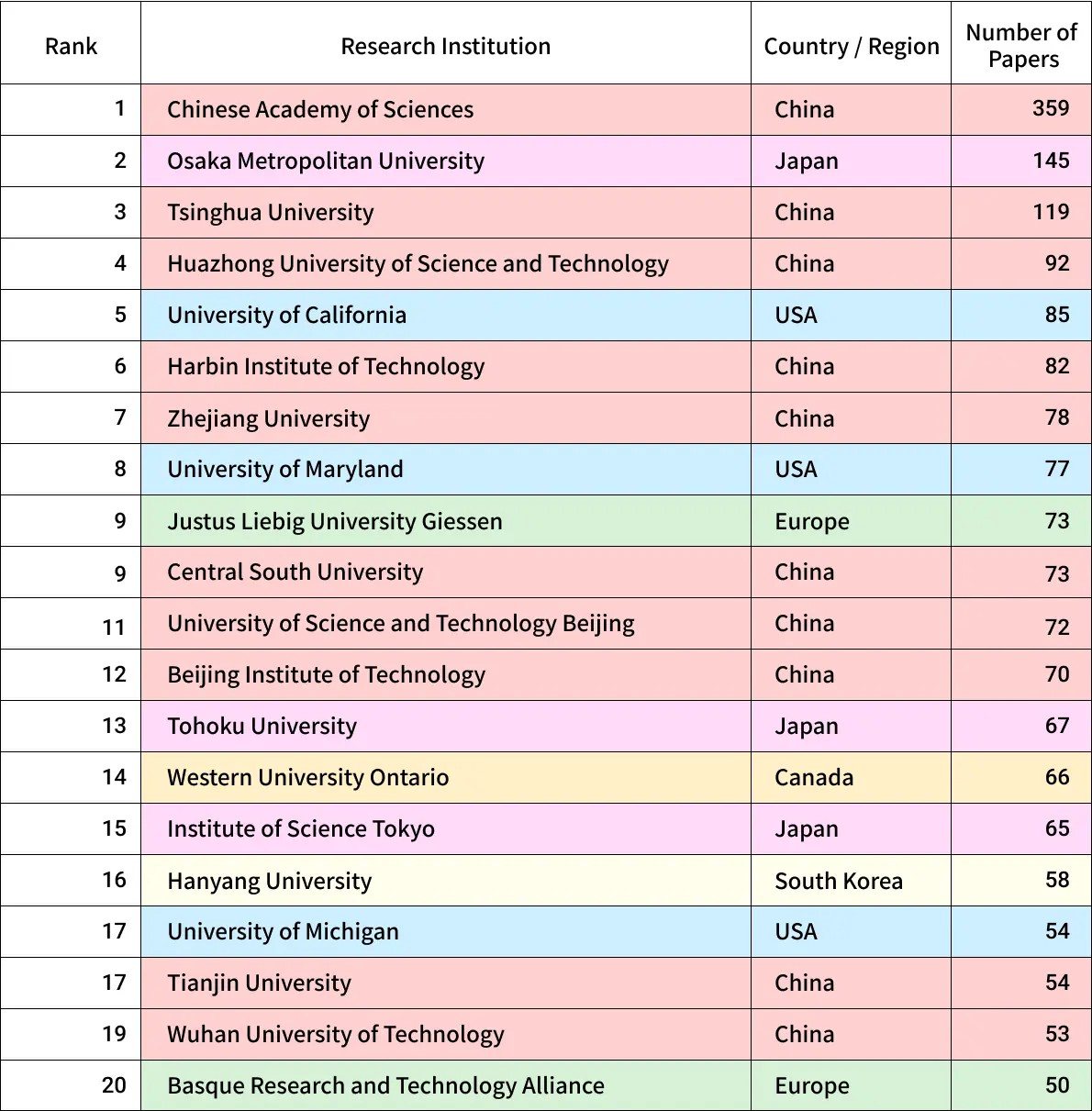
Cited from News Letter No. 2, All-Solid-State Battery Research Center, Osaka Metropolitan University
According to the Japan Patent Office's "FY2023 Patent Application Technology Trend Survey," all-solid-state batteries are identified as a technological field in which Japan holds a competitive advantage. Furthermore, based on the number of papers published between 2013 and 2022 on solid electrolytes, Osaka Metropolitan University ranks 2nd in the world and 1st in Japan.
These achievements demonstrate that Osaka Metropolitan University is one of the world's leading hubs for all-solid-state battery research.
All-solid-state-batteries are expected as next generation rechargeable batteries, especially for
electric vehicle (EV) drive systems, and many battery and automobile manufacturers are currently
developing them. However, there seems to be numerous technological and cost-related challenges remaining
before commercialization can be achieved.
Professor Mori, a member of the Mechanism Elucidations Group and also listed in the 2025 "Top 2% of the
World's Most Influential Scientists", explains the technical difficulties and challenges of the
research.
"Inability to return to the original state"
The basic structure of the all-solid-state batteries consists of a cathode active material (*2), an anode active material (*3), and a solid electrolyte between them. During charging and discharging, lithium ions migrate through the solid electrolyte. In addition, electrolytes and active materials are basically produced from powders. The All-Solid-State Battery Research Center conducts research of many types of materials, and they place an emphasis, in particular, on lithium ion rechargeable batteries with sulfide-based electrolytes.
*2 In case of the lithium ion rechargeable battery, material that releases lithium ions during charging and takes them in during discharging
*3 In case of the lithium ion rechargeable battery, material that takes in lithium ions coming from active materials and releases them during discharging.
Since the structure itself appears simple, there may not be any complex challenges.
The real challenge lies in "what kind of contact state these powders form and what kind of interfaces they
create," says Professor Mori.
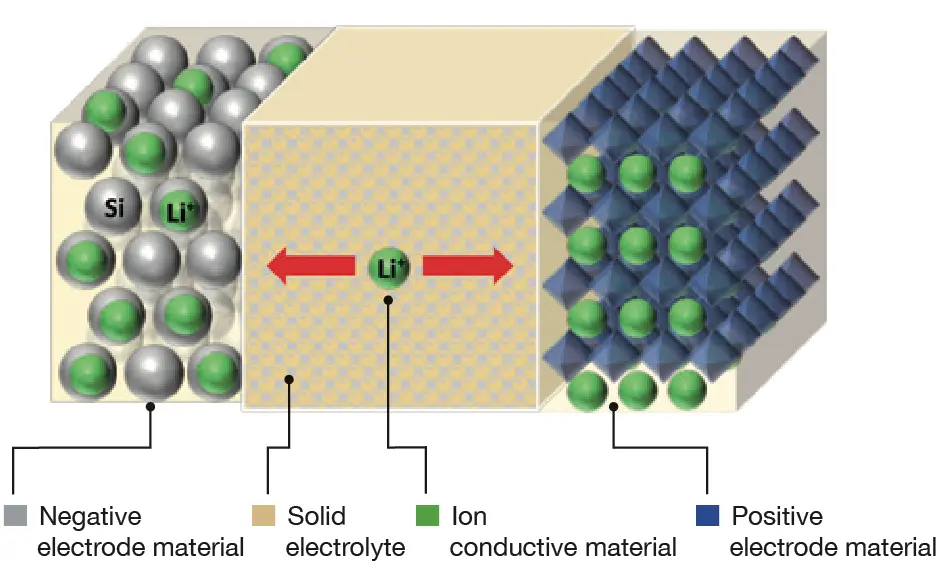
Inside of the all-solid-state battery
Interface matters - A typical example is the expansion and contraction of active materials by repeating charging and discharging. This worsens the contact between the active material and the electrolyte, increasing resistance and, in some cases, causing delamination that can lead to conditions close to insulation.
Also, "there are cases where applying voltage causes ions to move, altering the structure or triggering chemical reactions that make the battery unable to return to its original state," explains Professor Mori.
Charge carrier (lithium ions) are not the only mobile ions. There have been proposals for introducing halogens (*4) that are greater than lithium such as chlorine(Cl) or bromine(Br) in a sulfide-based solid electrolyte as the framework to facilitate lithium ions to move. However, these halogens become anions and may migrate to the active material interface during cycling or alter the composition near interface.
*4 Argyrodite-type sulfide solid electrolyte
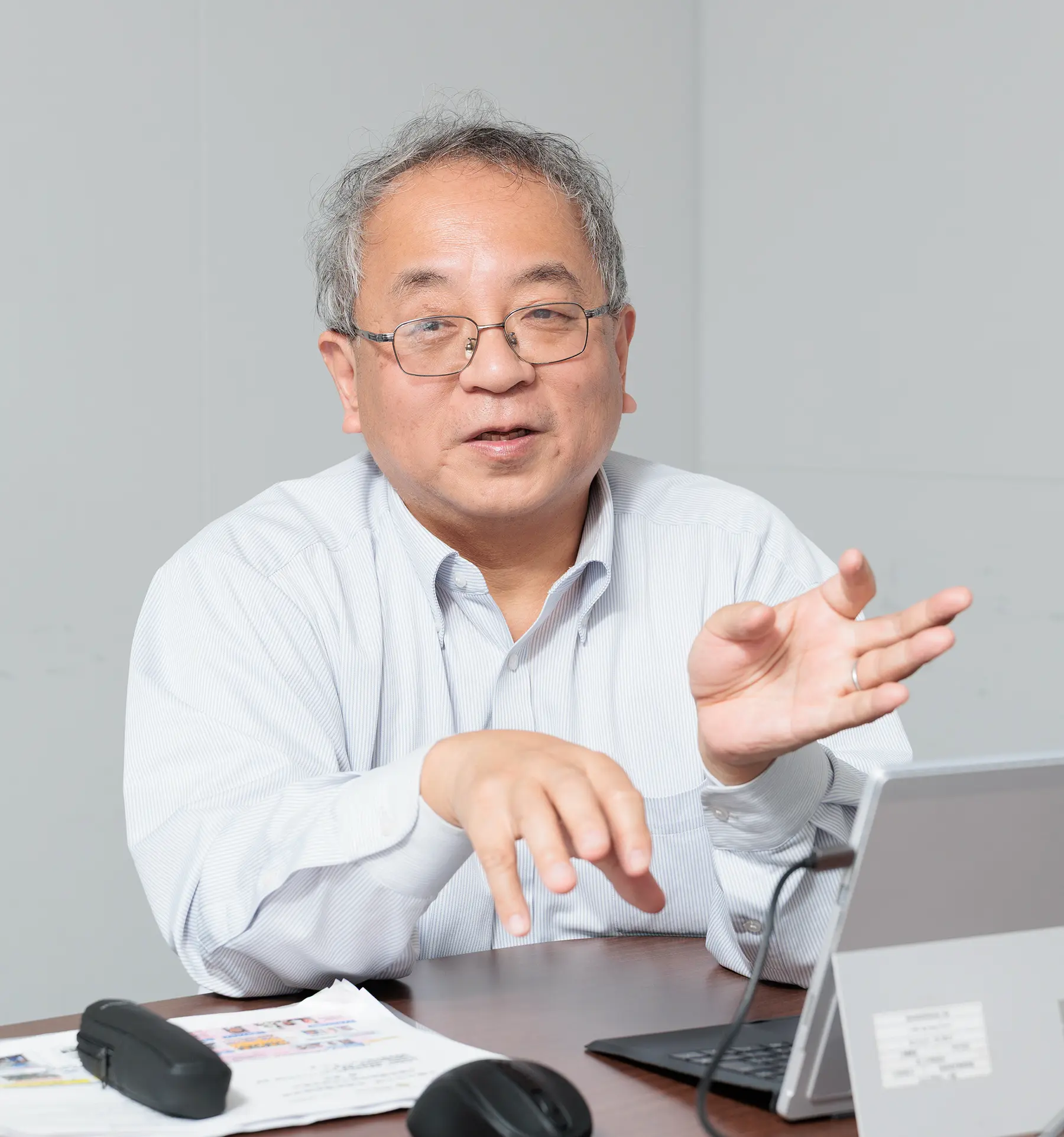
"Rechargeable batteries must fundamentally be reversible--able to return to their original state," says
Professor Mori.
If they cannot, they behave like primary batteries that are used once and discarded. In addition to
reversibility, researchers must also solve issues one by one such as "developing materials that enable
faster charging" and "designing manufacturing processes with fewer steps".
Problem solving requiring diverse instruments
Naturally, a wide range of analytical instruments are required for analyzing problems. For observing powders, observation instruments of µm-scale would do, but analyzing compositional and structural changes requires instruments capable of a nanoscale elemental distribution and a chemical state. Light elements like lithium require different measurement techniques and instruments compared to heavier elements.
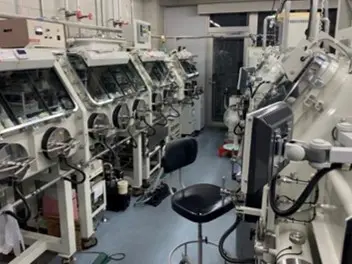
Glove box for the fabrication of all-solid-state batteries
What makes it even more challenging is that such observation and analysis need to be performed under
air-isolation environment.
The research target of lithium generates lithium hydroxide immediately when reacting with moisture in
the air, and release flammable hydrogen gas. Sulfide-based solid electrolytes react with moisture in the
air, alter their structure, generating toxic sulfide oxygen gas.
Therefore, samples must be prepared under an air-isolation environment (inside the glove box), and
sealed in airtight containers, and brought into analytical instruments. Analytical instruments must have
specifications to allow for air-isolation analysis of sample sealed in airtight containers.
A variety of specifications that have been introduced lately
The center's diverse analytical needs are reflected in the specifications of the instruments introduced in FY2025 under the "J-PEAKS" program of the Ministry of Education, Culture, Sports, Science and Technology. Four instruments as below from JEOL were installed.
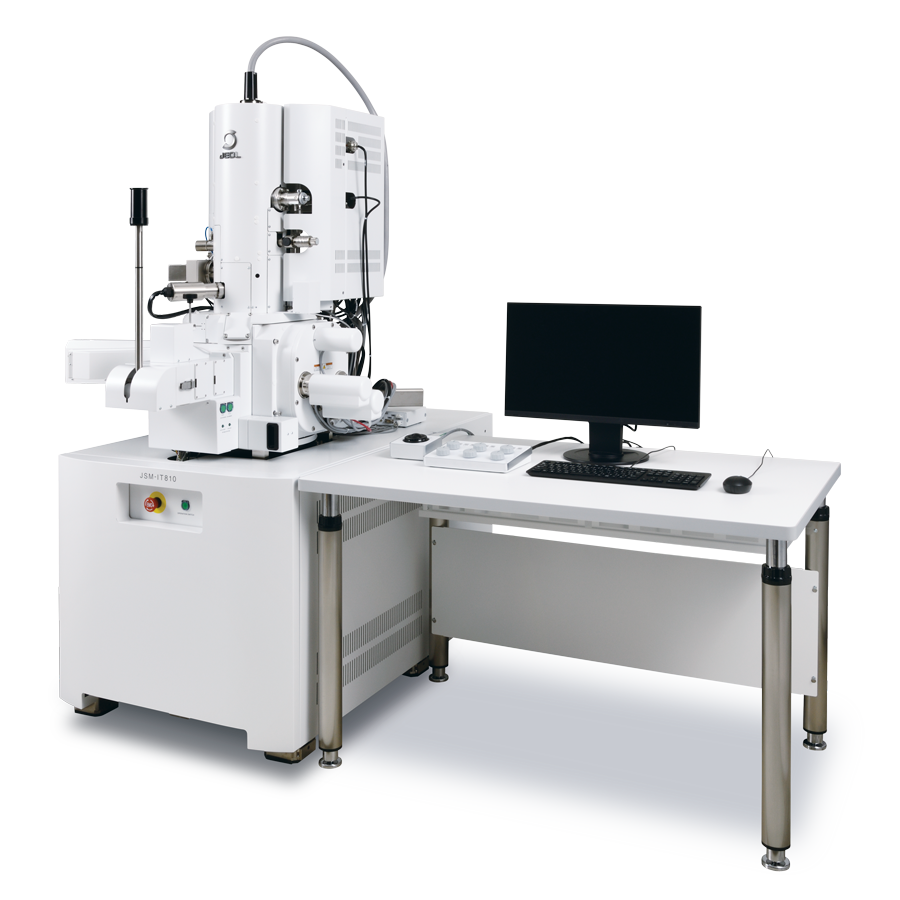
- Scanning Electron Microscope: JSM-IT810
- Gas Chromatograph Time-of-Flight Mass Spectrometer: JMS-T2000GC
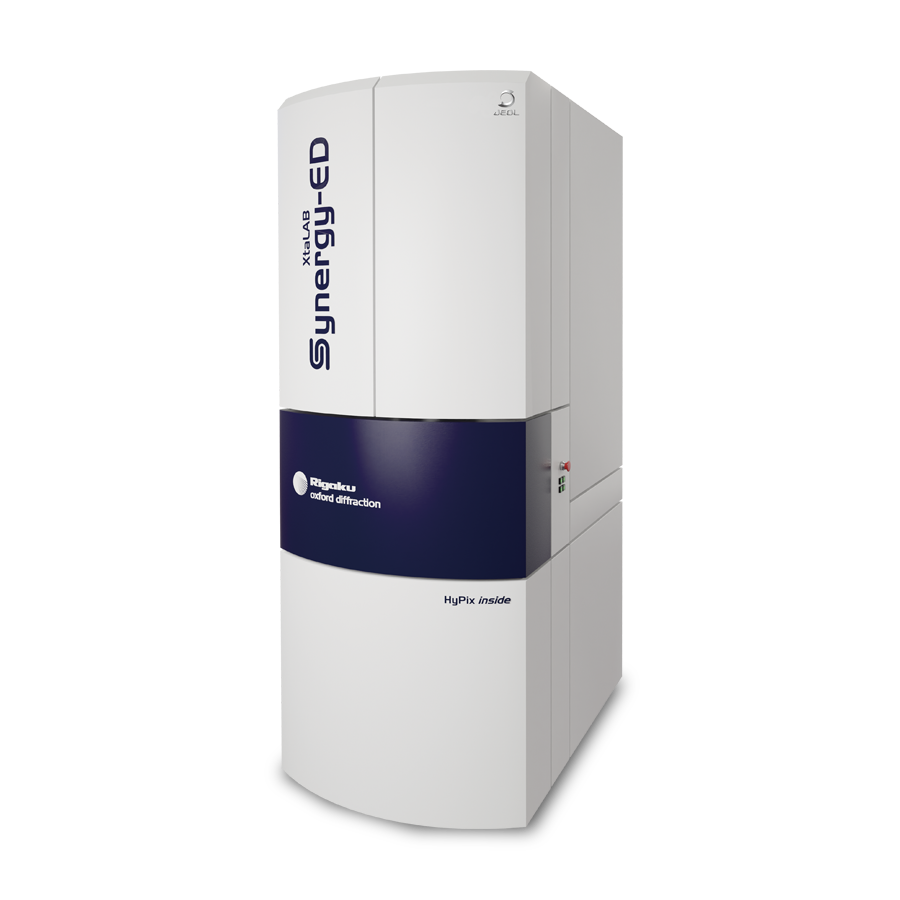
- Electron Diffractometer: XtaLAB Synergy-ED
- Energy-filter SEM
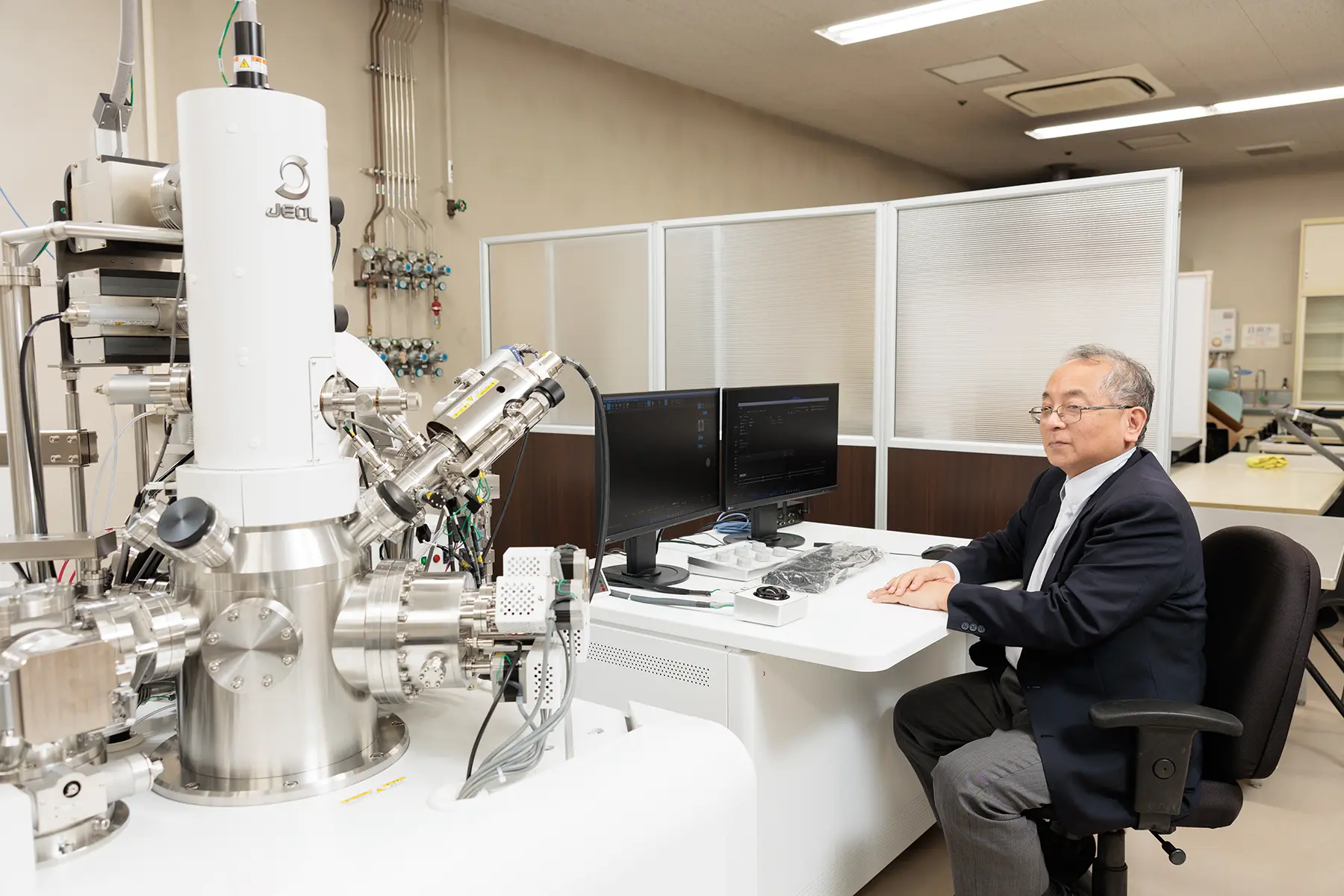
The first one, JSM-IT810 has more functions than the usual scanning electron microscope (SEM).
There are several attachments around the chamber (specimen chamber). One is the EDS (energy Dispersive X-ray
Spectrometer). This allows for qualitative and quantitative analyses, and elemental mapping of the element
observed by SEM.
Another attachment is the SXES: Soft X-ray Emission Spectrometer. SXES enables a high sensitivity analysis
of lithium, a light element which is difficult to analyze with EDS, with a high sensitivity, as well as
information related to chemical and bonding states.
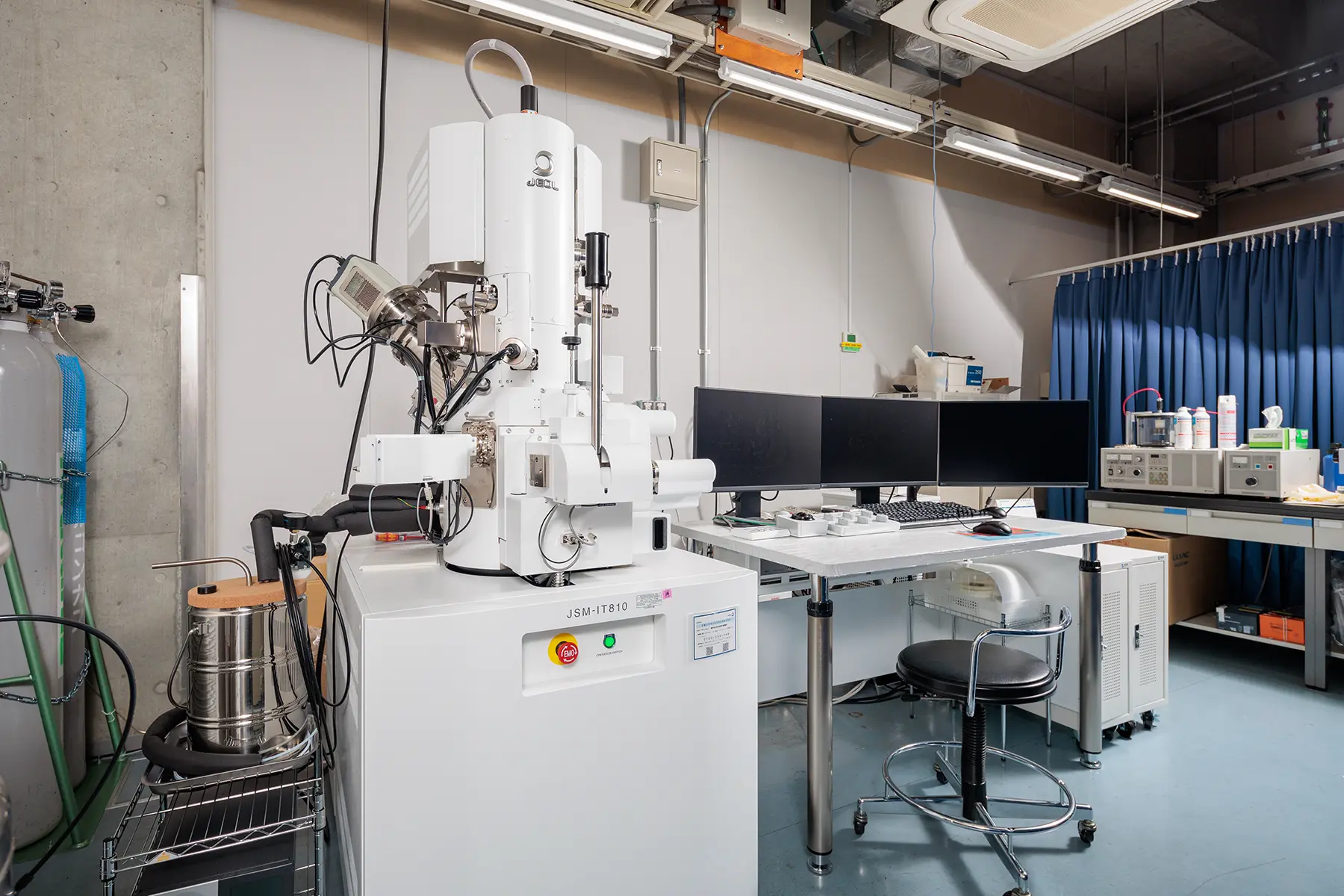
JSM-IT810 Schottky Field Emission Scanning Electron Microscope
Its capability for operando analysis is one of the features of JSM-IT810.
Operando analysis is direct observation of the process of the sample in motion.
Concretely, it equips an optional charging and discharging holder, enabling measurement of the current value
during charging and discharging, and the micro change of the sample condition at the same time. By using
such a function, "we also hope to work on the in-situ observation to capture the interface change while
simulating charging and discharging cycles through the electrode contact". (Prof. Mori.)
The second instrument, JMS-T200GC is a "Gas Chromatograph Time-of-Flight Mass Spectrometer". However, it is
equipped with more ionization methods than conventional ones, with the feature of enabling the detection of
chemical substances that were difficult to ionize.
In addition, it is equipped with automatic qualitative analysis software using AI, it provides a candidate
molecular formula of the chemical substance with high accuracy.
Osaka Metropolitan University refers to it as the "Unknown Substance Analysis System".
When unexpected chemical substances are produced by repeated charging and discharging, this system will
surely demonstrate its power by revealing the true nature of the substances."
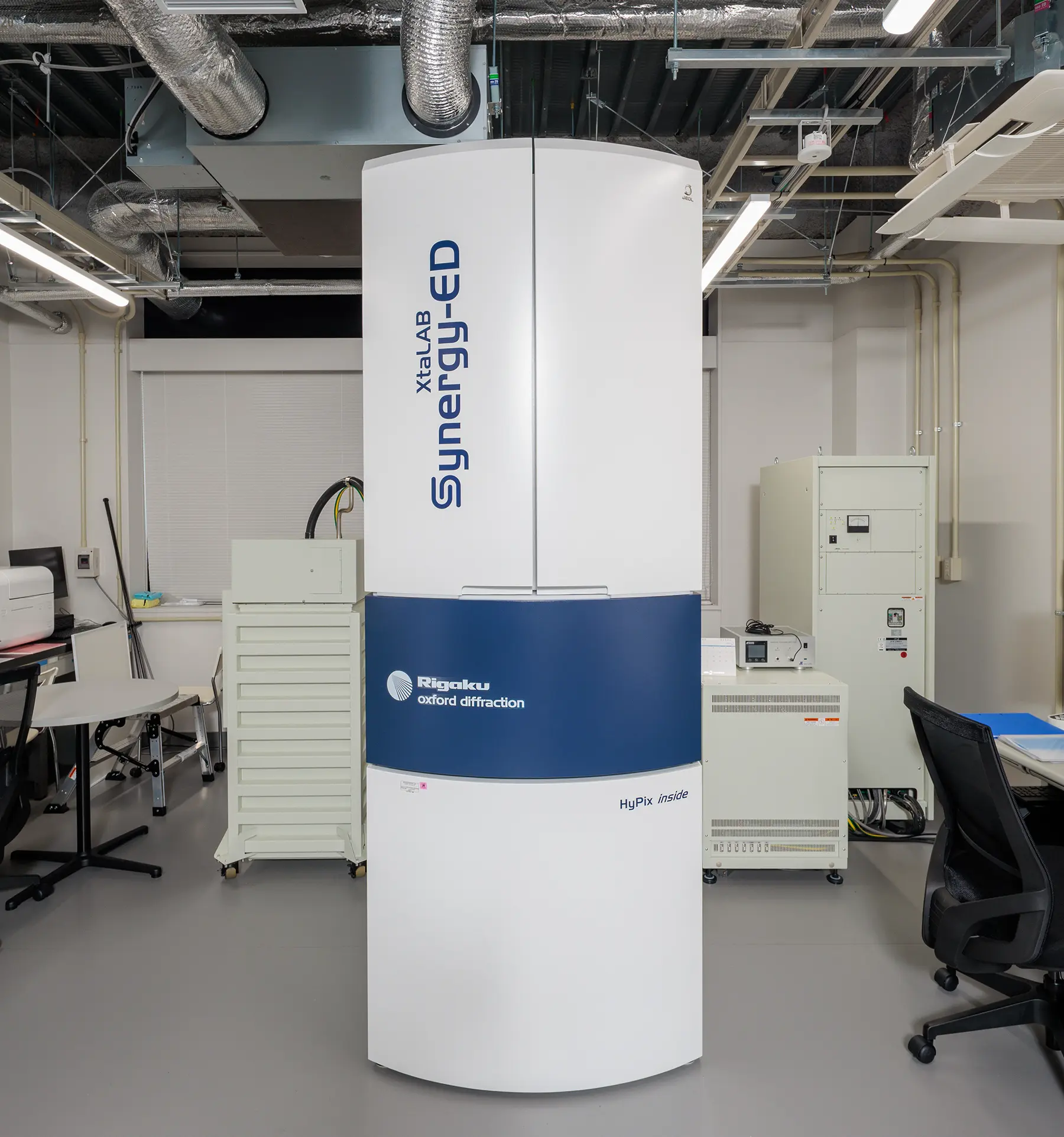
Electron Diffractometer
XtaLAB Synergy-ED
The third one, XtaLAB Synergy-ED is a platform for micro single crystal structure analysis jointly developed by JEOL and Rigaku. Some readers may feel a slight sense of incongruity when they hear that the instrument is intended for "single crystals." If the sample is produced by pressing a powder, wouldn't it be in an amorphous state? In fact, it is known that dispersing micro crystals within the electrolyte increases its conductivity. For this reason, materials are being developed in which crystallinity is intentionally introduced through a heat treatment. In research, it also becomes essential to identify the types and states of the micro crystals that are formed.
The fourth instrument, Energy Filter SEM is a completely new type of electron spectrometry instrument
proposed by JEOL.
It can separate and acquire information from different energy bands, such as secondary electrons(below
several tens of eV), Auger electrons(from several tens of EV to several keV), and backscattered electrons
(ranging from high energies close to the incident electron energy down to the low energy band close to the
secondary electrons) almost in real time, and then make analysis "later to look into the composition of this
specific location later". By selecting energy bands afterward, researchers can perform the elemental
analysis of the sample surface (Auger spectroscopy), chemical-state analysis, and electronic state analysis
from a single measurement.
As the same sample can be analyzed multifacetedly from a single measurement, it is "expected to be a
powerful tool in problem-solving" (Prof. Mori).
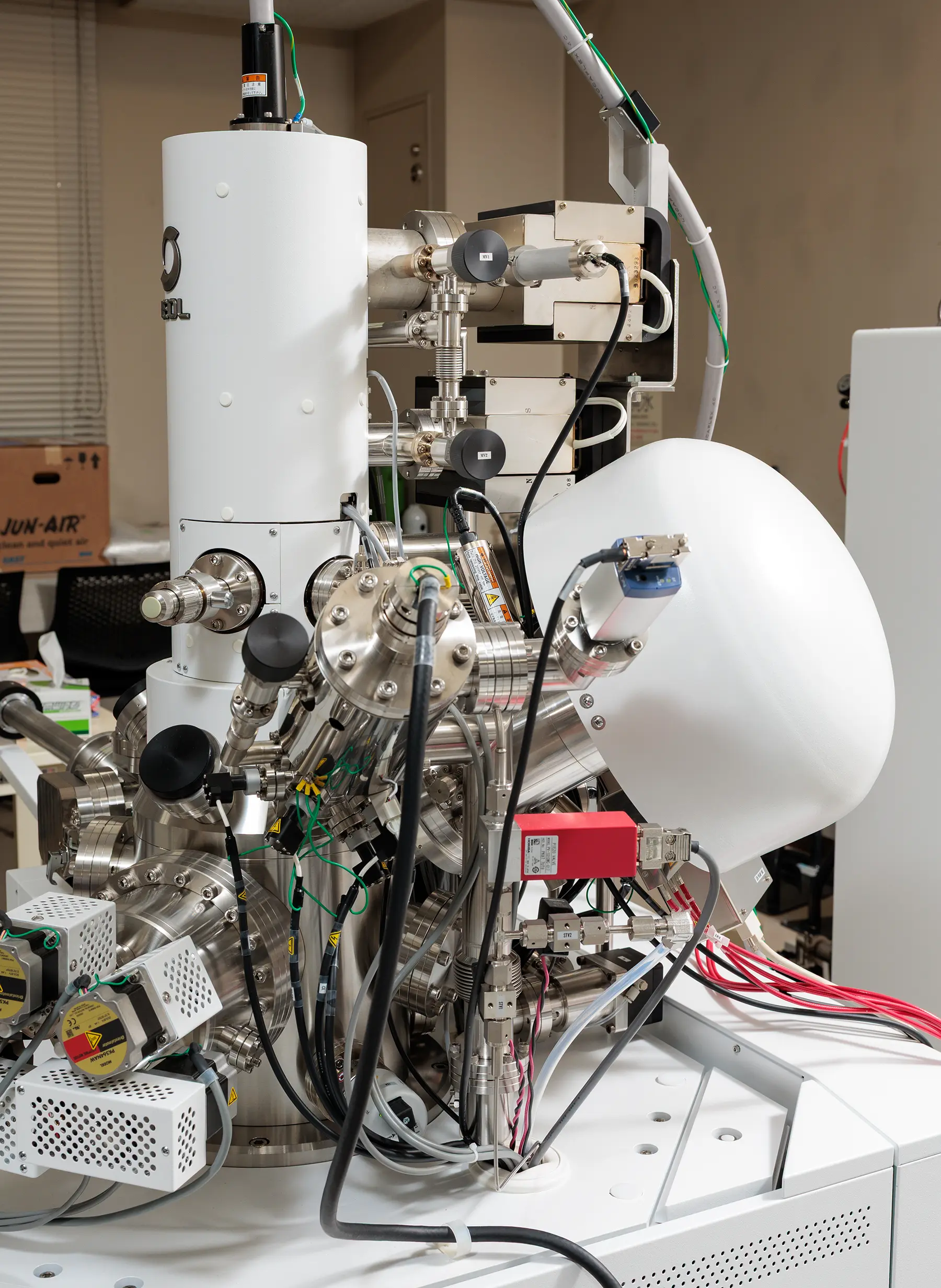
Equipped with an ion gun, the system performs depth profiling by alternately etching the sample and acquiring spectral data. By rapidly collecting and stacking spectral information from each layer, it enables practical three-dimensional analysis that was previously difficult to achieve.
The Solid-State Battery Research Center, which conducts a wide range of analyses using these analytical instruments, will undoubtedly accumulate insights--not only hints for practical application but also fundamental scientific knowledge.
Former president looking beyond practical application
The All-Solid-State Battery Research Center was established in August 2020 under President Masahiro
Tatsumisago of Osaka Prefecture University (*5), himself a solid-state battery researcher. Since the center
was established with the expectation from industries, the center aimed at social implementation (practical
application) from the beginning.
In April 2021--less than a year after its founding--the Consortium for Practical Application of
All-Solid-State Batteries was launched mainly by the members of the center, to promote collaboration with
industries and exchange researchers, as a natural flow.
(*5) In April 2022, he became the first president of Osaka Metropolitan University following the university merger. He concurrently served as president of Osaka City University (Apr. 2022-Mar. 2025) and Osaka Prefecture University (Apr. 2023-Mar. 2025) for united operation of both universities as long as students were enrolled.
| August 2020 |
Establishment of the All-Solid-State Battery Research CenterNamed "Osaka Prefecture University All-Solid-State Battery Research Center". |
|---|---|
| April 2021 |
Establishment of the Consortium for Practical Application of All-Solid-State BatteriesNamed "Osaka Prefecture University Consortium for Practical Application of All-Solid-State Batteries". Founded to promote collaboration with industry, foster research talent. There are 110 corporate members including special members. (As of April 2026). |
| April 2022 |
Integration of Osaka City University and Osaka Prefecture UniversityFollowing the merger, the center and consortium were renamed: "Osaka Metropolitan University (OMU) All-Solid-State Battery Research Center" and "Osaka Metropolitan University Consortium for Practical Application of All-Solid-State Batteries". |
| August 2022 |
Launch of the Kansai Battery Human Resource Development ConsortiumCentered on METI Kansai Bureau of Economiy, Trade and Industry, this consortium unites industry, government, and academia. Its goal is to foster approximately 22,000 personnels in the battery manufacturing field, approximately 30,000 personnels in the entire supply and chains such as materials. The university is expected to foster about 8000 highly skilled professionals, as well as to train personnel for manufacturing through lectures and visits. The OMU All-Solid-State Battery Research Center is participating in it as the hub for personnel development based on advanced battery material development and evaluation and analysis technologies. |
| April 2023 |
Approved by the Ministry of Education, Culture, Sports, Science and Technology (MEXT)The OMU All-Solid-State Battery Research Center was officially recognized as a joint-use and joint-research center, for the first time in Japan. |
| December 2023 |
Selected for the J-PEAKS Program as a Research Seeds CaseA project proposal from Osaka Metropolitan University as the lead institution has been selected for the MEXT's J-PEAKS "Program for Forming Japan's Peak Research Universities". The energy material research based on the all-solid-state battery which OMU is advantageous, is referred to as the typical example of research seeds that can aggressively contribute to policy planning and social implementation through promotion via co-creation among industry, academia, government, and private collaboration. |
| April 2025 |
Opening of the Smart Energy BuildingThe Smart Energy Building is a facility constructed at OMU's Nakamozu
Campus with support from the MEXT's "Project for the development of facilities for
Industry-Academia-Government Collaboration and joint research" and J-PEAKS. |
The Kansai region hosts major battery-related companies such as the Panasonic Energy Co., Ltd. and GS Yuasa
International Ltd. Along Osaka Bay, numerous lithium-ion battery factories, component manufacturers, and R&D
institutions are concentrated--earning the nickname "Kansai Battery Bay."
With strong expectations from industries, the consortium has grown to over 100 participating companies as of
April 2026.
"Professor Tatsumisago often says, "fundamental research becomes even more important after commercialization". Universities tend to stick to fundamental research and stop their research once a practical application is achieved. But that does not support Japan's industry. Understanding what happens after commercialization and continuing to improve performance is essential. I think that is what he means." (Professor Mori.)
Industry seeks breakthroughs for commercialization, but a university that continues fundamental research afterward and helps enhance product performance must be invaluable for industries.
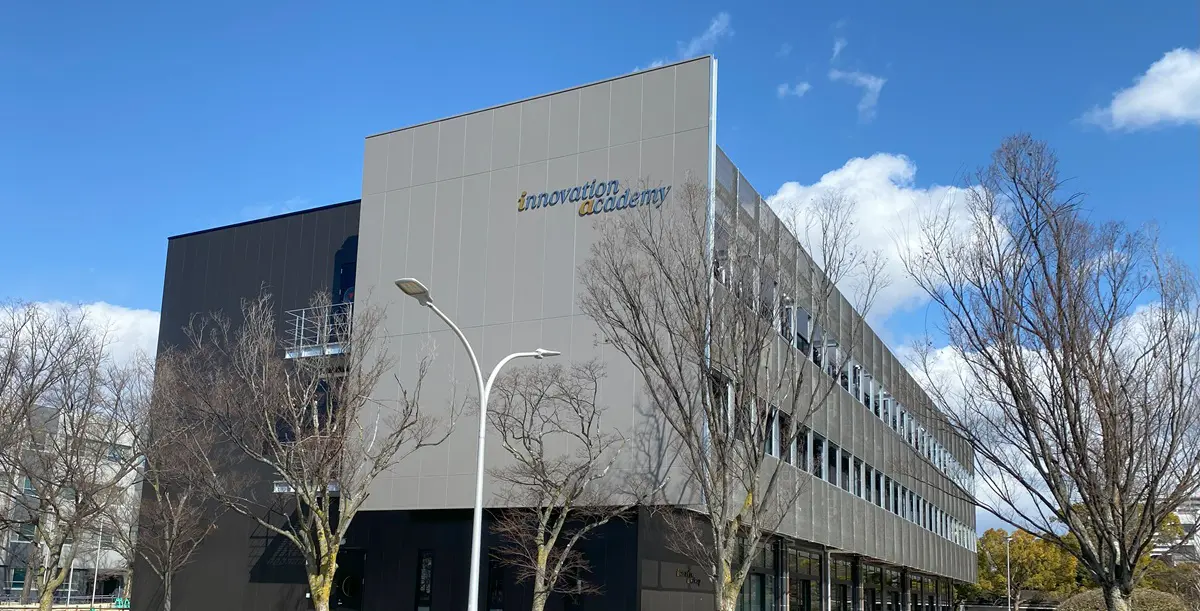
Innovation Academy Smart Energy Building opened on April 1,
2025
Facility serves as a living lab for industry-university public-private collaboration to promote
co-creative research with companies and create start-ups.
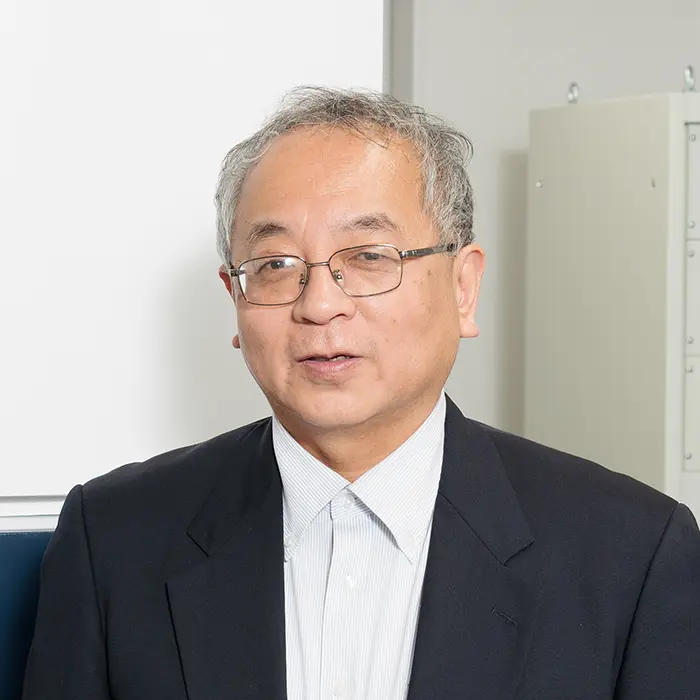
Shigeo Mori
Department of Materials Science
Graduate School of Engineering, Osaka Metropolitan University
Specializes in the structural analysis of functional materials. He engages in evaluating microstructural characterization using electron microscopy, as well as elucidating the reaction mechanism and interface phenomena in the all-solid-state battery material.